


Your Browsing History


Justin T.
Joined on 11/04/02
0
0
product reviews
- 9
Seagate 500GB PATA Hard Drive
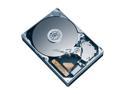
Seagate BarraCuda 7200.10 ST3500630A 500GB 7200 RPM 16MB Cache IDE Ultra ATA100 / ATA-6 3.5" Hard Drive (Perpendicular recording) Bare Drive
Pros: This is the ST3500630A drive which has the 16MB buffer, and is a bit nicer than the ST3500830A drive which only has the 8MB buffer. - Tom's Hardware Benchmarks - Single Drive Average Read Speed: 63 MB/sec Single Drive Average Write Speed: 64 MB/sec (Those speeds are very close to the WD Raptor hard drive, so this drive is NOT a slouch by any means) 5yr Seagate manufacturer warranty
Cons: None so far. Setup and install was easy.
Overall Review: I bought (4) of these 500GB PATA drives for use in my home RAID5 file server. (I got the Black Friday Special price of $xxx each) After using a 64K Stripe Size on my RAID5 controller card, I formatted the drives NTFS using 8K Allocation Unit Size and ended up with 1.39TB of usable space in Windows. (Basically, that works out to the 465GB others were getting per drive) RAID5 Avg Read Speed: 63MB/sec
11/30/2006See more detail
Excellent solution for multiple laptops sharing a single USB-C hub/monitors/mouse/keyboard
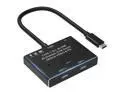
AUBEAMTO USB-C USB3.1 Type-C 8K Switch Bi-Direction 8K@30Hz 4K@120Hz Power Delivery 100w 10Gbps Data Transfer Multi-Function Splitter Converter (8K)
Pros: - Works as described to switch 2 laptops with 1 USB-C hub/dock that was connected to multiple monitors/Ethernet/webcam/keyboard/mouse - Supplies PD 100W charging power to charge the laptop being actively used
Cons: Honestly there isn't anything that I'm unhappy with, maybe it would be nice to have some mounting tape/foam to anchor the switch on a desk so that it doesn't slide around. The unit is so lightweight and small (about 3in x 3in x 3/8in high) that your USB-C cables will definitely weigh more than the switch and can push or move it around.
Overall Review: I've used KVM products in the past, but when using this USB-C Switch from AUBEAMTO with 2 laptops and a single set of monitors/Ethernet/mouse/keyboard/webcam/etc I think it is even better! Multiple 1080p monitors I tested worked perfectly when switching between laptops, just had to tap the ESC key when switching to wake the other laptop from sleep. Loving the ability to switch between laptops as I need, it takes about 15-20s for all of my monitors to sync after switching but is so much better than what I had been doing before.
5/17/2026See more detail
Power Acoustic PHDM-103 10.3" Headrest Monitor
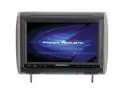
New Power Acoustik Phdm103 10.3" Headrest Monitor 1050P Dig Media 3 Color Skins
Pros: This is a nice headrest monitor that works great with our family of 3 kids, and for the price seems to have a great combination of features that most families would enjoy. -Plays MP4/MOV/VOB videos from a single USB slot (we have 32GB SanDisk SDCZ33) -FM audio on any frequency you want (to send to your car's headunit) -Supports infrared wireless headphones (so you don't have to mess with physical cords for your little ones) -Supports 3 main modes: Photos/Music/Videos Within each of the modes you can browse through the USB drive's file system and find the file(s) you want to play. -Remote control feels solid and works pretty well. -Supports video feed to another monitor within the car (or another PHDM-103) -Has RCA audio out (stereo) that you can use to "hard wire" to your car's aux audio input -Runs on 12V DC power, only needs 2Amp per unit. -Continuous video play (keeps going through all of the videos in a folder automatically)
Cons: -Filesystem wants to order files by Date Modified, not by name of the file. So this is a bit strange at first, but I think you get used to it. Didn't see any way to change this in any menu. -In very cold winter weather (0F-10F) sometimes the unit we have doesn't want to power on. Once the car is warm, the issue goes away and it powers up with no problem.
Overall Review: Overall, a great little unit, we are buying a 2nd one of these for the other driver-side headrest. Haven't tried the MiniHDMI + USB port from a mobile device, but apparently you can hook this up to your smartphone(with a $50 adapter) and play video/games/audio from your phone on the screen.
3/9/2014See more detail
2GB 667Mhz DDR2 Dell Upgrade
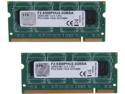
G.SKILL 2GB (2 x 1GB) 200-Pin DDR2 SO-DIMM DDR2 667 (PC2 5300) Dual Channel Kit Laptop Memory Model F2-5300PHU2-2GBSA
Pros: This G.SKILL (2x1GB) DDR2 RAM upgrade worked flawlessly in my new Dell Inspiron E1505/6400 laptop and noticeably sped up Windows Vista Home Premium. I couldn't be more pleased with the bang for my buck!
Cons: Nothing! Easy install (removed two screws and a plastic cover) and the new memory works great with Vista
Overall Review: I'd definitely buy this again if I was upgrading another DDR2 laptop.
5/2/2007See more detail
Biostar GeForce 6800XT (open box)
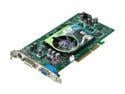
BIOSTAR GeForce 6800XT 512MB GDDR2 AGP 4X/8X Graphics Card V6802XA52
Pros: Was able to use Rivas Tuner to sucessfully unlock this open-box card to 16/6 and able to adjust memory speed. CPU speed adjustments are locked unless you decide to reflash the BIOS and I'm not interested in doing that.
Cons: Card is not as fast as most PCI-E cards that are available for $100 or so. 7600GT is a much better card and priced a bit less.
Overall Review: I had AGP slot and needed a faster card to compliment my ATSC HDTV tuner card. This fit perfectly and now all of my TV shows play back with great speed and quality, even at 1920x1080i resolution. I couldn't be happier with the fact that I was able to unlock ALL 16/6 pipelines and vertex shaders as well as put a Zalman AlCu-VF700 cooler on there and get my temps to around 50C. Card plays great at 1280x1024 on every game I've thrown at it.
3/22/2007See more detail
tubbytreats3
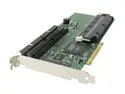
PROMISE FastTrak SX4060 PCI IDE 4-Channel Adapter
Pros: - RAID 5 creation is fast, easy, and reliable. - Read speeds are quite satisfactory.
Cons: - Write speeds are considerably slower than reading - No onboard XOR Processor (this chip is included on higher-end RAID conroller cards and speeds up the "parity bit" calculation when performing "writes" to the array)
Overall Review: <p>wulfman and techdude are unfortunately incorrect. I want buyers to have the most accurate information in their hands before they lay down money to purchase a product.</p> <p>Promise uses (what they have termed) an "XOR Engine" to calculate RAID5 "parity bit" information when writing data to the array. This is NOT THE SAME as a dedicated XOR Processor. This is a cost-savings move on Promise's part, and one that allows them to sell a RAID5 controller card for a cheaper price. Most wouldn't even notice the difference between this card and a RAID5 controller card that has a dedicated onboard XOR Processor.</p> <p>XOR Processor != XOR Engine</p> <p>This card is great, works well, but if you are interested in FAST write speeds, look for a card with an onboard processor that is dedicated to XOR calculations. This Promise SX4060 uses the host machine CPU to do the XOR calculations (according to Promise's XOR Engine) and will slow down your system when performing data writes</p>
3/16/2007See more detail