


 All Categories


 All Categories



Warranty Notice:
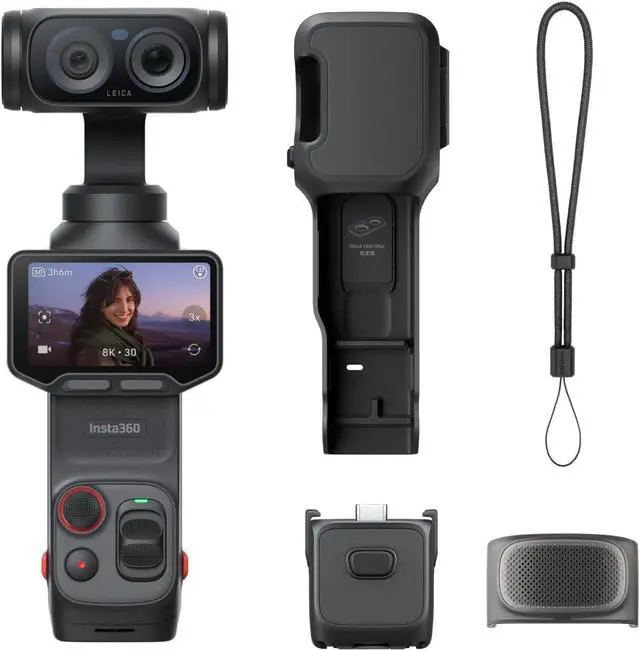
This product does not include manufacturer warranty when purchased or used outside of its designated sales region. By purchasing internationally, you acknowledge that warranty support from the manufacturer will not be available.The Insta360 Luna Ultra is a pocket-size 8K vlogging camera with dual Leica lenses, a 1-inch main sensor, 3-axis gimbal stabilization, and a detachable 2-inch touchscreen, making it a strong fit for creators who want cinematic handheld video, flexible framing, and polished results for travel, daily vlogs, and short-form content.
| Attribute | Value |
|---|---|
| Best For | Vloggers and mobile creators who need gimbal-stabilized 8K/4K capture with Leica 1" imaging, a detachable 2" OLED remote for on-the-go monitoring, and AI-assisted tracking for walking/running/cycling scenarios |
| Processor And Imaging Chips | Triple-AI chip architecture: Qualcomm 4nm flagship AI chip handles system control, AI tracking and compute while two dedicated pro imaging chips handle low-light processing and PureVideo tasks |
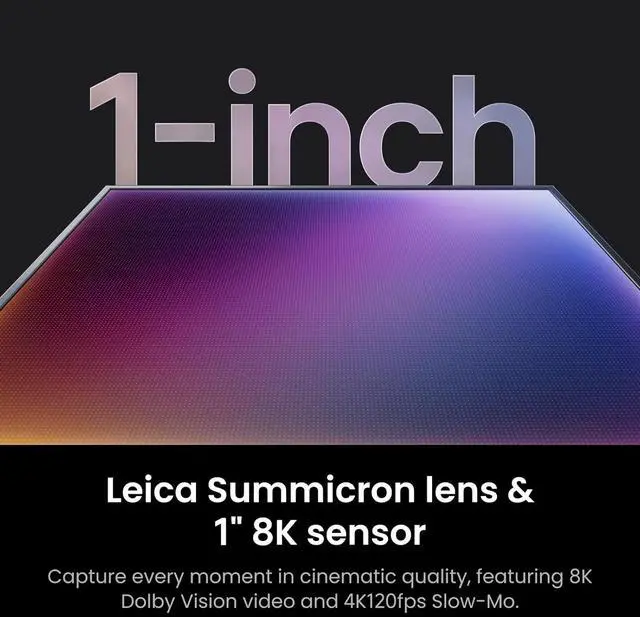
| Imaging And Sensors | Dual Leica sensors: main 1" CMOS Leica Summicron (gross 50MP, native 8192×6144 with UltraPhoto/37MP output) and 1/1.3" telephoto Leica Summicron (12MP effective reported); standard RGB Bayer filter array and 10-bit native color depth |
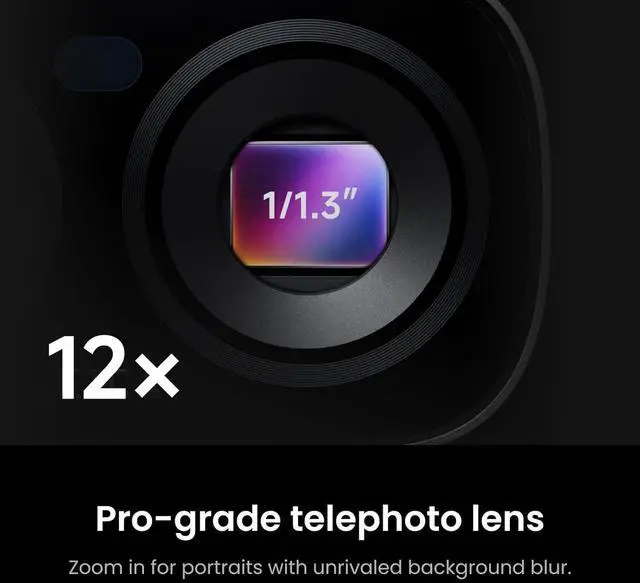
| Lenses And Zoom | Dual Leica Summicron lenses: wide f/1.8 (main, 20mm equivalent) and telephoto f/2.0 (1/1.3"); optical 3× (telephoto), lossless 6× (telephoto native), combined digital up to 12×; supported focal steps 1×/2×/3×/6×/12× with FOV ~108° (wide) and 38° (telephoto) |
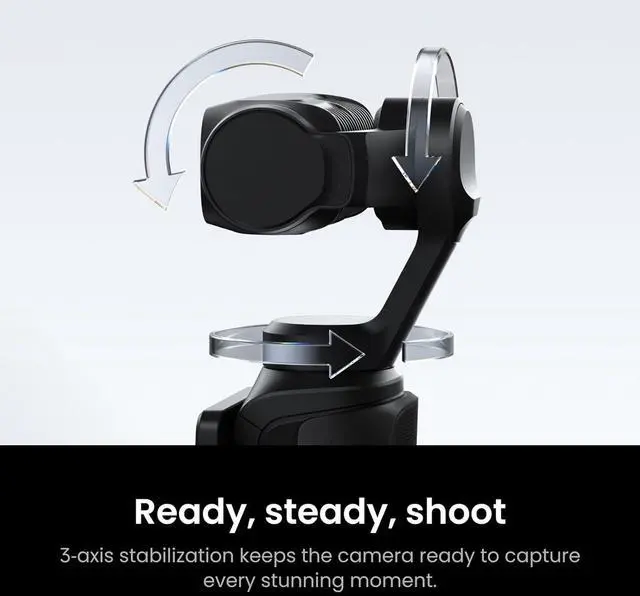
| Stabilization And Gimbal | Dual stabilization: precision 3-axis mechanical gimbal (±0.005° accuracy, max control speed 210°/s) plus FlowState 3.0 electronic stabilization with AI triple-chip real-time correction; stabilization range up to ±45° tilt and ±30° roll for smooth, drone-like footage during movement |
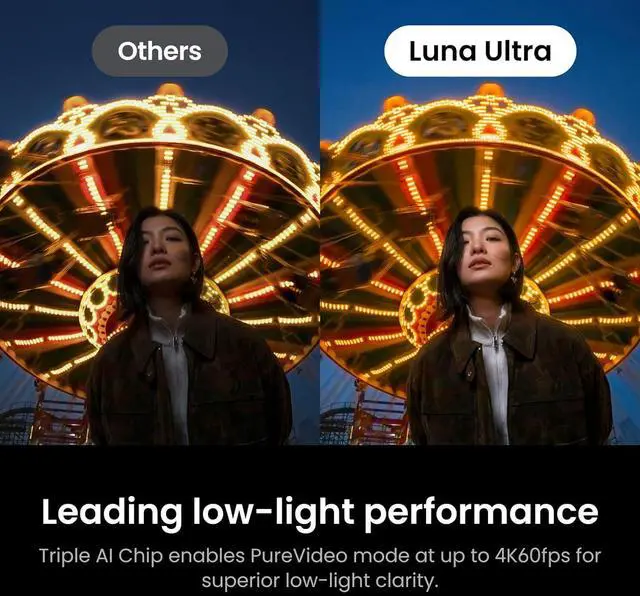
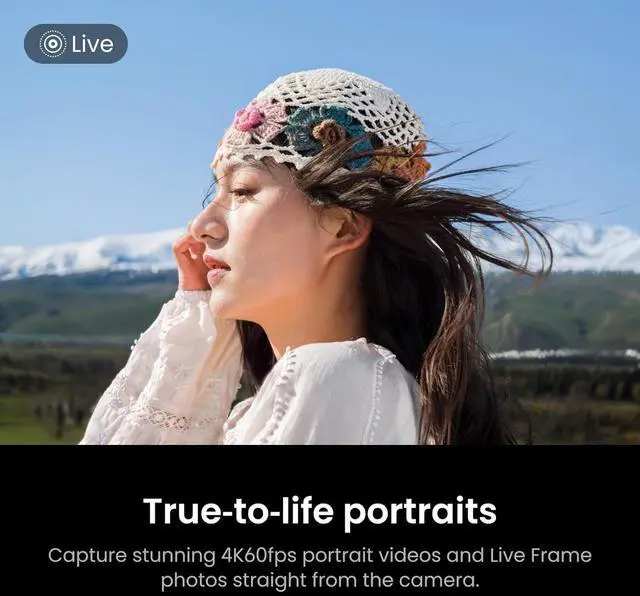
| Video And Photo Modes | Supports 8K@30fps (with stabilization), 4K up to 120fps and Full HD up to 240fps; PureVideo low-light processing (4K@60fps), DeepTrack 5.0 AI tracking/auto-composition/active zoom, UltraPhoto 37MP stills and 200MP scenic panorama (20224×10112) |
| Color And Profiles | 10-bit color pipeline with Dolby Vision and I-Log support, Leica-tuned profiles (Leica Natural, Leica Vivid, Leica Chrome), Rec.709 and Rec.2020 gamuts, six built-in cinematic filters and support for optional magnetic CPL/Variable ND/Black Mist filters |
| Focus And Exposure | AI-enhanced rapid autofocus with Single AF, Continuous AF and DeepTrack 5.0 subject tracking; focal ranges wide 0.2–8m and telephoto 0.15–8m (telephoto macro to 15cm); exposure options include Auto/Manual with independent exposure per lens, multi-segment/center-weighted/spot metering, EV ±4 and ISO 100–6400 |
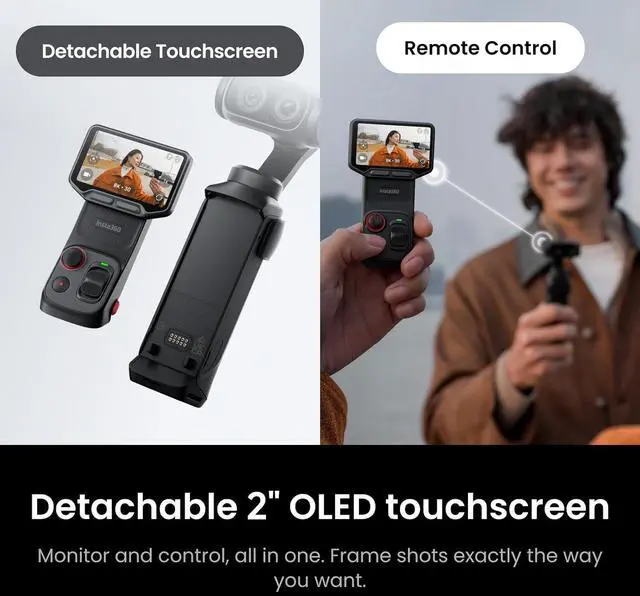
| Display And Remote | Detachable, rotatable 2" OLED touchscreen that functions as a wireless remote and monitor with HD live view up to 20 m (65 ft) and a built-in mic for wireless audio; brightness reported between 700 and 1000 nits across listings |
| Wired And Wireless Networking | Main gimbal unit supports Wi‑Fi 6 (802.11 a/b/g/n/ac/ax) on 2.4GHz and 5GHz bands with specified EIRP limits; detachable touchscreen uses Wi‑Fi 4 (802.11 b/g/n) on 2.4GHz; Bluetooth BR/EDR/BLE included for remote control; HD live view/remote range up to 20 m |
Q: Should I buy the Insta360 Luna Ultra or DJI Osmo Pocket 3?
A: Choose the Insta360 Luna Ultra if you want a pocket gimbal camera with a built-in telephoto option, longer reach, and higher top-end capture specs on paper, including dual Leica-branded lenses and 8K support. Choose the DJI Osmo Pocket 3 if you want a more established single-lens option with widely validated image quality, 1-inch sensor performance, and a larger body of professional reviews confirming dependable autofocus, stabilization, and workflow. The practical trade-off is flexibility versus simplicity: Luna Ultra is the better fit for users who expect to use zoom and multiple focal lengths often, while Pocket 3 is the safer fit for users who mainly shoot wide-angle vlogs and want a proven ecosystem.
Q: Is Insta360 Luna Ultra worth it over DJI Osmo Pocket 4P?
A: Buy the Insta360 Luna Ultra if your priority is stronger zoom-oriented shooting and you want Insta360's dual-lens positioning centered on focal-length flexibility, detachable screen use, and high-resolution capture. Buy the DJI Osmo Pocket 4P if your priority is overall image consistency and a more conservative step-up from the Pocket line. Early comparisons and community testing commonly frame this as a trade-off between Luna Ultra's zoom and stabilization advantages versus Pocket 4P's color, dynamic range, and broader confidence in image quality. If you care more about portrait framing and distant subjects, Luna Ultra makes more sense; if you care more about balanced image quality across everyday shooting, Pocket 4P is the steadier choice.
Q: Should I upgrade from Osmo Pocket 2 or the original Osmo Pocket to Insta360 Luna Ultra?
A: Yes, Luna Ultra is a meaningful upgrade if you are coming from Osmo Pocket 2 or the original Osmo Pocket and want a modern jump in sensor size, low-light capability, screen usability, tracking features, and focal-length range. The original Pocket line is much more limited in sensor size, recording features, and display experience, while Luna Ultra adds a 1-inch main sensor, telephoto lens, detachable touchscreen workflow, and newer AI-assisted tracking. The trade-off is cost: older Pocket models still make sense for basic stabilized video, but Luna Ultra is the better move if you want a clear step up rather than a small refresh.
Q: Is Insta360 Luna Ultra better than Insta360 GO Ultra for travel and daily carry?
A: Choose Insta360 GO Ultra if your main goal is the lightest hands-free camera for body mounting, casual POV capture, and minimal carry weight. Choose Insta360 Luna Ultra if you want stronger image control, a true 3-axis mechanical gimbal, a larger main sensor, a detachable touchscreen, and better suitability for intentional vlogging or travel shooting. The trade-off is clear: GO Ultra is easier to carry everywhere, while Luna Ultra is the better fit when image quality, framing options, and stabilized handheld footage matter more than size.
Q: Is Insta360 Luna Ultra a good choice for travel vlogging and family trips?
A: Yes, if your priority is stabilized handheld video in a compact camera. Retail Q&A for comparable pocket gimbal cameras repeatedly focuses on vacations, family memories, and portability. Luna Ultra fits that use well because it combines a 3-axis gimbal, a 1-inch main sensor, a detachable 2-inch remote screen, and a protective case in the box. The main trade-off is durability: like other gimbal cameras, it is better suited to careful travel and walk-around shooting than rough, wet, or sandy use.
Q: Is Luna Ultra better than a standard action camera for everyday video and low-light shooting?
A: Usually yes for general vlogging, casual travel footage, portraits, and night scenes. Retail discussion around 1-inch camera models repeatedly highlights better low-light performance and more natural image quality than typical small-sensor action cameras. Luna Ultra adds a 1-inch main sensor, a dedicated telephoto camera, Leica-tuned color modes, and a mechanical gimbal, which make it a stronger fit for creator-style video than a rugged ultra-wide action cam. The trade-off is that action cameras are usually tougher and better for water, impact, and helmet-style mounting.
Q: Is the 12× zoom actually useful, or is this still mainly a wide-angle vlogging camera?
A: The zoom is a real buying advantage if you often shoot people, details, or distant subjects. On comparable retail Q&A pages, zoom is one of the most repeated decision questions because many pocket cameras are wide-only. Luna Ultra is more flexible than that type of product: it includes a separate telephoto camera, supports up to 6× lossless zoom, and reaches 12× total zoom range. That makes it more suitable than a fixed wide-angle pocket camera for travel details, portraits, and tighter framing, but it is still not a substitute for a long-zoom camcorder for field sports from far away.
Q: Who is Luna Ultra most suitable for?
A: It is best for solo creators, travelers, and vloggers who want smoother video, better low-light results, and more framing flexibility than a basic action camera. Repeated retail questions on comparable products center on family videos, vacations, sports sidelines, and simple creator workflows. Luna Ultra is especially suitable for users who want a compact all-in-one camera with built-in stabilization, portrait-friendly shooting, AI tracking, and remote monitoring from the detachable screen. It is less suitable for buyers who mainly need waterproofing, crash resistance, or hands-free mounting in extreme activities.
Q: Is Luna Ultra a better buy than DJI Osmo Pocket 3?
A: It depends on what you value. Osmo Pocket 3 is the safer mainstream comparison for buyers who want a proven pocket gimbal camera with a 1-inch sensor and 4K120 recording. Luna Ultra looks better on paper for buyers who specifically want higher-resolution 8K capture, a second telephoto lens, and longer zoom flexibility. The trade-off is that Osmo Pocket 3 has broader market familiarity, while Luna Ultra appears positioned as the more feature-forward option for users who care about zoom range and dual-lens versatility.
Q: Is the Insta360 Luna Ultra worth buying for travel vlogging and walking footage?
A: It makes the most sense for solo creators who want smoother handheld video, a compact body, and more framing flexibility than a phone. Based on the product data, its strongest fit is travel and walk-and-talk vlogging because it combines a 3-axis gimbal, 1-inch main sensor, telephoto lens, AI tracking, and a detachable screen/remote. The main trade-off is that early user discussions also mention launch-stage issues, so it is a better buy for users who value image quality and stabilization more than first-generation polish.
Q: Who is the Insta360 Luna Ultra best suited for?
A: It is best suited for vloggers, travel creators, and solo shooters who want a pocket-size camera with built-in stabilization and both wide and tighter framing options. The wide 1-inch camera, separate telephoto lens, AI tracking, and detachable touchscreen are more useful for self-recording and quick setup than for action-sports use. Buyers focused mainly on rugged mounting, underwater use, or the simplest possible setup may be better served by a traditional action camera instead.
Q: What are the main trade-offs of the Insta360 Luna Ultra?
A: The main trade-offs are launch maturity, battery dependence for the detachable screen workflow, and complexity compared with simpler cameras. On paper, the camera offers advanced features such as dual Leica-branded lenses, 8K recording, Dolby Vision, AI tracking, and detachable remote monitoring. In user discussions, the recurring cautions are early software or hardware issues, activation/app dependence at launch, and concerns about remote battery endurance. It is a stronger fit for users who want features and are comfortable with updates than for buyers who want a fully proven system on day one.
Q: Is the detachable touchscreen actually useful or just a gimmick?
A: It is useful if you film yourself, place the camera out of reach, or want a remote monitor/controller. The product data says the screen can work wirelessly up to 20 meters and includes live view and control, which directly supports tripod, travel, and self-shooting use. The trade-off is that this benefit depends on another battery-powered part, so it adds convenience but also another point to manage.
Q: Is Dolby Vision worth using on the Insta360 Luna Ultra?
A: It is worth using if you want more grading flexibility or better highlight and shadow handling, but it is not essential for every user. The product data confirms 10-bit Dolby Vision and I-Log support, which makes the feature more relevant for creators who edit and deliver higher-quality video. For quick everyday shooting, standard color modes are the simpler choice.