


 All CategoriesAll CategoriesAll Categories
 Hot Seller

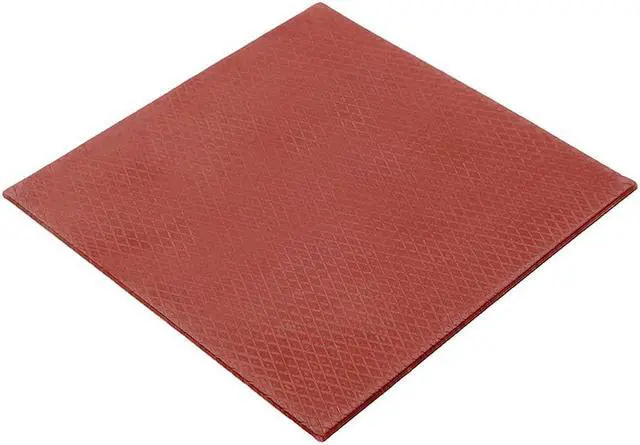
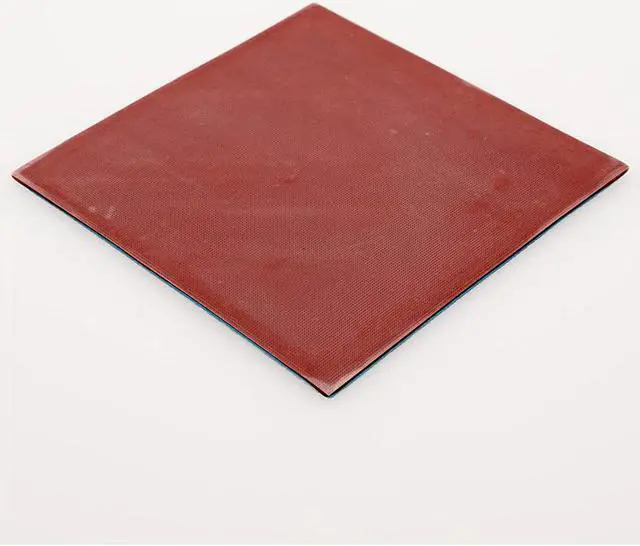
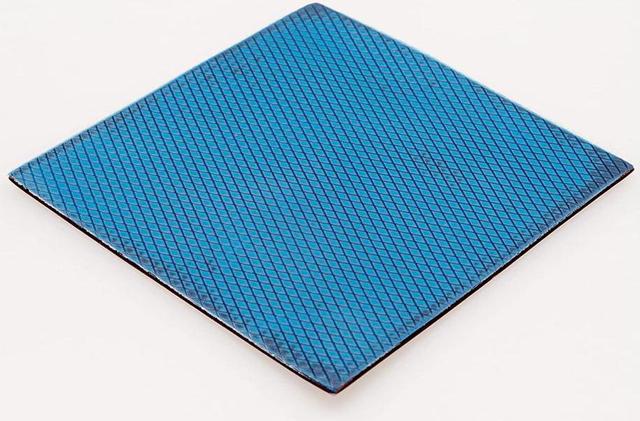
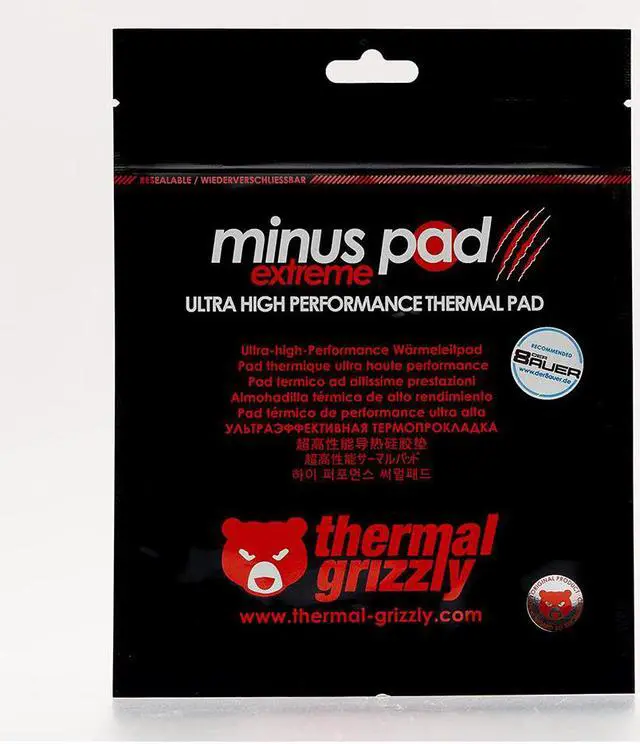
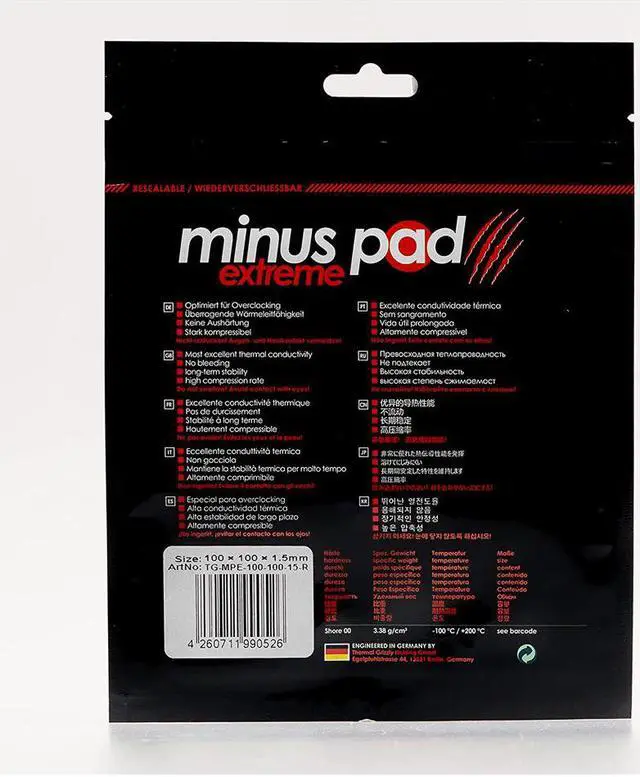


The thermal pad is silicone based with modelling clay like consistency. This allows a perfect surface shaping with maximum possible compression. The minus pad extreme is electrically insulating.
Due to the consistency only one-time use is recommended. The thermal conductivity was improved by about 260 % over the minus pad 8 which allows best cooling for tough cooling operations such as voltage regulators and memory ICs.
within the capabilities of thermal pads
The minus pad extreme is available in size 120 x 20 mm and 100 x 100 mm with thicknesses of 0,5mm, 1mm, 1,5mm, 2mm, 3mm.
Warranty Notice:
This product does not include manufacturer warranty when purchased or used outside of its designated sales region. By purchasing internationally, you acknowledge that warranty support from the manufacturer will not be available.Thermal Grizzly Minus Pad Extreme is a 100 × 100 × 0.5 mm silicone-based thermal pad for PC builders and electronics technicians who need a compressible thermal interface that can conform to component surfaces. It is electrically insulating and rated for operation from −100 °C to +200 °C.
| Attribute | Value |
|---|---|
| Best For | Thermal-interface applications needing a 100 × 100 × 0.5 mm pad |
| Dimensions And Fit | 100 × 100 × 0.5 mm sheet; listed thickness range is 0.5–3.0 mm with a typical tolerance of ±0.1 mm |
| Operating Temperature | −100 °C to +200 °C, including long-term operation |
| Material And Electrical Properties | Shore 00 hardness of 65, density of 3.38 g/cm³, V-0 flammability rating, and electrical insulation rated at 8 KV/mm (ASTM D149) |
| Product Details | Pink; item weight 0.02 kg |
| Model Identifiers | Thermal Grizzly Minus Pad Extreme, model TG-MPE-100-100-05-R |
Q: Thermal Grizzly Minus Pad Extreme vs Minus Pad 8: which should I choose for higher thermal-pad performance?
A: Choose Minus Pad Extreme when your priority is Thermal Grizzly’s higher-performance pad positioning. Minus Pad 8 is the more balanced option in the same lineup, while the manufacturer’s comparison places Minus Pad Extreme higher for performance. Match the 0.5 mm thickness to the gap specified for your component.
Q: Minus Pad Extreme or Minus Pad Extreme 2—which is the newer version?
A: Minus Pad Extreme 2 is the successor to Minus Pad Extreme. Thermal Grizzly describes Extreme 2 as maintaining comparable high thermal conductivity with a revised material composition and a softer consistency. Choose Extreme 2 for the updated formulation; choose this Minus Pad Extreme when you specifically want the original version.
Q: Minus Pad Extreme vs Minus Pad Pro: which should I choose for a GPU?
A: Choose Minus Pad Extreme when you want the original high-performance pad in this listing. Choose Minus Pad Pro for a combination of very high thermal conductivity and outstanding compressibility; Thermal Grizzly positions Pro’s conductivity close to Minus Pad Extreme. For either pad, select the thickness specified for your GPU’s cooler and components.
Q: Minus Pad Extreme vs Minus Pad Advance: which is the higher-performance option?
A: Minus Pad Extreme is positioned for higher thermal-pad performance. Minus Pad Advance is a middle option in Thermal Grizzly’s newer Basic, Advance, and Pro series, with improved compressibility compared with Basic. Choose Extreme when performance is the main priority; choose Advance for a newer-series balance of conductivity and compressibility.
Q: How do I know if this 0.5 mm thermal pad is the right thickness for my device?
A: Use it only where the required pad thickness is 0.5 mm. Check the device’s service information or measure the original pad; a pad that is too thin may not make contact, while one that is too thick may interfere with component or heatsink contact.
Q: Can I cut this 100 × 100 mm pad to fit smaller components?
A: Yes. The 100 × 100 mm sheet can be cut to the size needed for the contact area. Measure first and cut carefully; confirm the required thickness separately, since cutting changes the pad’s footprint, not its 0.5 mm thickness.
Q: What is this thermal pad suitable for?
A: It is intended for electronic components where a thermal pad is needed to bridge a gap to a heatsink, provided the application calls for a 0.5 mm pad. It may suit repair or cooling work on components such as memory, power-delivery parts, or storage devices; check the device’s specifications before installation.
Q: Is the pad electrically insulating?
A: Yes. The provided specifications describe the pad as electrically insulating, with a dielectric strength of 8 kV/mm under ASTM D149. This property does not eliminate the need to fit and install the pad correctly.
Q: Can I use this thermal pad directly on a CPU or GPU die instead of thermal paste?
A: No. The Reddit discussion distinguishes gap-filling thermal pads from paste used on directly contacting CPU or GPU dies. This 0.5 mm pad is intended for an interface with a gap; use the interface material specified for your device.
Q: Is the pad’s electrical insulation rating enough for a high-voltage MOSFET?
A: The supplied product data lists electrical insulation of 8 kV/mm under ASTM D149, but that value alone does not confirm suitability for a specific high-voltage assembly. Check the required pad thickness, operating conditions, and the design’s insulation requirements before using it.

