Three hundred and fifty dollars is a useful ceiling for a gaming processor. Below it you have real choice among current parts from both AMD and Intel; above it you enter the territory of chips whose extra performance mostly shows up in productivity benchmarks rather than frame rates. The question, then, is not which CPU under $350 has the biggest specification sheet. It is which one turns your money into the most frames per second and the fewest stutters. Below are five current options, what each one is genuinely good at, and a clear recommendation. Prices were checked on Newegg on July 28, 2026.
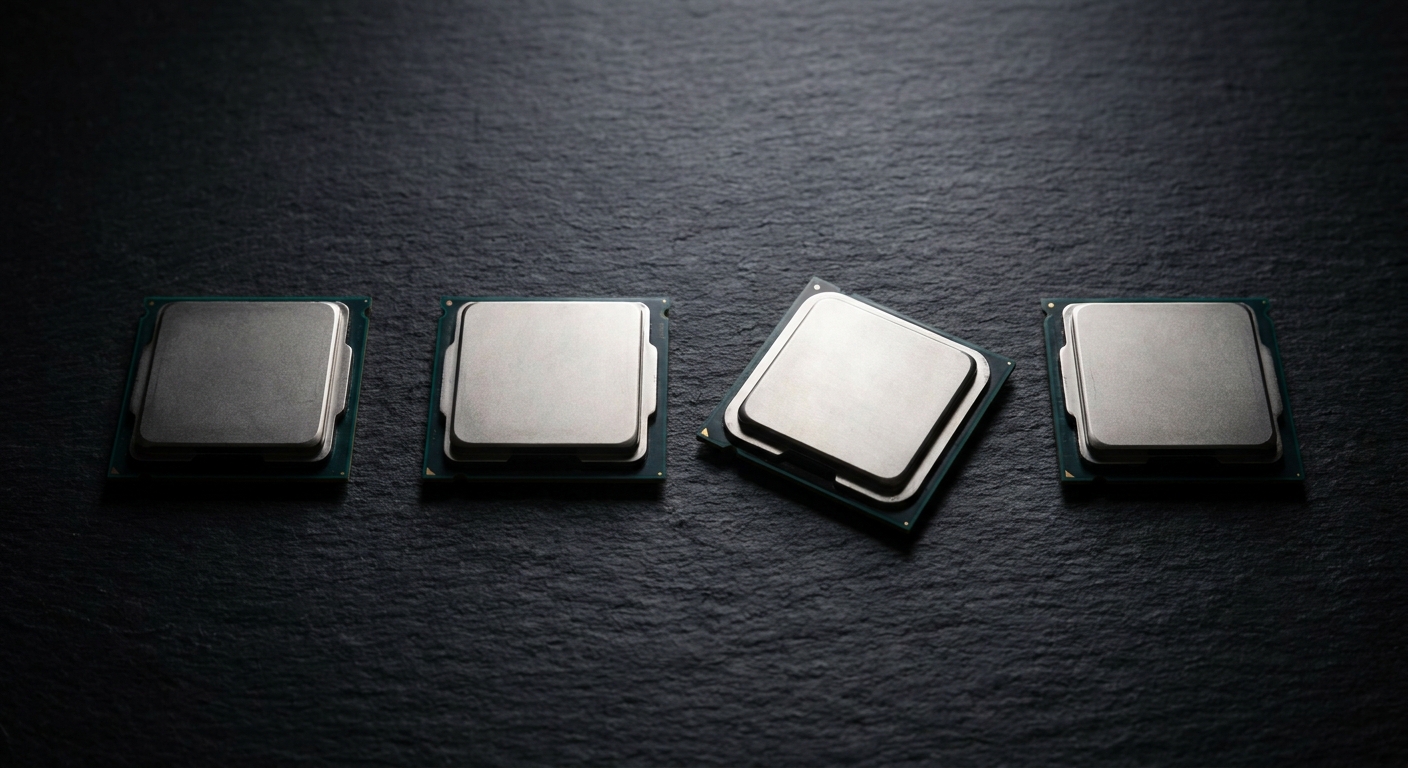
What to Look For in a Gaming CPU
Three things, in order of importance. First, cache. Games do not spend their time on dense parallel math; they spend it looking up game-state data thousands of times per frame. A large L3 cache keeps that data close to the cores, which cuts the waiting that shows up as frame-time spikes. This is the single biggest factor at this price point and the least discussed.
Second, core count, but only up to a point. Six cores is workable, eight is comfortable, and beyond that you get diminishing returns unless you stream, encode or compile. Third, platform cost, which is the number people forget: the board, memory and cooler you need alongside the chip, plus how long that socket will keep accepting upgrades. A cheaper CPU on a dead-end socket can end up costing more over four years.
The Field at a Glance
| Processor | Price | Cores / Threads | Total cache | TDP | Socket |
|---|---|---|---|---|---|
| AMD Ryzen 7 7700X3D | $329.00 | 8 / 16 (Zen 4) | 104MB | 120W | AM5 |
| Intel Core Ultra 7 265K | $314.98 | 20 (8P + 12E) | — | 125W | LGA1851 |
| AMD Ryzen 7 7700X | $240.99 | 8 / 16 (Zen 4) | 40MB | 105W | AM5 |
| Intel Core Ultra 5 245K | $214.99 | 14 (6P + 8E) | — | 125W | LGA1851 |
| AMD Ryzen 5 9600X | $199.99 | 6 / 12 (Zen 5) | 38MB | 65W | AM5 |
Best Overall: Ryzen 7 7700X3D, $329
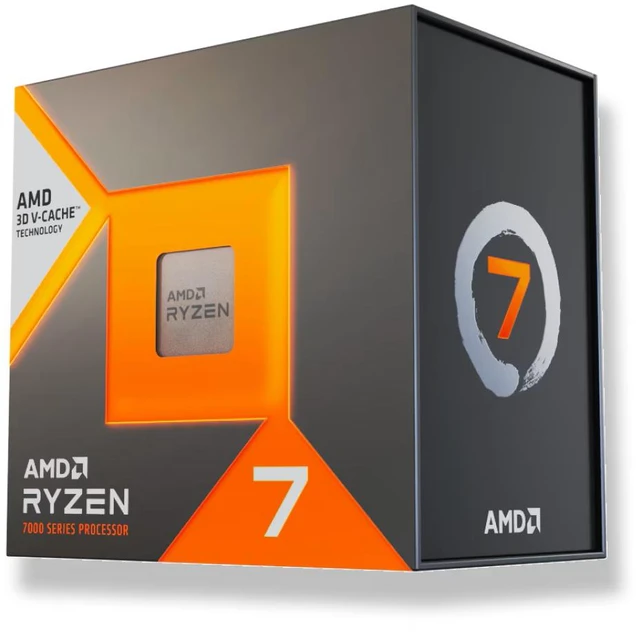
The Ryzen 7 7700X3D sits $21 under the ceiling and wins on the criterion that matters most. It is a Zen 4 chip with 8 cores and 16 threads, clocking 4.0 GHz base and 4.5 GHz boost, with 104MB of total cache of which 96MB is L3 thanks to AMD's 3D V-Cache. Compare that with the 40MB in the 7700X and the 38MB in the 9600X and the gap is not incremental, it is more than double.
What that buys you in practice is consistency. Peak frame rates in lightly threaded games are broadly similar across this whole list; what separates them is the one-percent-low figures, the moments when a big simulation tick or a crowded scene forces the CPU to fetch a lot of data at once. That is exactly where a 96MB L3 pool earns its keep, and it is the difference between gameplay that feels smooth and gameplay that feels almost smooth. Its 120W TDP is also modest enough for an ordinary tower air cooler, and at the time of writing the product page carries a limited-time offer that includes a Cooler Master Elite Liquid 240 AIO with purchase plus a 4% off coupon in the buy box, which matters because the retail box does not include a cooler.
Best for Mixed Work and Play: Core Ultra 7 265K, $314.98
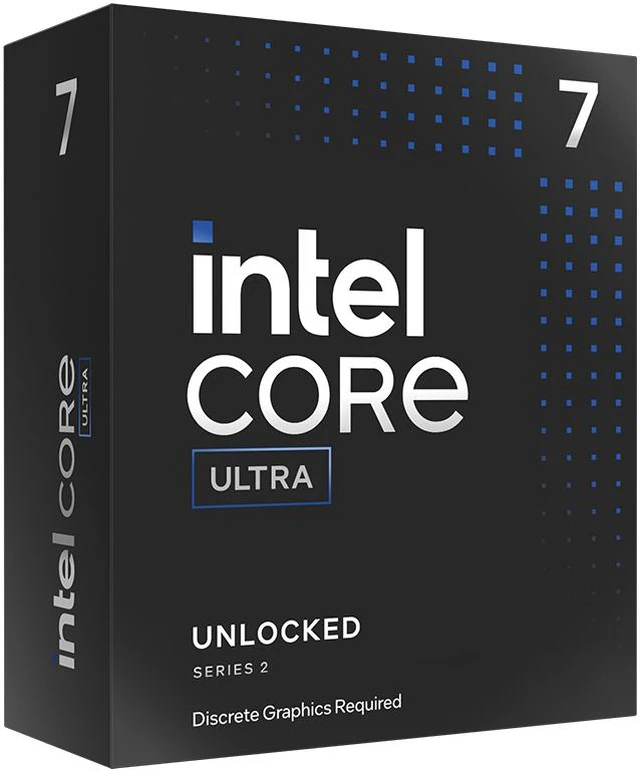
The Core Ultra 7 265K gives you 20 cores, arranged as 8 performance cores plus 12 efficiency cores, on LGA1851 at 125W, for $14 less than the 7700X3D. If your PC is a gaming machine that also renders video, compiles code or runs heavy exports, this is the better use of the money, because those efficiency cores do genuinely useful work in throughput tasks.
For pure gaming it is the weaker choice. Efficiency cores contribute little to frame rates, and Arrow Lake has no equivalent of 3D V-Cache to fall back on. Pick this chip if productivity is at least half of what the machine does; otherwise you are buying cores that sit idle while you play.
Best Value: Ryzen 7 7700X, $240.99
The Ryzen 7 7700X is the same eight-core Zen 4 layout as the 7700X3D but without the stacked cache, and it clocks higher as a result at 4.5 GHz base and 5.4 GHz boost. It costs $88 less. If you play games that are not especially cache-sensitive, or you are pairing it with a mid-range graphics card that will be the limiting factor anyway, this is a lot of processor for the money, and it also currently carries the free AIO cooler promotion.
The honest framing is that the $88 you save is real, and so is the frame consistency you give up in demanding simulation and strategy titles. If your budget genuinely stops at $250, take this and do not feel short-changed. If you can reach $329, the X3D chip is the better gaming buy.
Best Budget Picks: Core Ultra 5 245K at $214.99 and Ryzen 5 9600X at $199.99
The Core Ultra 5 245K offers 14 cores at $214.99 and currently ships with a free 240mm cooler promotion, which effectively removes a line item from your build. The Ryzen 5 9600X is the leanest option at $199.99: six Zen 5 cores boosting to 5.4 GHz at only 65W, which means it runs cool, sips power, and works happily with a cheap cooler. It also carries a Newegg promo code for extra savings.
Both are perfectly capable of driving a mid-range graphics card at 1440p. Their shared limitation is cache, and for the 9600X, six cores rather than eight, which becomes noticeable if you stream while playing or keep a lot of applications open behind the game.
Do Not Forget the Platform Cost
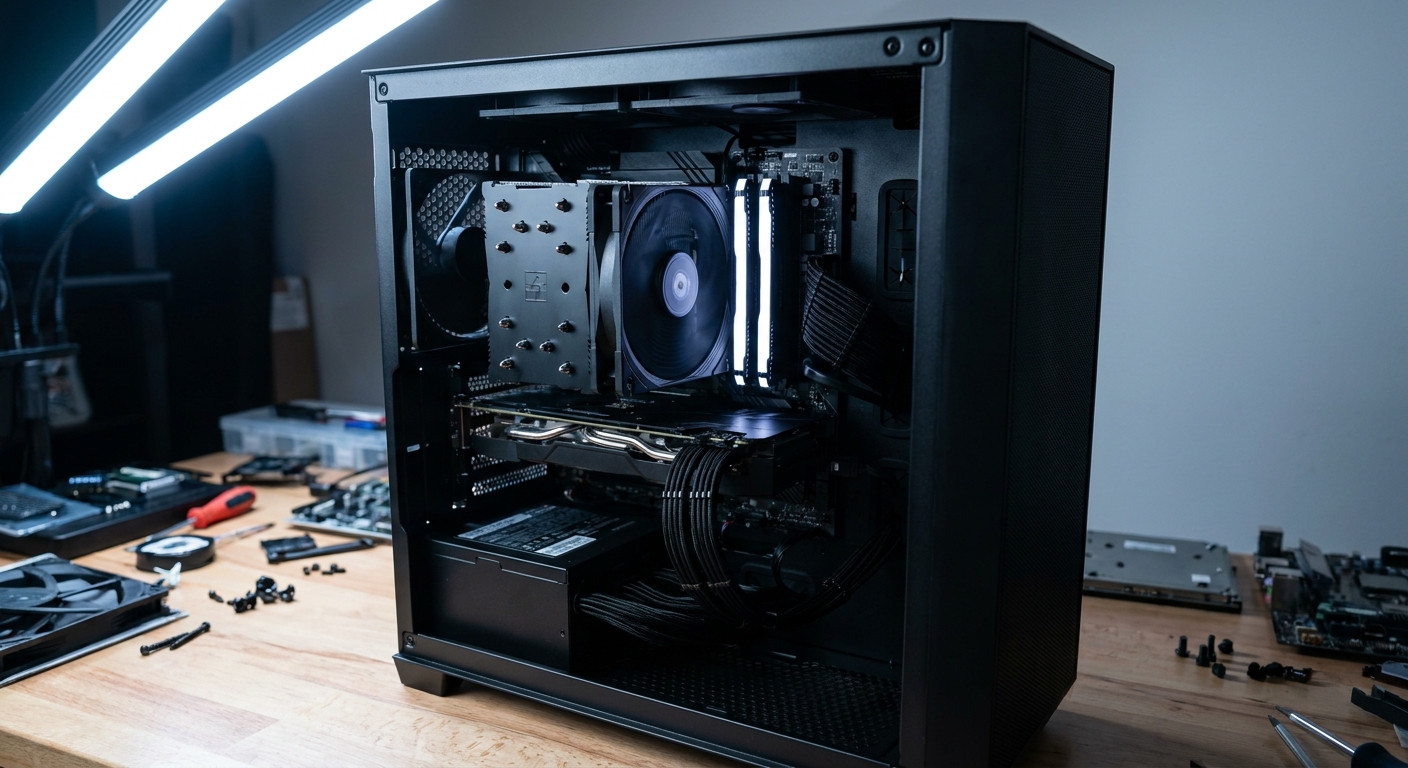
The chip is only part of the bill. An AM5 board can be as little as $109.99 for the ASRock B650M PRO RS, or $151.98 for the MSI B850 GAMING PLUS WIFI6E if you want Wi-Fi 6E and a newer chipset that ships with recent firmware. Factor in a cooler for any chip that does not include one, and remember to enable your memory's EXPO profile after the build, since DDR5 defaults to a slower speed until you do.
There is also a longevity argument. AM5 has been in service since 2022 and continues to receive new processors, which means an AM5 build today can take a CPU upgrade later without replacing the board and memory. You can compare current pricing across the field on Newegg's gaming CPU listings.
The Verdict
For gaming under $350, the Ryzen 7 7700X3D at $329 is the pick. Its 96MB L3 cache addresses the actual bottleneck in modern games, eight cores cover streaming and background applications, its 120W TDP keeps cooling simple, and AM5 leaves the door open for a future upgrade. Choose the Core Ultra 7 265K at $314.98 instead if you do serious productivity work, the Ryzen 7 7700X at $240.99 if your budget stops short, and the Ryzen 5 9600X at $199.99 if you want the lowest-power, lowest-cost entry into a current platform.
Read More
- Tom's Hardware: Best CPUs for Gaming — Independent rankings with frame-time and value analysis.
- AMD Official: Ryzen 7 7700X3D — Manufacturer specifications for cores, clocks and cache.
- Guru3D: Ryzen 7 7700X3D Review — Detailed benchmark results across gaming and productivity workloads.
- TechSpot: AM5 Motherboard Chipset Guide — What each AM5 chipset gives you, useful for platform budgeting.
- Newegg: Gaming CPUs — Browse and compare current processors by price and platform.
Frequently Asked Questions
Answers to the most common questions about choosing a gaming CPU under $350.