
Headsets are the one category where I trust spec sheets the least. Frequency response is quoted so loosely that it tells you almost nothing, and two headsets with identical 50mm drivers can sound entirely different. What the specs do tell you reliably is weight, connection type and range, and those three things decide whether you still want to be wearing it at hour four.
So instead of ranking these, I have sorted them by the situation you are in. That is closer to how people actually choose.
If You Wear It All Day
Weight is the whole game here, and the range on this list is wider than you would guess: from 8.32 ounces up to 0.88 pounds, which is a difference you feel on your neck by the evening.
The Logitech G535 LIGHTSPEED is the light one at 8.32 ounces, with 40mm drivers, 2.4GHz wireless rated to just under 40 feet, a 20Hz to 20KHz response and a flip-to-mute microphone. It is an on-ear design rather than over-ear, which some people prefer and some find warm after a while.
The Logitech G733 LIGHTSPEED is 0.61 pounds with PRO-G 40mm drivers and a suspension headband that spreads the weight rather than concentrating it on one spot. Range is up to 20 metres on 2.4GHz LIGHTSPEED. If you have a head shape that fights conventional headbands, this is the design worth trying.
If You Care About How It Sounds
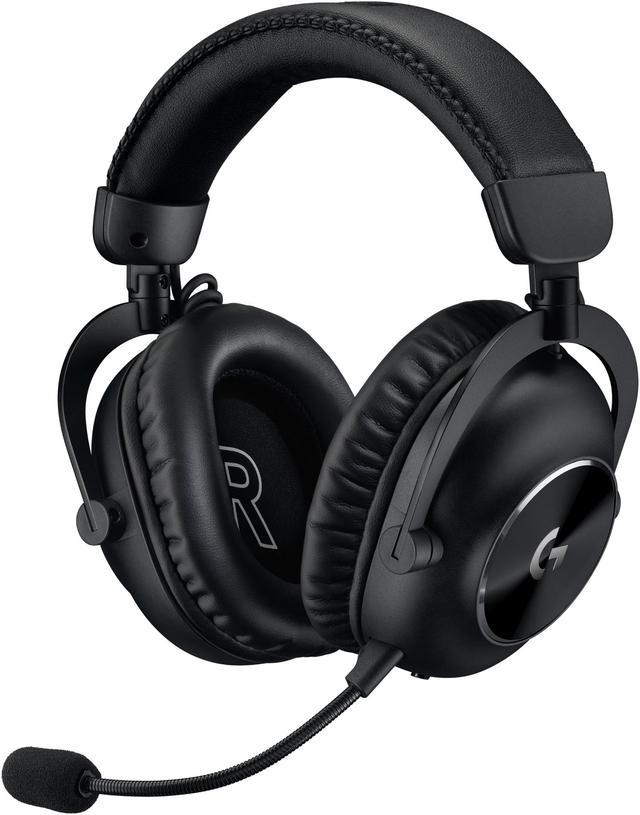
The Logitech G PRO X 2 LIGHTSPEED is the most complete headset here. Fifty-millimetre graphene drivers, DTS:X 7.1 surround, a detachable microphone, and it works over 2.4GHz LIGHTSPEED at up to 30 metres, over USB, or over a 3.5mm cable. At 345 grams it is not the lightest, but the clamp is even and it disappears after a while.
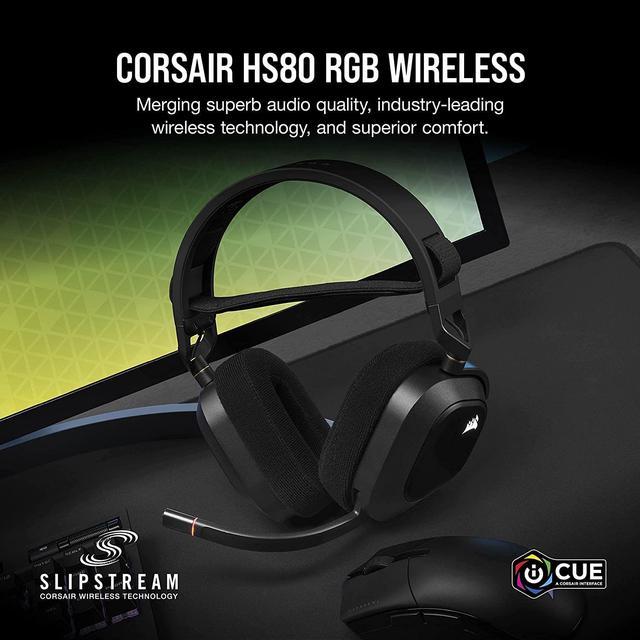
The Corsair HS80 RGB Wireless is the one I recommend to people who talk as much as they listen. Custom 50mm neodymium drivers with a quoted 20Hz to 40KHz range, Dolby Atmos spatial audio, a 1500mAh battery, 2.4GHz wireless to about 60 feet, and a microphone with a 100Hz to 10KHz response and minus 40dB sensitivity that genuinely does sound like a desk mic.
The CORSAIR VIRTUOSO RGB WIRELESS XT adds Bluetooth 5.0 alongside the 2.4GHz connection and a 3.5mm input, so you can take a call on your phone without unplugging anything. Same 50mm drivers and 20Hz to 40KHz range, 1500mAh battery, 18 metres on 2.4GHz and 9 metres over Bluetooth, at 0.84 pounds.
If You Play on More Than One Device
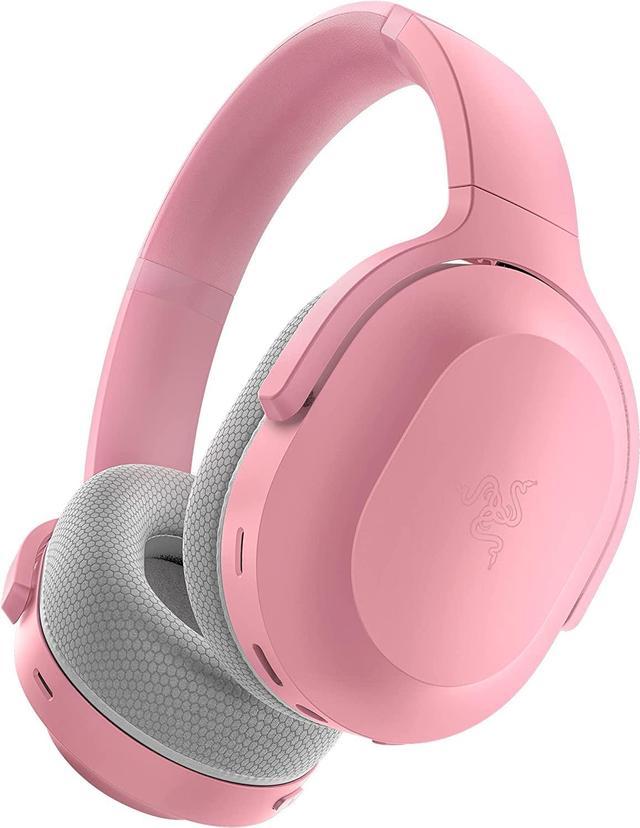
The Razer Barracuda is the obvious pick if your gaming is spread across hardware. It connects over USB-C 2.4GHz wireless, Bluetooth 5.2, or a 3.5mm analogue cable, with 50mm drivers, an integrated noise-cancelling microphone rated at minus 38dB, and a 300 gram weight. The USB-C dongle is the part that matters, because it plugs directly into a handheld or a phone.
The SteelSeries Arctis 1 Wireless works the same way with a USB-C receiver and a 3.5mm fallback, plus a detachable ClearCast microphone. It is 0.62 pounds and the simplest headset on this page, which is not a criticism.
If You Just Want It to Work
The Corsair VOID RGB ELITE Wireless is a straightforward 2.4GHz headset with custom 50mm neodymium drivers, a 20Hz to 30KHz range and a microphone rated at minus 42dB. No Bluetooth, no wired mode, no decisions. At 0.88 pounds it is the heaviest here, so try it on if you can.
The Thing Nobody Puts on the Box
Two practical details decide more returns than driver size does. The first is where the receiver goes. A USB-A dongle plugged into the back of a tower has to get its signal through a steel case and a desk, which is why a headset rated to 60 feet can still crackle at eight. Front-panel port, or a short extension cable to somewhere with line of sight, fixes most of what people report as a faulty headset.
The second is charging. A headset with a fixed battery and a single USB port is a headset you will occasionally have to plug in mid-session, and whether that is annoying depends entirely on whether it still works while charging. The Corsair models here carry 1500mAh cells and charge over USB while in use. The Razer Barracuda and SteelSeries Arctis 1 both keep a 3.5mm cable as a fallback, which is the simplest insurance against a flat battery in the middle of something.
What I Would Pick
Long sessions, comfort above all: G535 for the weight, G733 if the headband suits you. Best all-round sound and the most connection options: G PRO X 2 LIGHTSPEED. Talking on stream or in calls: HS80 RGB Wireless. Moving between PC, console and phone: Razer Barracuda. One device, no fuss: VOID RGB ELITE.
One thing worth saying because it saves returns: nearly every headset here quotes a 100Hz to 10KHz microphone response, which means the microphone is not what separates them. Fit is. If you can try a pair on before committing, do that first. The full range is in Newegg’s wireless gaming headset listings.
Frequently Asked Questions
Is 2.4GHz wireless better than Bluetooth for gaming? Yes, for latency. A dedicated 2.4GHz receiver is designed for low-latency audio, which is why every headset here uses one for its primary connection. Bluetooth is the convenience option for phones and calls, which is why headsets like the VIRTUOSO RGB WIRELESS XT and Razer Barracuda offer both rather than choosing.
Does headset weight really matter? More than most specs on the box. The range here runs from 8.32 ounces on the Logitech G535 to 0.88 pounds on the Corsair VOID RGB ELITE, and over a long session that difference shows up as pressure on the top of your head. Headband design matters too, which is why suspension designs like the G733 suit some people better than a conventional padded band.
What does the microphone frequency response tell me? Less than you would hope. Almost every headset here lists 100Hz to 10KHz, which is the standard voice range, so the number does not separate them. Sensitivity figures such as minus 40dB on the HS80 and minus 38dB on the Razer Barracuda are slightly more informative, but the real differences come from capsule quality and software processing rather than published specs.
Can I use a wireless gaming headset with a console or handheld? It depends on the receiver. Headsets with a USB-C dongle, like the Razer Barracuda and SteelSeries Arctis 1 Wireless, plug directly into many handhelds and consoles. Headsets with a USB-A receiver need a port that accepts it. A 3.5mm fallback, which several of these have, covers anything else.
How long do these batteries last? Battery capacity is quoted for some models and not others, with the Corsair HS80 and VIRTUOSO XT both listing 1500mAh lithium cells. Real-world life depends heavily on volume and whether RGB lighting is on, so treat manufacturer hour figures as a best case. Turning the lighting off is the single biggest change you can make.
Read More
- RTINGS: The Best PC Gaming Headsets — Lab-measured frequency response, microphone recordings and comfort testing across wireless models.
- Tom’s Hardware: PC Peripherals — Peripheral reviews and buying advice, including gaming audio.
- Logitech G: PRO X 2 LIGHTSPEED Wireless Headset — Manufacturer specifications including driver material, weight and wireless range.
- Corsair: Gaming Headsets — Official product pages for the HS80 RGB Wireless and VIRTUOSO RGB WIRELESS XT.
- Newegg: Wireless Gaming Headsets — Compare current models by connection type, driver size and weight.