
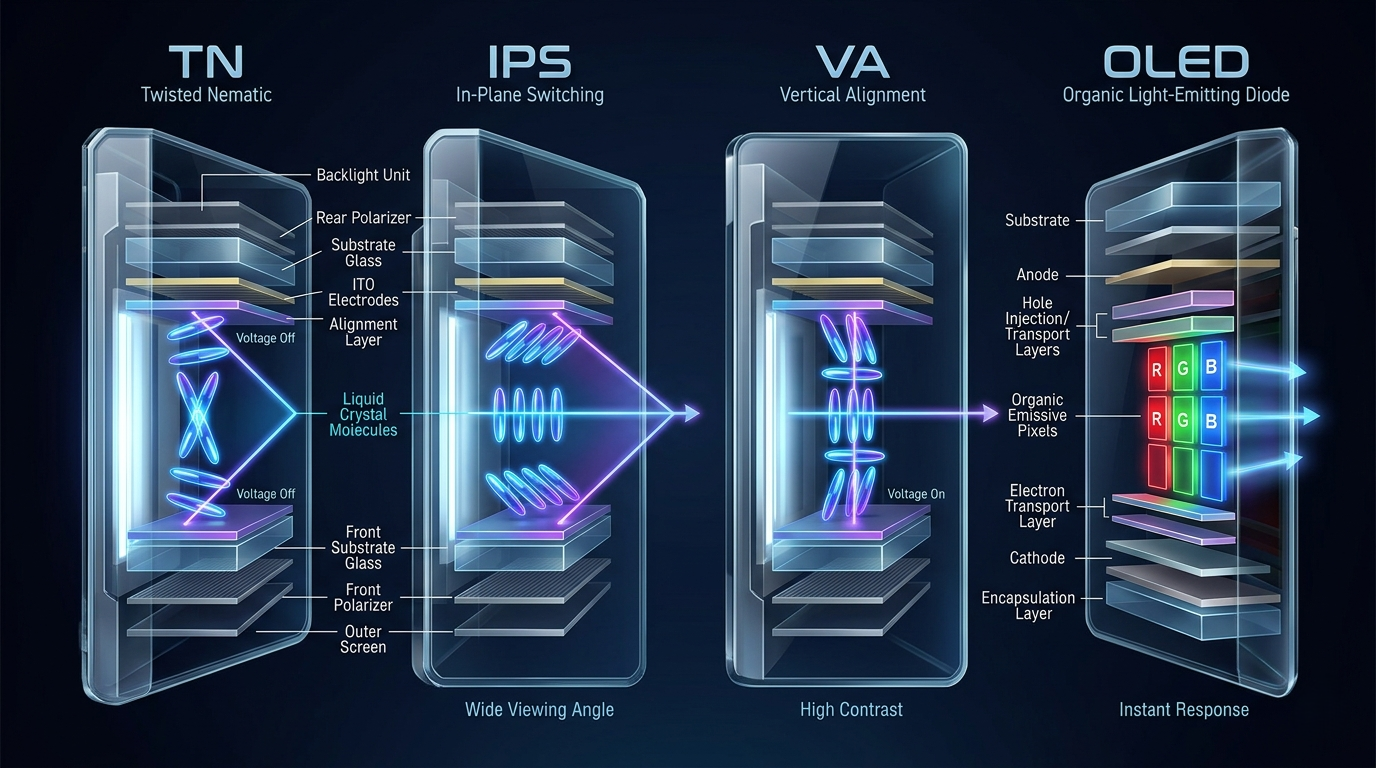
The gaming monitor landscape has evolved dramatically, and in 2026, the choice between IPS, VA, TN, and OLED panels has become more nuanced than ever. With AI-powered display optimization now standard in premium models and new manufacturing techniques pushing boundaries, understanding these technologies is crucial for making an informed purchase decision.
The Four Panel Technologies: Technical Foundation
Each panel technology uses distinct methods to control light and color, fundamentally affecting your gaming experience. Let’s explore how these technologies work and what they mean for modern gaming.
TN (Twisted Nematic): The Speed Champion
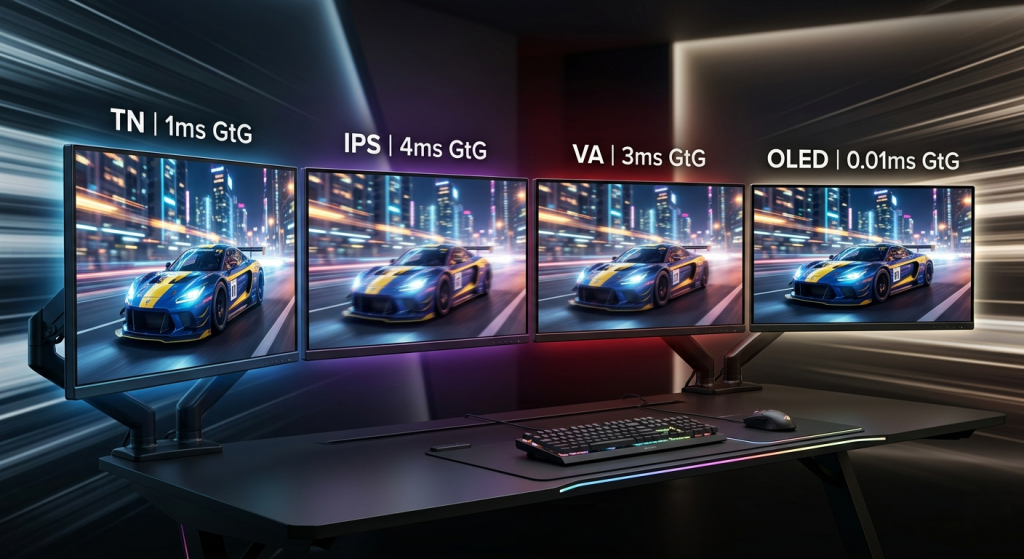
TN panels remain the fastest option available, with response times as low as 0.5ms in 2026 models. These panels work by twisting liquid crystal molecules to control light passage, offering exceptional pixel transition speeds. However, they sacrifice color accuracy and viewing angles for this speed advantage.
Competitive esports players still favor TN panels for titles like Counter-Strike 2 and Valorant, where every millisecond matters. If you’re serious about competitive gaming, check out high-refresh-rate TN monitors that deliver the responsiveness professionals demand.
IPS (In-Plane Switching): The Color Accuracy Leader
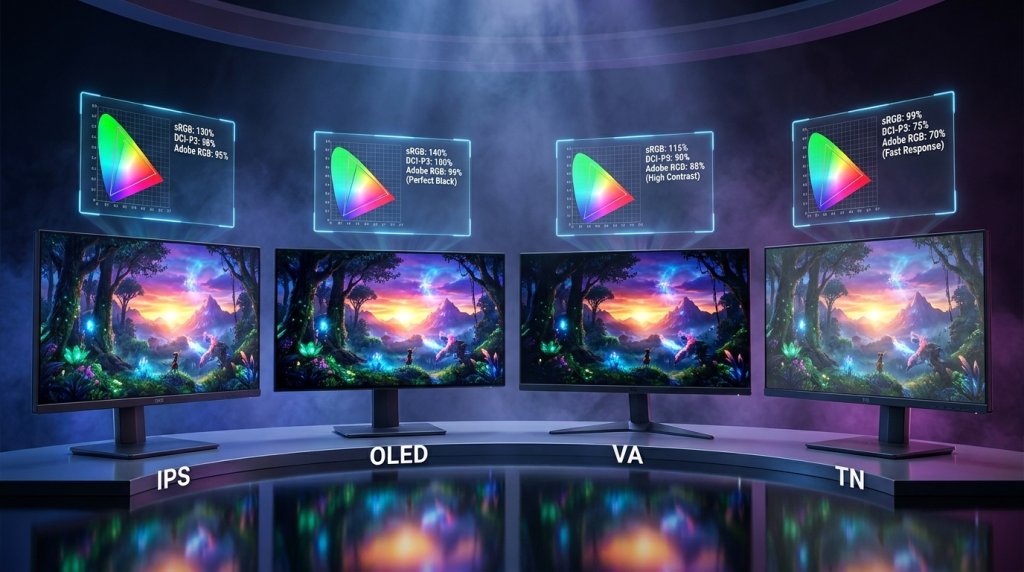
IPS technology has undergone significant improvements, with Fast IPS and Nano IPS variants now offering response times competitive with TN panels. These panels excel in color reproduction, typically covering 99% or more of the sRGB color space and increasingly supporting wide color gamuts for HDR content.
The latest AI-enhanced IPS panels in 2026 use machine learning algorithms to predict pixel transitions and reduce ghosting, making them viable for both competitive gaming and content creation. For versatile gaming setups, explore IPS gaming monitors that balance performance with visual quality.
VA (Vertical Alignment): The Contrast King
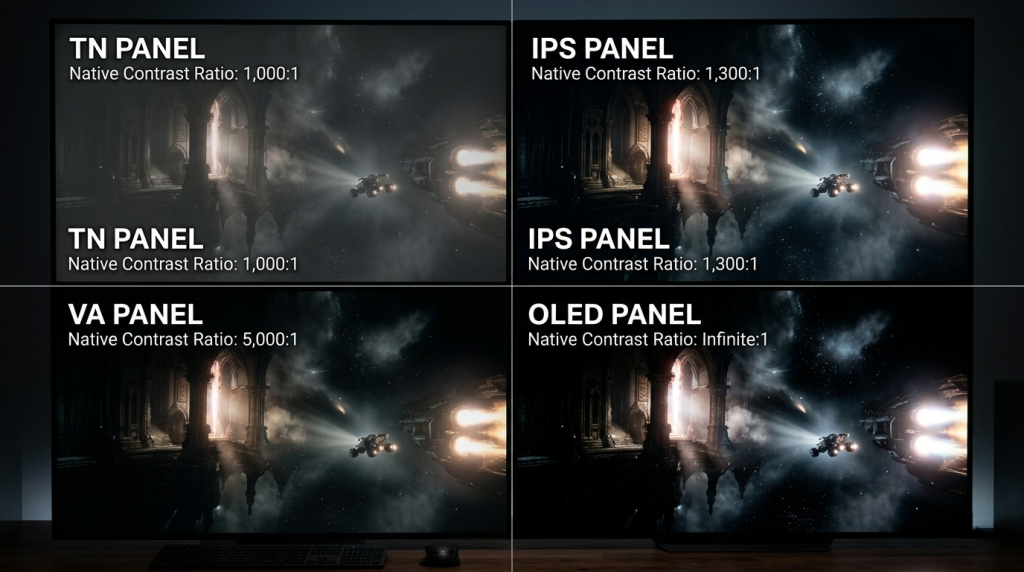
VA panels deliver the highest native contrast ratios among LCD technologies, typically ranging from 3000:1 to 5000:1. This makes them particularly effective for HDR gaming and immersive single-player experiences where deep blacks enhance atmosphere.
Modern VA panels have addressed previous motion blur concerns through advanced backlight scanning and overdrive technologies. For cinematic gaming experiences, curved VA monitors provide exceptional immersion with their superior contrast performance.
OLED: The Premium All-Rounder
OLED technology represents the pinnacle of display quality in 2026, offering per-pixel lighting control, infinite contrast ratios, and response times below 0.1ms. Recent manufacturing improvements have significantly reduced burn-in risk, with AI-driven pixel refresh algorithms and improved organic materials extending panel lifespan.
The integration of OLED technology in gaming monitors has accelerated, with prices becoming more accessible while maintaining premium performance characteristics.
Performance Comparison Table
| Panel Type | Response Time | Contrast Ratio | Color Accuracy | Viewing Angles | Best Use Case |
|---|---|---|---|---|---|
| TN | 0.5-1ms | 700:1-1000:1 | Good | Limited | Competitive Esports |
| IPS | 1-4ms | 1000:1-1500:1 | Excellent | Wide | Balanced Gaming & Content |
| VA | 3-5ms | 3000:1-5000:1 | Very Good | Moderate | Immersive Single-Player |
| OLED | <0.1ms | Infinite | Excellent | Wide | Premium All-Purpose |
2026 Industry Developments
The display industry has witnessed remarkable innovations this year. AI-powered adaptive refresh technologies now work seamlessly with both NVIDIA GPUs and AMD hardware, optimizing panel behavior based on content type.
Recent announcements from major manufacturers indicate that hybrid panel technologies combining VA contrast with IPS color accuracy are entering mass production. These quantum dot enhanced panels promise to deliver 95% of OLED’s visual quality at significantly lower cost points.
Adaptive Sync Technology Integration
Modern panels work in conjunction with adaptive sync technologies to eliminate screen tearing. G-Sync compatible monitors now support variable refresh rates from 1Hz to 480Hz, while FreeSync Premium models offer similar capabilities with broader GPU compatibility.
HDR Performance Considerations
HDR implementation varies significantly across panel technologies. HDR gaming monitors with VESA DisplayHDR 1000 certification or higher deliver the most impressive results, with OLED panels naturally excelling in this area due to their infinite contrast and precise local dimming capabilities.
IPS and VA panels require full-array local dimming (FALD) zones to achieve comparable HDR performance, with 2026 models featuring up to 2,304 dimming zones in premium displays.
Screen Size and Panel Technology Synergy
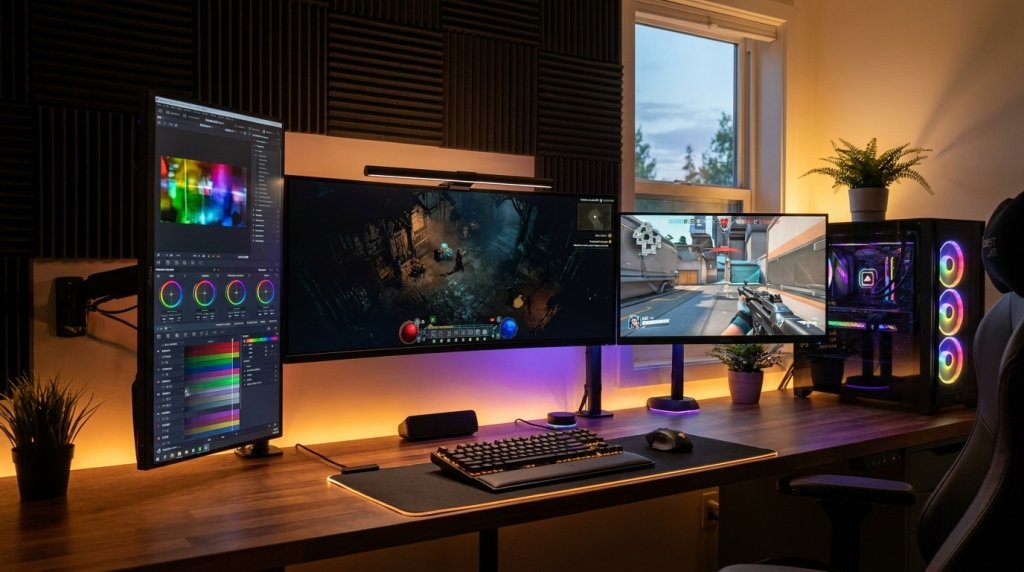
The relationship between panel technology and screen size matters for optimal viewing experience. For desktop gaming at typical viewing distances, 24-26 inch monitors work well with TN and IPS panels, while ultra-wide 33+ inch displays benefit from VA’s superior contrast or OLED’s uniformity.
For truly immersive experiences, 39+ inch gaming monitors utilizing VA or OLED technology deliver cinematic gaming environments.
Making Your Choice in 2026
Your ideal panel technology depends on your gaming priorities and budget. Competitive players should prioritize TN or Fast IPS panels with high refresh rates. Single-player enthusiasts benefit from VA’s contrast or OLED’s perfect blacks. Content creators and versatile users find IPS panels offer the best balance.
The good news is that 2026’s panel technologies have converged in performance more than ever before, meaning any modern gaming monitor from reputable manufacturers will deliver excellent results. Consider your specific use case, available GPU hardware, and viewing environment when making your selection.