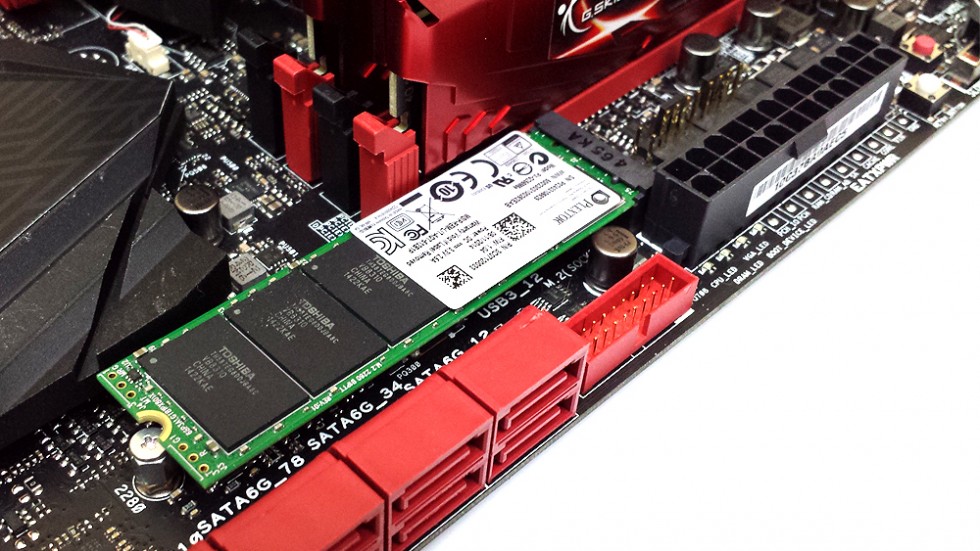
 Computer expansion cards continue to shrink and solid state drives (SSDs) are taking the lead with the M.2 SSD form factor. No longer relegated to simply being mounted in drive bays or large expansion slots, SSDs and other add-in cards continue the trend of smaller is better.
The M.2 specification is not only used for SSDs, but also for Wi-Fi, Bluetooth®, NFC, and other internally-mounted cards. The interfaces available include USB 3.0 (backward compatible to USB 2.0), SATA 3.0, and NVMe.
The availability of NVMe on M.2 is a boon to SSDs since SATA (6 Gbps) has proven to be an impediment to full SSD performance. The NVMe driver uses up to four PCI Express lanes for potential data transfers at much higher speeds than SATA can practically achieve due to being interfaced through older AHCI technology that was designed for the slower spinning media of traditional hard drives.
The M.2 design was specifically aimed at SSDs and future memory technologies to overcome the bottleneck of the older technology while shrinking the form factor. PCI Express 3.0 with 4 lanes will achieve 32 Gbps transfer rates, which should satisfy SSD needs for the next few years of advancements.
Computer expansion cards continue to shrink and solid state drives (SSDs) are taking the lead with the M.2 SSD form factor. No longer relegated to simply being mounted in drive bays or large expansion slots, SSDs and other add-in cards continue the trend of smaller is better.
The M.2 specification is not only used for SSDs, but also for Wi-Fi, Bluetooth®, NFC, and other internally-mounted cards. The interfaces available include USB 3.0 (backward compatible to USB 2.0), SATA 3.0, and NVMe.
The availability of NVMe on M.2 is a boon to SSDs since SATA (6 Gbps) has proven to be an impediment to full SSD performance. The NVMe driver uses up to four PCI Express lanes for potential data transfers at much higher speeds than SATA can practically achieve due to being interfaced through older AHCI technology that was designed for the slower spinning media of traditional hard drives.
The M.2 design was specifically aimed at SSDs and future memory technologies to overcome the bottleneck of the older technology while shrinking the form factor. PCI Express 3.0 with 4 lanes will achieve 32 Gbps transfer rates, which should satisfy SSD needs for the next few years of advancements.
M.2 SSD Form Factor Yields Smaller Drives and Faster Data Transfers
This article was written by Scott Roy Smith and was originally published on HardBoiled.
Computer expansion cards continue to shrink and solid state drives (SSDs) are taking the lead with the M.2 SSD form factor. No longer relegated to simply being mounted in drive bays or large expansion slots, SSDs and other add-in cards continue the trend of smaller is better.
The M.2 specification is not only used for SSDs, but also for Wi-Fi, Bluetooth®, NFC, and other internally-mounted cards. The interfaces available include USB 3.0 (backward compatible to USB 2.0), SATA 3.0, and NVMe.
The availability of NVMe on M.2 is a boon to SSDs since SATA (6 Gbps) has proven to be an impediment to full SSD performance. The NVMe driver uses up to four PCI Express lanes for potential data transfers at much higher speeds than SATA can practically achieve due to being interfaced through older AHCI technology that was designed for the slower spinning media of traditional hard drives.
The M.2 design was specifically aimed at SSDs and future memory technologies to overcome the bottleneck of the older technology while shrinking the form factor. PCI Express 3.0 with 4 lanes will achieve 32 Gbps transfer rates, which should satisfy SSD needs for the next few years of advancements.
Computer expansion cards continue to shrink and solid state drives (SSDs) are taking the lead with the M.2 SSD form factor. No longer relegated to simply being mounted in drive bays or large expansion slots, SSDs and other add-in cards continue the trend of smaller is better.
The M.2 specification is not only used for SSDs, but also for Wi-Fi, Bluetooth®, NFC, and other internally-mounted cards. The interfaces available include USB 3.0 (backward compatible to USB 2.0), SATA 3.0, and NVMe.
The availability of NVMe on M.2 is a boon to SSDs since SATA (6 Gbps) has proven to be an impediment to full SSD performance. The NVMe driver uses up to four PCI Express lanes for potential data transfers at much higher speeds than SATA can practically achieve due to being interfaced through older AHCI technology that was designed for the slower spinning media of traditional hard drives.
The M.2 design was specifically aimed at SSDs and future memory technologies to overcome the bottleneck of the older technology while shrinking the form factor. PCI Express 3.0 with 4 lanes will achieve 32 Gbps transfer rates, which should satisfy SSD needs for the next few years of advancements.