
The GeForce RTX 5070 Ti launched as NVIDIA’s highest-value proposition in the Blackwell generation — faster than the RTX 5070 without crossing into RTX 5080 pricing territory. But the market has been complicated by supply constraints and fluctuating prices since launch. This FAQ-style guide answers the questions PC builders and upgraders are actually asking about the RTX 5070 Ti in June 2026.
What Are the RTX 5070 Ti’s Specs?
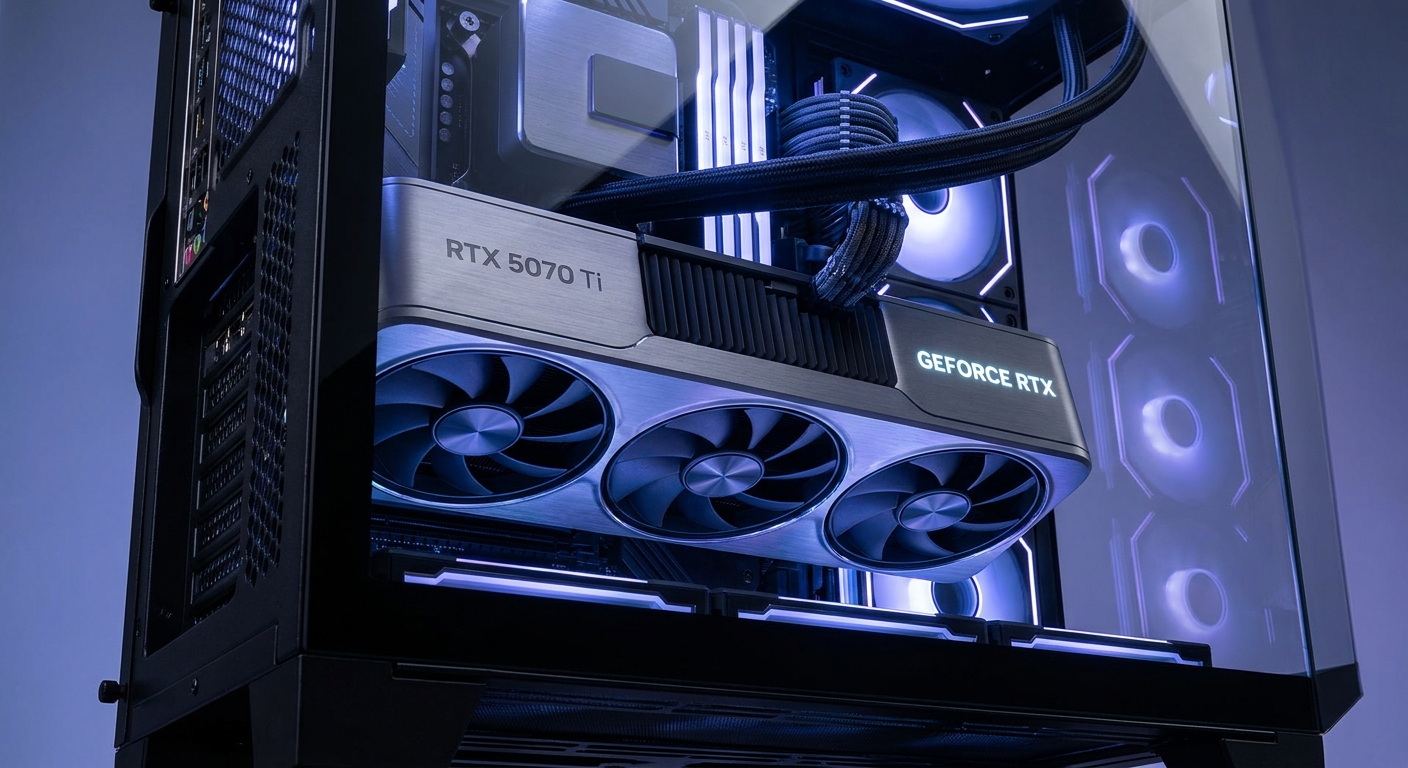
The RTX 5070 Ti is built on NVIDIA’s Blackwell architecture and uses the GB203 die — the same chip family as the RTX 5080, configured with 8,960 CUDA cores versus the 5080’s 10,752. Key specifications: 16GB GDDR7 memory on a 256-bit bus, Boost Clock around 2,572 MHz (varies by AIB), 300W TDP, and a 16-pin power connector. It supports PCIe 5.0, DLSS 4 with Multi-Frame Generation, and DisplayPort 2.1b for 8K output.
How Does the RTX 5070 Ti Perform vs. the RTX 5080?
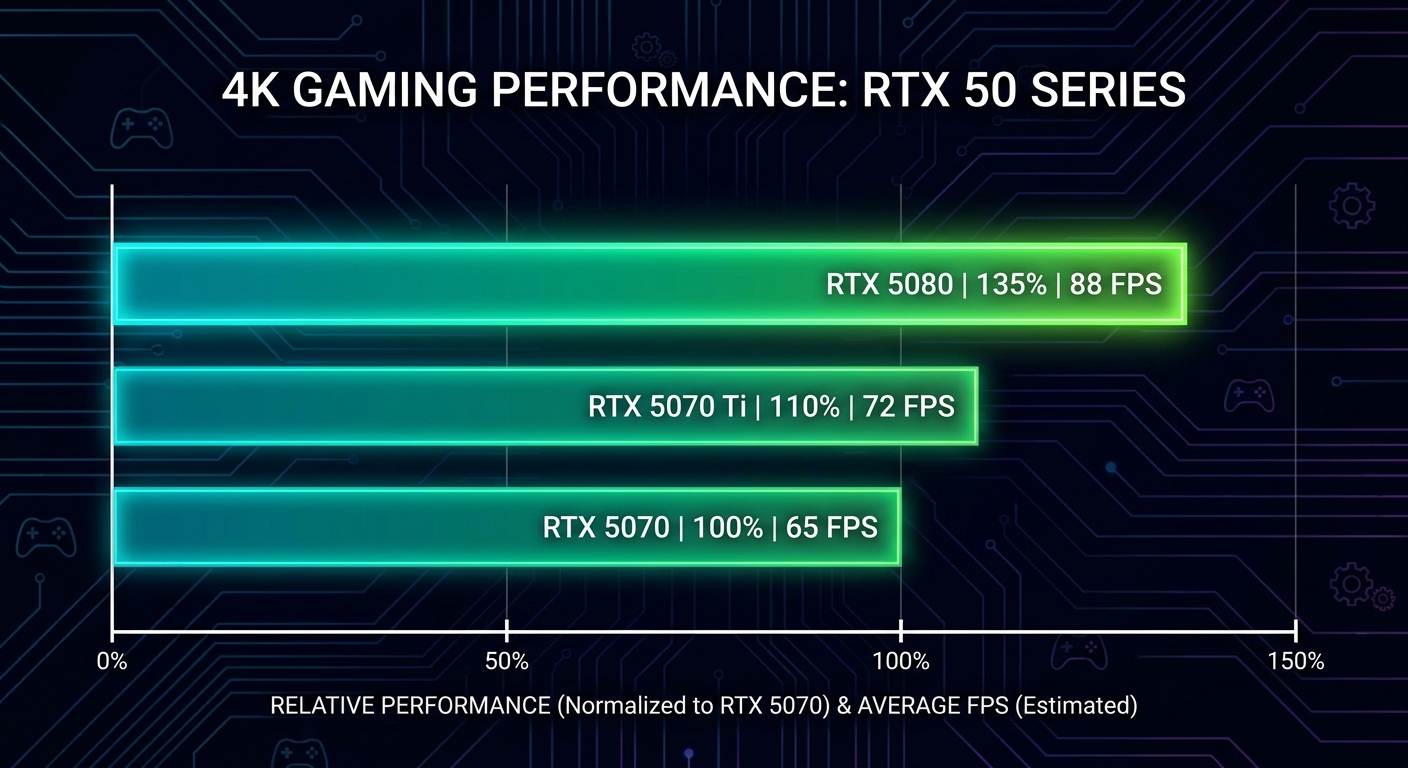
In rasterized gaming at 4K, the RTX 5070 Ti typically delivers 85–90% of RTX 5080 performance while costing significantly less. The gap widens slightly in memory-bandwidth-heavy workloads because the RTX 5080 uses a 256-bit bus at higher clocks. For pure gaming, the RTX 5070 Ti is close enough to the 5080 that most players cannot tell the difference at 1440p or 4K — unless they are benchmarking side by side.
With DLSS 4 Multi-Frame Generation enabled, both cards produce more frames than any display can show at standard resolutions, making the raw performance difference even less meaningful in practice. The RTX 5080 earns its premium primarily in ray tracing-heavy titles and content creation workloads like 3D rendering and video encoding.
How Does It Compare to the RTX 5070 (Non-Ti)?
The RTX 5070 (12GB GDDR7, 6,144 CUDA cores) is the step below, and the performance gap is more noticeable here — approximately 20–25% at 4K rasterization. For 4K gaming at Ultra settings, the RTX 5070 Ti is the better choice. For 1440p or DLSS-assisted 4K where raw headroom matters less, the RTX 5070 can save you $150–$200 at current pricing.
What Is the RTX 5070 Ti’s Price Right Now?
As of June 2026, the RTX 5070 Ti is priced at MSRP of $749 but real-world availability has pushed prices higher. On Newegg, the MSI Gaming Trio OC is listed at $1,049.99 from Newegg directly (currently showing out of stock at that price), with marketplace sellers listing at $1,299–$1,420. Supply has been constrained since launch. If you are waiting for prices to drop closer to MSRP, availability has been improving gradually through 2026.
Is the RTX 5070 Ti Worth Buying in 2026?
At MSRP ($749), the RTX 5070 Ti is an excellent value — one of the best GPU launches NVIDIA has had in this performance tier in years. At current street prices ($1,000–$1,200), it remains competitive with the RTX 5080 only if the RTX 5080 is also at elevated prices. Before buying at over-MSRP pricing, check whether the RTX 5080 has come down to near its own MSRP ($999) — at that point, the RTX 5080 becomes the better buy.
Best RTX 5070 Ti Cards on Newegg Right Now
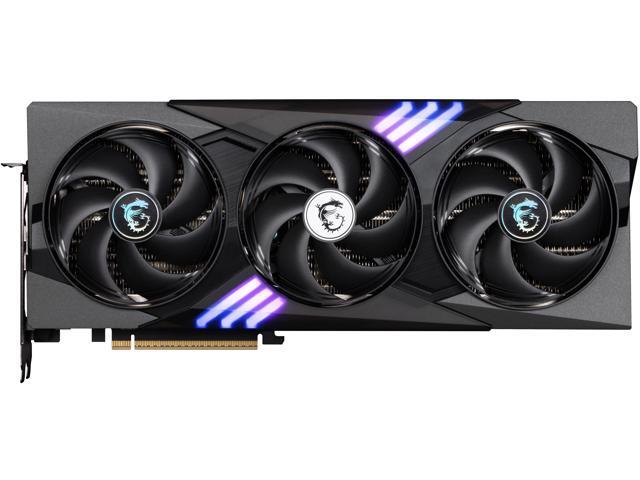
MSI Gaming Trio OC RTX 5070 Ti ($1,049.99 — Newegg listed)
The MSI Gaming Trio OC is one of the most popular RTX 5070 Ti variants, offering a 338mm triple-fan cooler, Boost Clock of 2,572 MHz, and excellent thermal performance under sustained gaming loads. Specs confirmed: 8,960 CUDA cores, 16GB GDDR7 256-bit, 300W TDP.
MSI Ventus 3X OC RTX 5070 Ti ($979.99)
The MSI Ventus 3X OC at $979.99 is the more affordable MSI option with a cleaner aesthetic and the same CUDA core count. It runs slightly warmer than the Gaming Trio under sustained load but is otherwise identical in gaming performance.
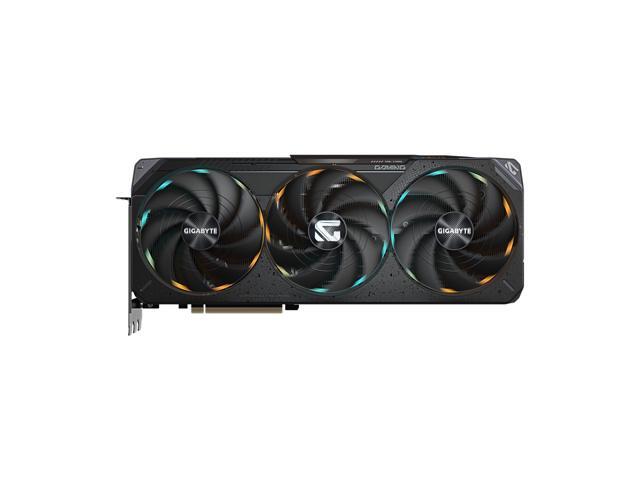
GIGABYTE Gaming OC RTX 5070 Ti
The GIGABYTE Gaming OC offers the WINDFORCE 3X cooling system and competitive pricing. Check Newegg for current availability as stock fluctuates weekly.
What PSU Do I Need for the RTX 5070 Ti?
NVIDIA recommends a 750W PSU for the RTX 5070 Ti (300W TDP). In practice, a quality 850W PSU provides comfortable headroom when paired with a modern CPU (65–125W TDP) and other system components. Avoid running a 5070 Ti on a 650W PSU — the card’s power spikes during gaming can exceed comfortable margins on lower-wattage units, causing stability issues.
Does the RTX 5070 Ti Need PCIe 5.0?
No. The RTX 5070 Ti runs on PCIe 5.0 x16 electrically, but it is backward compatible with PCIe 4.0 x16 with less than 1% performance difference in gaming. PCIe 3.0 x16 can show slight bandwidth constraints at 4K in some titles, but the difference is still under 5%. If you have a PCIe 4.0 Z790 or X670 motherboard, your card will run at full effective performance.
Final Verdict
The RTX 5070 Ti is one of the best GPUs in NVIDIA’s Blackwell lineup for enthusiast 4K gaming — positioned intelligently between the 5070 and 5080 in both price and performance. If you can find it close to MSRP, buy it. At current elevated market prices, compare it against RTX 5080 availability before committing. Browse all RTX 5070 Ti cards on Newegg for the latest prices and availability.
Related Posts
- RTX 5070 Ti vs RTX 5080: Which GPU Should You Buy in 2026?
- DDR5 Got Expensive. Here Is the Memory Kit I Would Buy in 2026
- Best Gaming Monitors in 2026
- Best NVMe SSDs in 2026
- GPU Prices Climbed Again. Here Is What I Would Buy in 2026
Frequently Asked Questions
Common questions about the NVIDIA GeForce RTX 5070 Ti in 2026.