
Two Great GPUs, One Clear Winner for Your Needs
The GPU market in 2026 has never been more competitive at the 1440p tier. NVIDIA’s GeForce RTX 5070 and AMD’s Radeon RX 9070 XT are the two most talked-about mid-to-high-end cards right now, and for good reason: both deliver exceptional 1440p performance at prices that, while not cheap, represent genuine value compared to flagship options. The RTX 5070 starts at $609.99 on Newegg, while the RX 9070 XT starts at $699.99. But price alone does not tell the whole story.
This head-to-head breakdown covers raw gaming performance, ray tracing capability, feature ecosystems, power efficiency, and long-term value. By the end, you will know exactly which card suits your build.
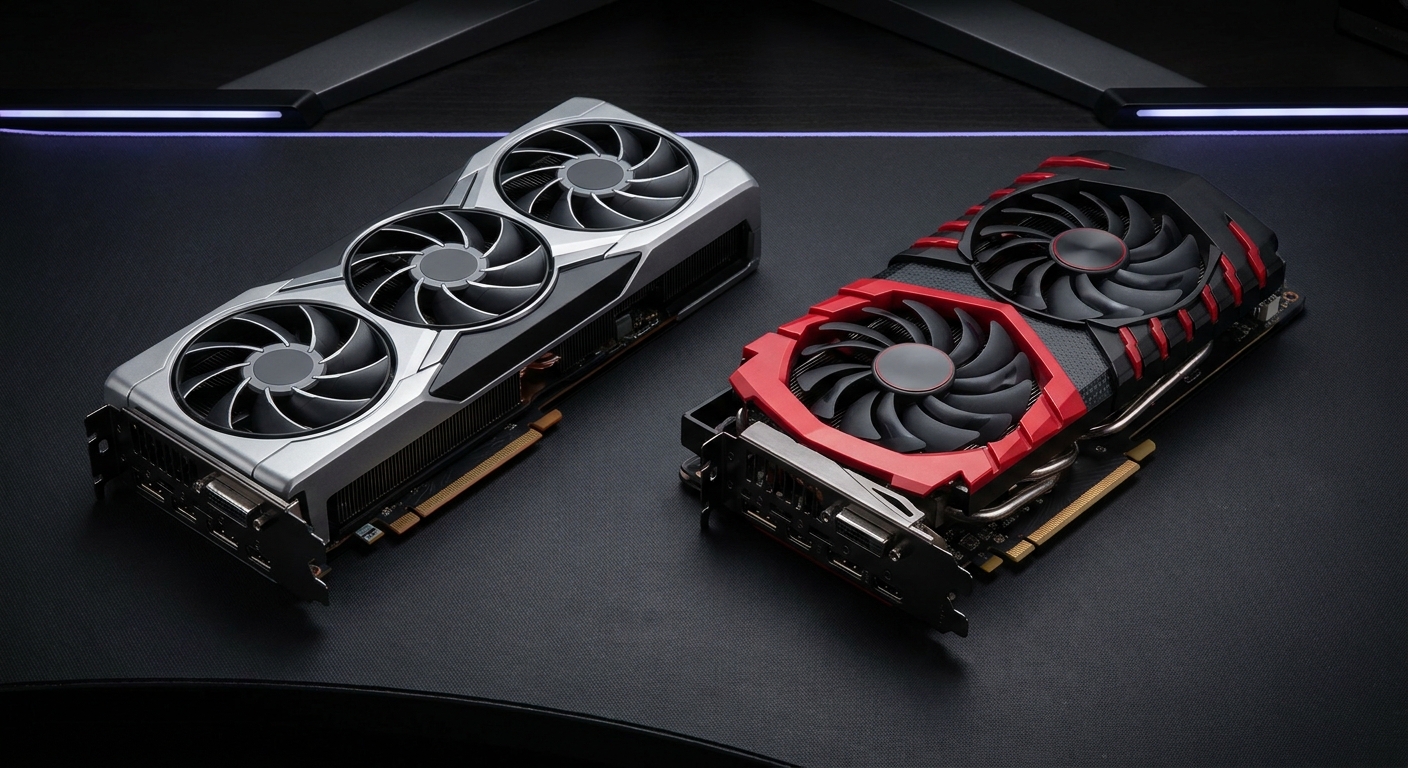
Contenders Overview
NVIDIA GeForce RTX 5070
Built on NVIDIA’s Blackwell architecture, the RTX 5070 brings 8,960 CUDA Cores, 12GB of ultra-fast GDDR7 memory on a 192-bit bus, and a memory bandwidth of 896 GB/s. Its total board power sits at 250W. The card ships with fifth-generation Tensor Cores for AI workloads and DLSS 4, which now includes Multi Frame Generation. NVIDIA positions this card as a capable 1440p and even light 4K performer.
AMD Radeon RX 9070 XT
The RX 9070 XT is AMD’s RDNA 4 flagship for the mainstream market. It carries 16GB of GDDR6 memory on a 256-bit bus, offering more VRAM headroom than the RTX 5070. Boost clock speeds reach 2.97GHz, and AMD’s FSR 4 upscaling technology has made significant strides in quality. The card’s TBP is 304W.
Side-by-Side Specification Comparison
| Spec | RTX 5070 | RX 9070 XT |
|---|---|---|
| Architecture | Blackwell | RDNA 4 |
| VRAM | 12GB GDDR7 | 16GB GDDR6 |
| Memory Bus | 192-bit | 256-bit |
| Memory Bandwidth | 896 GB/s | ~717 GB/s |
| TBP | 250W | 304W |
| Upscaling | DLSS 4 (MFG) | FSR 4 |
| Starting Price (Newegg) | $609.99 | $699.99 |
Deep Dive: Rasterization Performance at 1440p
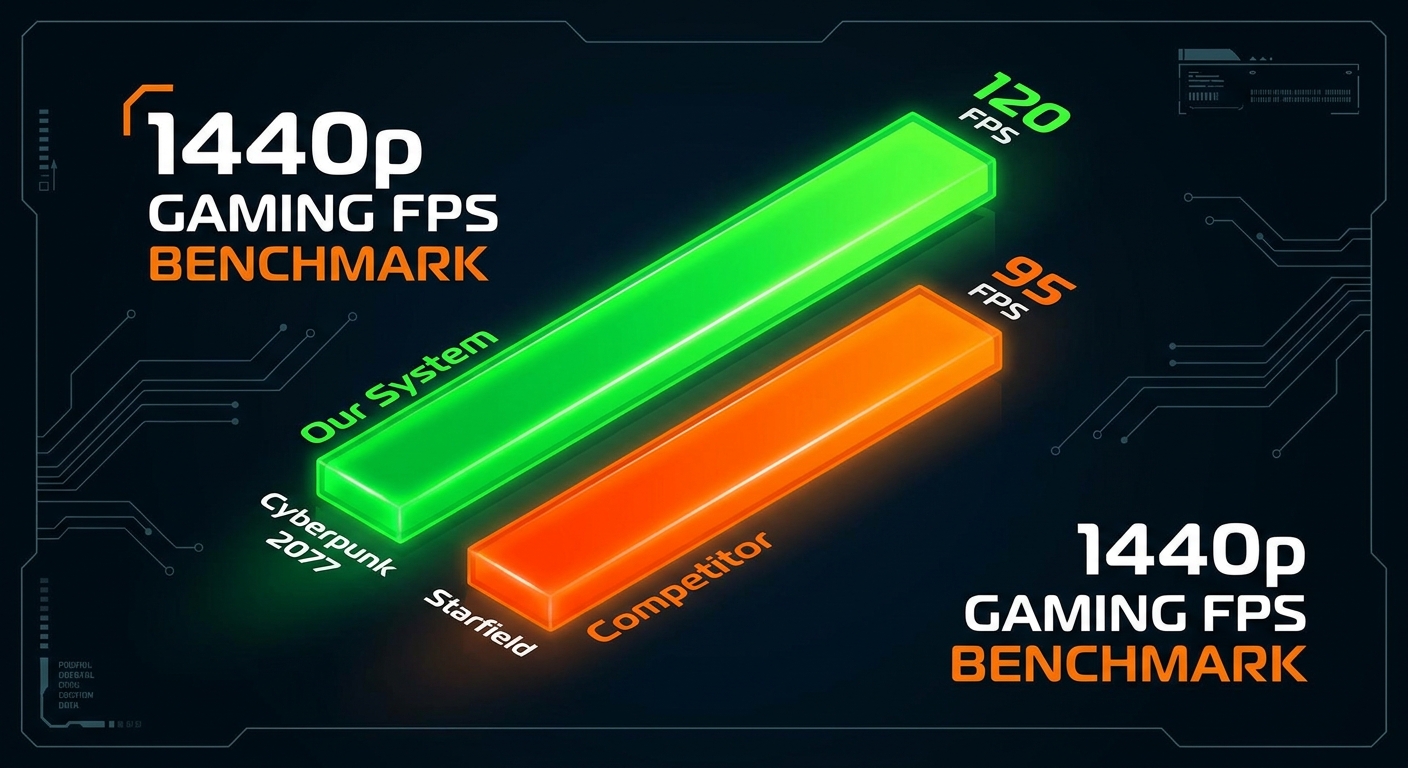
In traditional rasterized workloads, the RX 9070 XT holds a consistent performance lead over the RTX 5070, typically in the 7 to 17 percent range depending on the title. In demanding open-world games like Cyberpunk 2077 and Black Myth: Wukong at 1440p with ultra settings, the 9070 XT delivers noticeably higher average frame rates.
For competitive gaming in fast-paced titles where you want to push above 144 fps, both cards handle the task comfortably. If raw rasterization throughput is your primary metric, the RX 9070 XT wins this category.
Deep Dive: Ray Tracing and AI Features
This is where the RTX 5070 reverses the dynamic. NVIDIA’s fourth-generation RT Cores and DLSS 4 technology give the RTX 5070 a substantial lead in ray-traced workloads. In titles like Alan Wake 2 and Cyberpunk 2077 with full ray tracing enabled, the RTX 5070 outperforms the RX 9070 XT by a meaningful margin.
DLSS 4’s Multi Frame Generation can generate multiple frames for every one rendered frame, effectively multiplying frame rates in supported titles. AMD’s FSR 4 is a genuine improvement over its predecessors and works across a wider range of hardware, but it cannot match DLSS 4 in image quality or raw performance uplift in games that support both.

Power Efficiency and Thermals
The RTX 5070 draws 250W versus the RX 9070 XT’s 304W. For builds where PSU headroom is tight, the RTX 5070’s lower power draw is a practical advantage. Both cards are compatible with standard ATX 3.1 power connectors and will run comfortably on a quality 750W power supply.
Winner by Category
| Category | Winner | Notes |
|---|---|---|
| 1440p Rasterization FPS | RX 9070 XT | 7-17% lead in most AAA titles |
| Ray Tracing Performance | RTX 5070 | Stronger RT cores + DLSS 4 |
| VRAM Capacity | RX 9070 XT | 16GB vs 12GB |
| Power Efficiency | RTX 5070 | 250W vs 304W TBP |
| Upscaling Ecosystem | RTX 5070 | DLSS 4 Multi Frame Generation |
| Price | RTX 5070 | Starts ~$90 lower on Newegg |
| Future-Proofing (VRAM) | RX 9070 XT | 16GB more comfortable long-term |
Our Picks on Newegg
For the RTX 5070, the MSI Shadow GeForce RTX 5070 12G Shadow 3X OC is available at $609.99 on Newegg. For the RX 9070 XT, the GIGABYTE Gaming Radeon RX 9070 XT is available at $729.99 on Newegg. The Sapphire Pulse Radeon RX 9070 XT is currently on sale at $769.99 (down from $879.99).
Final Verdict
Choose the RTX 5070 if you play ray-traced games, value power efficiency, want DLSS 4 Multi Frame Generation, or are working with a tighter budget. Choose the RX 9070 XT if you primarily play rasterized games, want maximum raw frame rates per dollar at 1440p, or value the extra VRAM for long-term longevity. If you are looking for one recommendation, the RTX 5070 edges ahead for most gamers in 2026 due to its broader feature advantage and lower starting price.
Read More
- AMD Radeon RX 9070 XT GPU Review and Benchmarks (GamersNexus) – In-depth benchmark testing of the RX 9070 XT against the RTX 5070 across dozens of games and workloads.
- RTX 5070 vs RX 9070 XT Comparison (TechSpot) – Detailed performance and value analysis covering gaming, creation, and efficiency.
- NVIDIA RTX 5070 Official Product Page – Full official specs, DLSS 4 features, and partner card listings from NVIDIA.
- AMD Radeon RX 9070 XT Official Page – AMD’s official specs, FSR 4 details, and FidelityFX feature listings.
- GPU Benchmark Hierarchy 2026 (Tom’s Hardware) – Ranked GPU performance chart to see how both cards compare to the full market.
Related Posts
- Best CPU for the RTX 5070: Four Contenders, One Clear Winner
- The Best GPU for Your New Ryzen 7 7700X3D: Three Builder Scenarios
- Best Power Supplies in 2026
- Best Gaming Laptops in 2026
- How Much Memory an AM5 Build Actually Needs in 2026
Frequently Asked Questions
Answers to the most common questions about the RTX 5070 vs RX 9070 XT.