One of the busiest threads on r/buildapc last week came from someone who had put off buying more storage, then had a system crash, realized they needed a backup, and discovered that the 2TB drive they bought two years ago now costs far more than it did. Most of the replies were variations of "yes, it's not just you."
It isn't. TrendForce's July forecast, as reported by TweakTown, expects NAND flash to stay in a 4% to 6% supply deficit for the rest of 2026, with supply and demand only balancing out in the second half of 2027. Demand from AI data centers, which are shifting more spending toward flash-heavy inference workloads, has kept NAND supply tight, and consumer SSDs are feeling it. So the question isn't when prices come back down. It's how to buy sensibly in the meantime.
Should I Just Wait?
If you can, wait for storage you don't need yet. But if a drive is nearly full or you have no backup, waiting a year is a bad trade. The forecast points to the second half of 2027, not next month. Buy the capacity you need now and resist buying "future" capacity at today's prices.
Is a DRAM-less SSD Good Enough for Games?
For a game drive, yes. DRAM-less drives use a slice of system memory (Host Memory Buffer, or HMB) instead of their own cache chip, and game loading is mostly reads, which they handle well. This is where I'd save money.
The Kingston NV3 2TB is the most basic option here: PCIe 4.0, no DRAM, reads up to 6,000MB/s and a 5-year limited warranty. I'd step up to the TEAMGROUP T-FORCE G50 2TB if endurance matters to you, because it lists TLC NAND and a 1,300TBW rating, and it comes with a thin graphene heat spreader. Samsung's newer 990 2TB, a DRAM-less model that sits below the 990 PRO, is rated for writes up to 6,450MB/s and 800TBW.

Where Is It Still Worth Paying More?
Your boot drive, and any drive you use for heavy writing such as video editing or large downloads every day. A drive with its own DRAM holds up better under sustained mixed workloads. The Samsung 990 PRO 4TB has 4GB of DRAM, TLC V-NAND and ratings of up to 7,450MB/s reads and 6,900MB/s writes. If I could only buy one fast drive this year, it would be a 4TB model like this so I wouldn't have to buy again soon.
If 4TB matters more than top-tier sustained performance, the WD Blue SN5100 4TB is the other route. It is DRAM-less and uses QLC NAND, but it is still rated for up to 6,900MB/s reads, 1,200TBW and a 5-year limited warranty. For a big game library, that is a sensible compromise.

Can I Put Games on a Hard Drive?
Some of them. More new releases require an SSD outright. Call of Duty: Modern Warfare 4, out this Friday, lists 115GB with an SSD required, and Gears of War: E-Day also made an SSD mandatory. Older and smaller games still run fine from a hard drive, and a hard drive is the right place for backups, media and the games you rotate in and out.
The Seagate BarraCuda 8TB is a 5,400RPM drive with 256MB of cache. Note that it uses SMR recording, which is fine for archives and backups but slows down during long, sustained writes. The WD Blue 8TB spins at 5,640RPM, also has 256MB of cache and carries a 2-year limited warranty. Either one turns "I should back that up" into a routine.
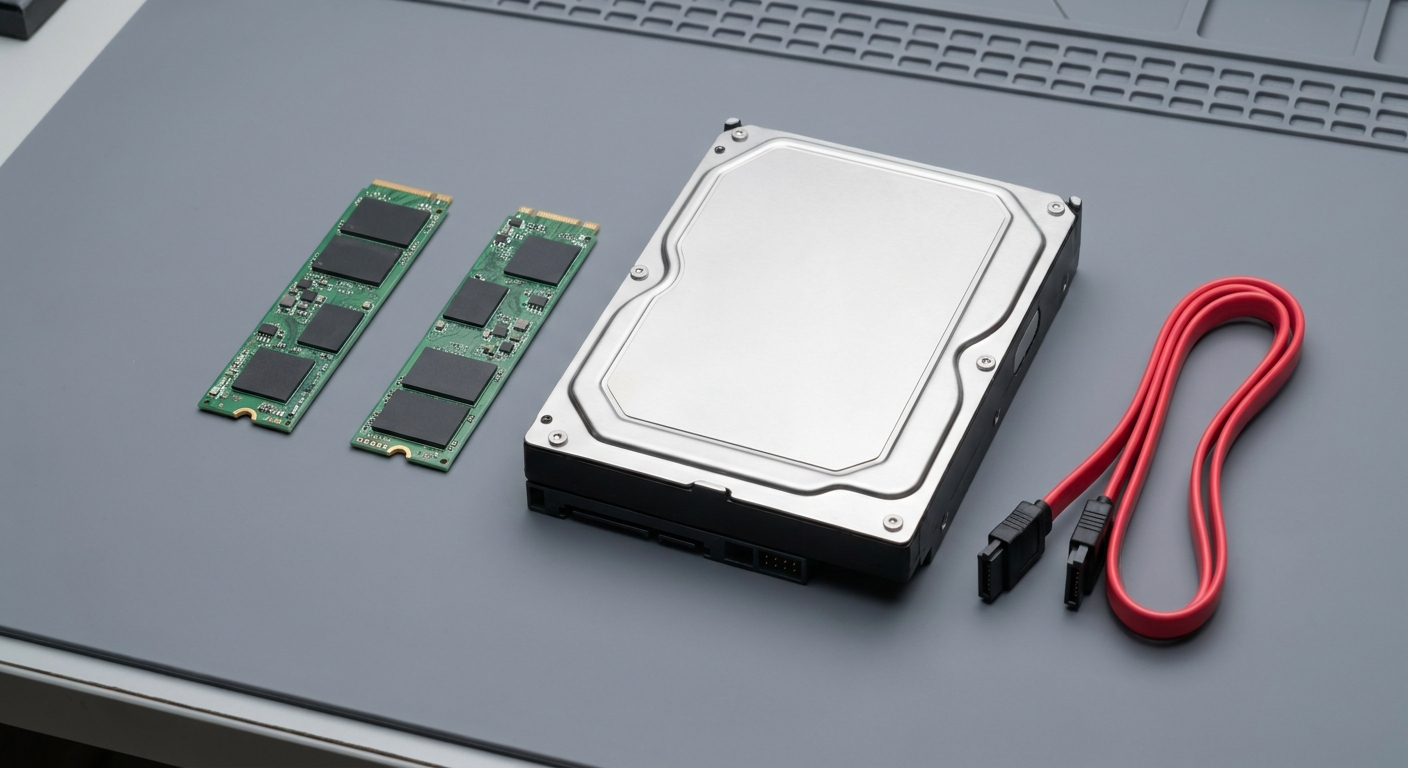
Is a SATA SSD Still Worth Buying?
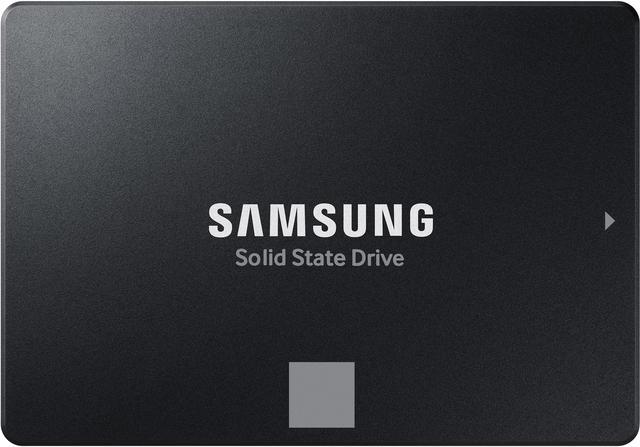
For older PCs without spare M.2 slots, absolutely. The Samsung 870 EVO 2TB tops out around 560MB/s, as every SATA drive does, but it has its own 2GB DRAM cache and a 1,200TBW rating. It is a big step up from any hard drive for game loading, and it fits in the 2.5-inch bay almost every case still has.
How I'd Split a Budget Right Now
- Boot and work drive: a DRAM-equipped NVMe like the 990 PRO, sized so it lasts.
- Game drive: a DRAM-less 2TB NVMe such as the T-FORCE G50 or Samsung 990.
- Backups and media: an 8TB hard drive.
- Old PC with no spare M.2: a SATA SSD like the 870 EVO.
None of that requires waiting for the market to fix itself. More options are in Newegg's 2TB NVMe SSD listings.
Frequently Asked Questions
Why are SSDs so expensive in 2026? Demand from AI data centers has kept NAND flash supply tight, and TrendForce expects a 4% to 6% supply deficit for the rest of 2026.
When will SSD prices go down? TrendForce's forecast, reported in July 2026, expects NAND supply and demand to balance in the second half of 2027.
Is a DRAM-less SSD OK for gaming? Yes. DRAM-less drives use Host Memory Buffer and handle game loading well. I'd still use a DRAM-equipped drive for a boot drive that also handles heavy writing.
Can I install new games on a hard drive? Not always. Call of Duty: Modern Warfare 4 requires an SSD, and Gears of War: E-Day made one mandatory. Older and smaller games still run from a hard drive.
What is SMR on a hard drive? SMR, or shingled magnetic recording, overlaps data tracks to increase capacity. It works well for archives and backups but slows during long, sustained writes.
Read More
- TweakTown: NAND Flash Shortages Expected to End in 2027 -- Coverage of TrendForce's forecast for when NAND supply recovers.
- TrendForce News: Memory Market -- Ongoing DRAM and NAND market reporting from TrendForce.
- PC Perspective: Samsung SSD 990 2TB Review -- A review of Samsung's new DRAM-less 990.
- Tom's Hardware: Best SSDs -- Regularly updated SSD rankings and test results.
- Newegg Insider: Best NVMe SSDs in 2026 -- Our broader NVMe SSD buying guide.