




 here!
here!
I’m your shopping assistant for PC builds, upgrades, and everything tech.
Got questions? Ask away!
Start a conversation
here!
I’m your shopping assistant for PC builds, upgrades, and everything tech.
Got questions? Ask away!
Start a conversation



Any questions? Ask CelesteSM will help you find out quickly.
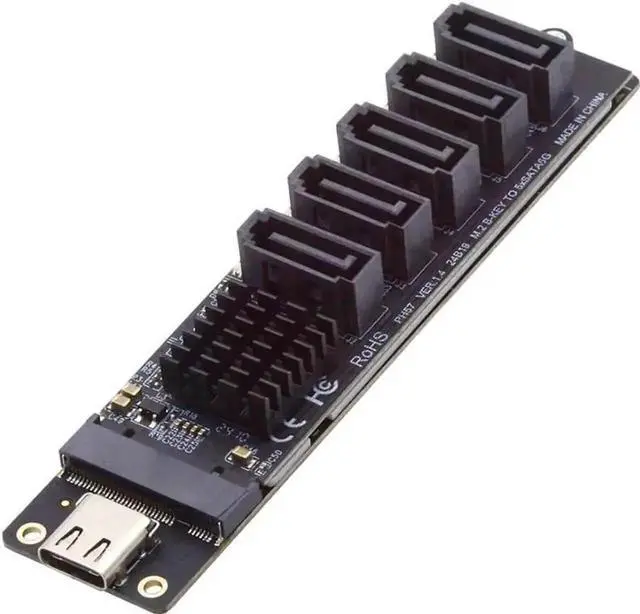
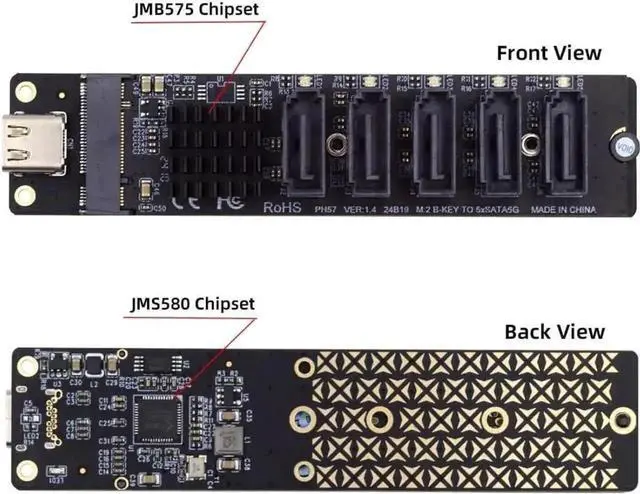
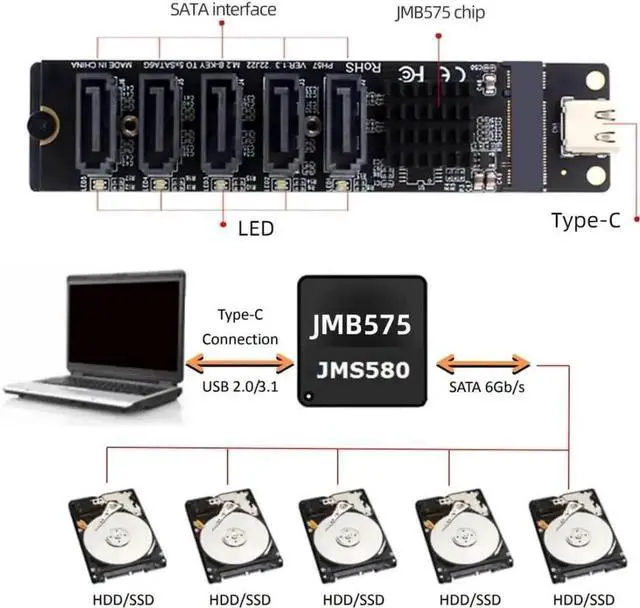
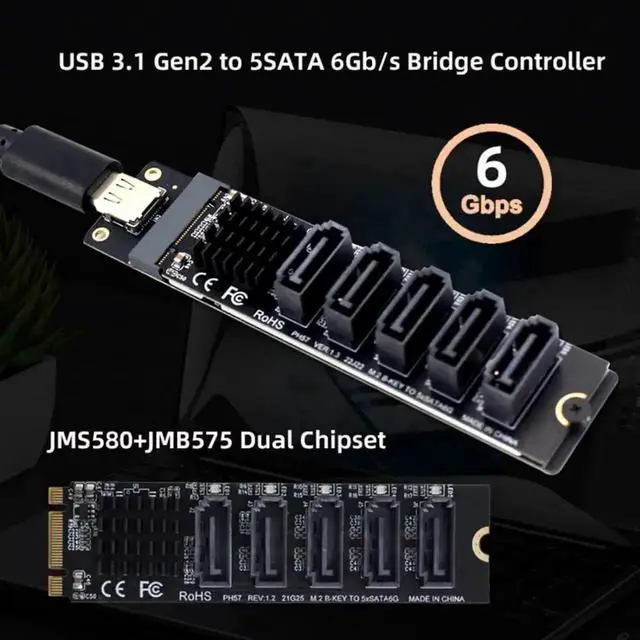
This USB 3.1 Gen 2 Type-C to 5-port SATA 3.0 port multiplier adapter adopts mature dual JMicron chip architecture, which perfectly solves the problem of insufficient motherboard native SATA ports for mass storage expansion, external disk array building and embedded device storage upgrade.
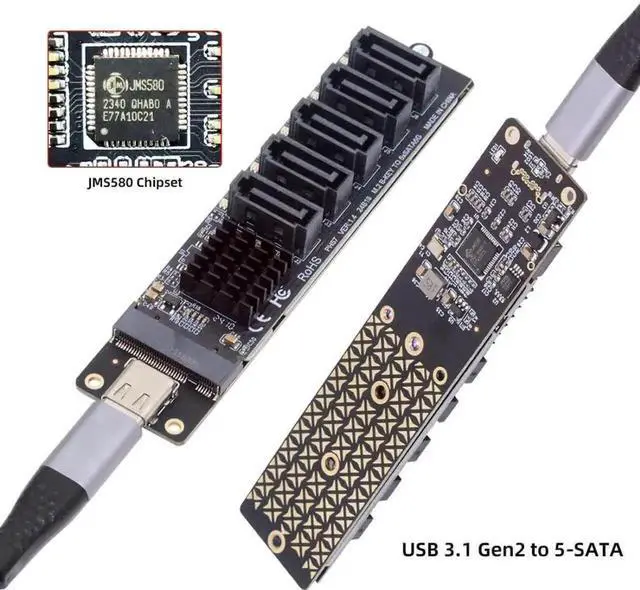
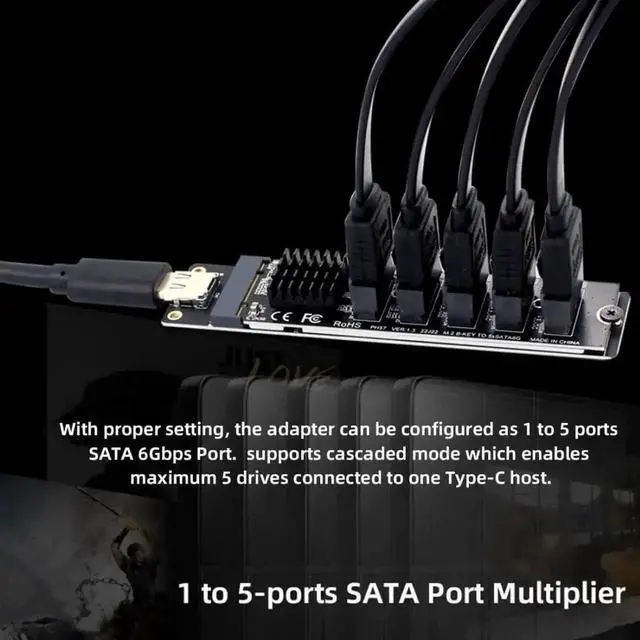
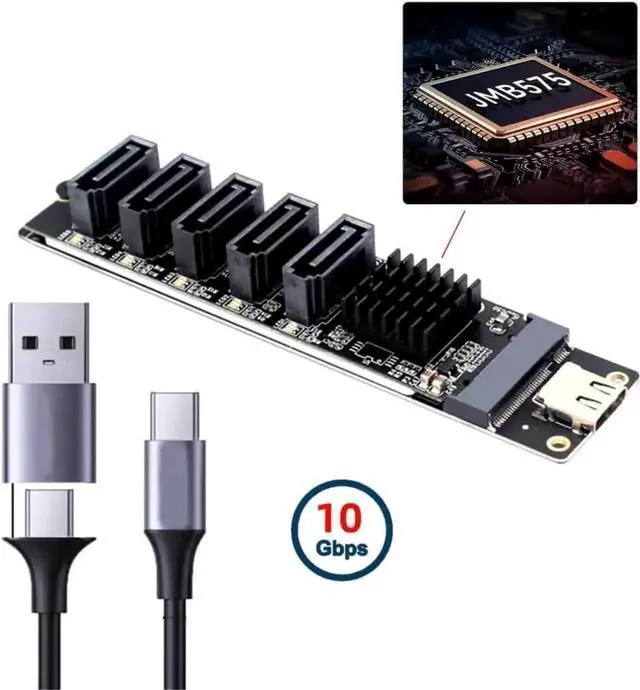
The core control system consists of two professional storage chips: JMS580 USB bridge chip and JMB575 SATA port multiplier chip. JMS580 converts USB 3.1 Gen2 Type-C 10Gbps high-speed signal into a single SATA 3.0 6Gbps channel, supporting UASP transmission protocol and SSD TRIM command to maximize solid state drive performance. The JMB575 port multiplier expands one upstream SATA channel into 5 independent SATA 3.0 downstream ports, allowing up to five SATA hard drives or SSDs to be recognized and operated by one single Type-C host connection. It supports command-based and FIS-based switching, cascaded expansion mode and staggered hard drive spin-up for stable multi-disk management
Complying with SATA 3.0 6Gbps official specification, each SATA port reaches maximum 6Gbps theoretical speed, backward compatible with SATA 2.0 (3Gbps) and SATA 1.0 (1.5Gbps) legacy hard drives. All 5 SATA interfaces support hot plug and unplug without restarting the host computer, greatly improving convenience for frequent disk testing and data migration. A mini aluminum heat sink is pre-mounted on the main control chips to efficiently dissipate heat during long-hour high-load working, avoiding chip thermal throttling and transmission failure in closed cabinet environments.
The adapter uses streamlined compact PCB layout with fixed installation holes, which can be fixed inside mini ITX chassis, industrial embedded control hosts, surveillance NVR recording boxes and DIY external multi-disk storage enclosures. It is a true plug-and-play device with no driver installation required for mainstream operating systems including Windows, Mac OS and Linux.
Wide application scenarios include video surveillance recording storage expansion, personal multi-disk backup disk group, small NAS auxiliary storage, IT hard disk testing bench, industrial IoT embedded equipment data logging, and large-capacity media file offline archiving.