

Your Browsing History


Patrick P.
Joined on 11/17/10
0
0
product reviews
- 3
Tried & True
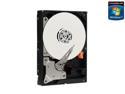
Western Digital Black WD1001FALS 1TB 7200 RPM 32MB Cache SATA 3.0Gb/s 3.5" Internal Hard Drive Bare Drive
Pros: Reasonably fast, rock solid stable, & able to stand the test of time.
Cons: None.
Overall Review: One of these is my boot drive, which I've had for a few months short of 2 years now, and it's just beginning to show signs of wear. The other's a redundant drive that I've had for 1. In my experience, that's a long time for an HDD, & these things have tackled it great. I'm sad they're deactivated; the FAEX (their next-in-line) sport 6 Gb/s support & double the cache memory--64 MB, but seem to have slightly worse reviews. Unreasonable prices per GB keep me away from SSDs for now (the speed bonus isn't so much incentive for me; my boot & load times are already low enough), so I guess I'll be looking to them for a new boot drive.
8/4/2012See more detail
Won't switch to battery during/after a power transient
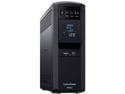
CyberPower CP1500PFCLCD PFC Sinewave UPS Systems - 1500VA/1000W, 120 VAC, NEMA 5-15P, Mini-Tower, Sine Wave, 12 Outlets, LCD, PowerPanel
Pros: It looks nice, and no terminal hook-up is required.
Cons: There was a power outage overnight, and I woke up to the UPS being off. Later, I found out why: it can't switch to battery power. A self-test with everything off done by holding down the Control button for three seconds simply shuts the unit off. If that wasn't indication enough, I couldn't resist doing one with PowerPanel by hesitantly hitting the blue Initiate Self-Test button. Result: everything got knocked out and now my RAID's slowly rebuilding. This renders the UPS a glorified surge protector. Suffice it to say I went back to my little APC. I guess I'll try my luck with APC's 1500 VA model.
5/18/2013See more detail
A very solid card that's still not out of the race
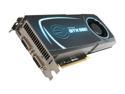
EVGA GeForce GTX 580 (Fermi) 1536MB GDDR5 PCI Express 2.0 x16 SLI Support Graphics Card 015-P3-1580-AR
Pros: I've had this card for almost 3 years, and it's been free of problems and is still able to deliver above average performance on the latest games at the highest settings. The direction NVIDIA seems to have headed with its newest 600 line makes it all the stronger; if there's exceptions to "newer is always better" in the world of computer components, this card makes a strong one with the GTX 680. The 580s still beat 680s in some benchmarking, and have almost double the 64-bit math performance of the 680s (which opted for SLIGHTLY better 32-bit performance, to better gear toward the mainstream), while games are starting to catch on to 64-bit. The performance these cards deliver is still only marginally lower (~5% loss), overall, than NVIDIA's equivalent cards from the 600 line (though that doesn't say as much good about the 580 as bad about the 680).
Cons: This edition's biggest drawback is the 1.5 GB of VRAM; these days, 2 GB should be the minimum. By now, all the augmented editions, like the 3 GB, are discontinued.
2/4/2013See more detail