
Your Browsing History


Todd J.
Joined on 11/03/01
0
0
product reviews
- 11
Indeed
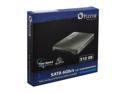
Plextor M3 Series 2.5" 512GB SATA III MLC Internal Solid State Drive (SSD) PX-512M3
Pros: Fast!
Cons: Doesn't go faster!
Overall Review: Regarding swalsh2333's comments I would agree with another follow-up post, know your computer's specs. SATA 3 has been integrated into more recent iterations of the Macs. The fact that a user is unaware of the specifics of their hardware, as already noted, does not rest at the feet of a hardware maker, in this case, Apple. The one star fellow is more than welcome to revert to a 5400rpm HDD if it suits him/her.
4/19/2012See more detail
No go

OCZ Speed 150X 2GB Secure Digital (SD) Flash Card Model OCZSD150-2GB
Pros: Shiny and new.
Cons: Doesn't allow formatting or writing. It's effectively write-protected even though it is physically unlocked. Useless for my Wii. :-( Will cost me more in shipping than I paid for it.
12/31/2008See more detail
Not Mac Plug and Play
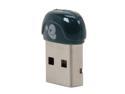
IOGEAR GBU521 Bluetooth 4.0 Micro Adapter
Pros: Works in windows once Windows 7 updated a bridge driver. Without W7 actually installing that, the software that came with it didn't recognize a bluetooth device being connected.
Cons: Is supposed to be plug and play supported with OS X. I've got Lion and it is not recognized as a viable bluetooth device. I have IOGear tech support working on this and will post when I get an update. Had been hoping to have this for it's low power function to combine with some BT 4.0 headsets when they come out.
4/1/2012See more detail
Wow!
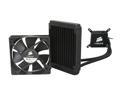
CORSAIR Hydro Series H60 (CWCH60) High Performance Liquid CPU Cooler
Pros: Cool! Literally! Having an i7-2600k chip with the stock fan I saw 80c with PCMark. Did the swap and am seeing ~30c under normal conditions and in the low 50s max while running PCMark.
Cons: Doesn't cool my GPU!
Overall Review: I had some concerns wondering if this single fan would be adequate for my i7 and had considered going for H80. Given the results, I'm happy to stick with the single fan solution!
12/27/2011See more detail
Beautiful Case with some considerations.
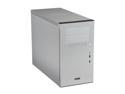
LIAN LI PC-A05FNA Silver Aluminum ATX Mid Tower Computer Case
Pros: Fantastic and sleek design that is utterly refreshing when compared to any number of garish and gaudy cases available. I wish more cases had this sleek and elegant design. All of the little nuances of this case are pretty amazing. Love the rubber mounted hard drive system. Lian Li got it right with this. The hard drives effectively "float" within the rubber mounts while some poorly thought out designs will simply place rubber washers between a screw that is still mounted directly through metal (any benefit of the rubber is minimized as the drive is still bolted to the metal of the case). Much quieter than my old Colorcase (now Compucase?) ATX Mid Tower which had the legacy 80mm fan ports. Love the front USB 2 and 3 ports and the audio jacks. I like the lower profile of the case with the front mounted PSU. Lian Li could probably sell a boatload of traditional cases (rear mounted PSU) with a similar design yet taller stature that would allow for larger GPU and PSU specs.
Cons: The only reason I'm not giving 5 stars is the difficulty of assembling the system within this case. Ironically, just after buying this case Anandtech put up a review of it and I agree with their assessment. This is not a case for the faint of heart and you absolutely need to do your homework about the specs of your system (GPU and PSU sizes). I took a chance on seeing if my Platinum rated InWin 550W PSU would fit. It would not with standard SATA connectors as there was not enough room with the stacked connectors in my MB (Gigabyte Z68X-UD3H-B3). I ended up having to spread out my SATA connectors and use the end with the right angle connectors to insure a slim fit with the PSU. I may offset the PSU (6.69" or 170mm deep) a few mm with some washers but the guidance around 160mm for the PSU is on track. I'll be able to make it work with what I have once I get opposing L shaped SATA connectors (effectively making a T shape when both are plugged in).
Overall Review: Before I even got this case I had wondered if anyone makes L shaped SATA cables the effectively nest together given the design of these stacked SATA ports. e.g., one connector being shorter than the other to allow for the the cables to point in the same perpendicular angle of the cable. It would be great if the MB makers would provide these for these boards with stacked SATA ports. As that doesn't appear to be the case it looks like I'll have to get connectors that allow me to basically have one cable pointing up from the stack with one pointing "down" toward the MB mounting plate as this will be the only way to recover the 2 currently inaccessible SATA ports. I used the top ports in the stack with the cable pointing down toward the base plate, effectively blocking my 2 lower ports on 2 of the SATA stacks. The inclusion of the front mounted PSU allows for a shorter yet longer case from front to back, something to be mindful of. Upright MB SATA ports may allow some room for big PSUs.
12/16/2011See more detail
Great so far!
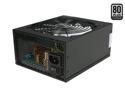
KINGWIN Lazer Platinum Series LZP-550 550 W ATX 12V v2.2 / EPS 12V v2.91 / SSI EPS 12V v2.92 SLI Ready CrossFire Ready 80 PLUS PLATINUM Certified Modular Active PFC Power Supply
Pros: Quiet and much more efficient! This was an upgrade from an old dual rail 450W Rosewill PSU from over 5 years ago, before the 80plus standard came into existence, I believe. As you can imagine, I'm moving from what probably was a 75% efficiency (at best) up to 90%. I don't run really heavy loads (usually <200W) very often but even at this level I'm seeing prior levels of ~167-170W decrease to ~140-145W. Even when in sleep mode there is a notable benefit moving from 16-17W down to 9-11W. Very nice!!!
Cons: Can't set the fan to engage at custom temperatures. Modular cables seem oriented to full ATX cases. I was hoping to use one SATA power cable and found myself having to bunch up the cable at the top of the case to get the first connector attached to the optical drive. This basically left me with only enough cable length to attach 2 of my hard drives despite there being 4 total power connectors (optical + 3 HDDs).
Overall Review: If my only real Con is that I had to use 2 modular cables to attach my SATA devices then it's a minus I'll happily live with. As others have noted, the main motherboard cables are hardwired with the peripherals being the focus of the modular cables, though there is an extra GPU modular cable. I don't really see the hardline cables as a minus. For anyone invested in this sort of PSU they're likely to be power users, so it's not like someone will not have a need for the basic connectors provided. e.g., Main, CPU, 2x GPU. In this sense the notion of a fully modular design seems needlessly gratuitous. e.g., Who's going to have a PSU without the main cable attached? No one, so why is there a need to have it be fully modular beyond the mere idea of it being fully modular? Additionally, from a design standpoint I'm guessing the main hardlines may be intended to reduce or eliminate any risk of additional impedance, though I'm no electrical engineer. Just some thoughts. :-)
10/22/2011See more detail