
Your Browsing History


Ian M.
Joined on 09/01/10
0
0
product reviews
- 8
A hidden 7870 XT
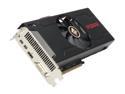
PowerColor PCS+ Radeon HD 7870 MYST. Edition (Tahiti LE) 2GB GDDR5 PCI Express 3.0 x16 CrossFireX Support Graphics Card AX7870 2GBD5-2DHPPV3E
Pros: It's not a regular 7870 like the others! It's a Tahiti LE with 4.3 billion transistors compared to the 7870GHz's Pitcairn XT with only 2.8 billion! Wiki it, and search for the reviews. You're getting more shaders, texture units and the same compute units as a 7870GHz. The card is stable after 6 hours of torture tests. If yours is flaky you may not have fed it properly with cool air and smooth power. (It wants lots of both.) Idles cool and quiet. 32C with fan @ approx 1000RPM. In synthetic benchmarks it goes up to 80C, but never above. At 100% load in a synthetic benchmark the fan spins up to 49% and is only audible if your head is practically against the case. This card is a huge step up in build quality over other Powercolor cards I've owned in the past. The shroud is metal. If the fan is loud for you either you've been blessed with SUPER HEARING, or more likely your case isn't providing the card with enough cool air. Even 100% load for 6 hours and the fan speed and temperature refused to go above 49% or 80C. You can't tell easily from the pictures but the three heat pipes this cooler has are set up to in a direct core contact configuration and not all the same length. The middle heat pipe actually forms an "S" shape and is twice as long as the two "U" shaped outer pipes.
Cons: It's a big card, because the board is the same size as a 7950. If you put this in an mATX board it might interfere with your SATA ports. Accessories? Nope. Not even a CF bridge or DVI to VGA adapter. Not a biggie in my opinion though. There's a driver disc and a small manual and that's it. If you have broadband and a brain you don't need these. The stock heatsink isn't bad, nor is the fan, but this card really, truly would be much better with two fans. With two of these fans, or a sealed blower type unit HIS is always so fond of, the card would run much cooler and very quietly. Not good for Crossfire for two reasons. 1. The cooling system is only OK, and putting them close together would increase the load. 2. You can only pair it to another 7870 XT and see the full benefits. You could still put them in Crossfire with a longer than stock CF cable if you wanted to. (Don't believe what you hear about those, they work just fine.) The gotcha would be keeping them cool and the fact being that sort of money can get you into a much more powerful card easily.
Overall Review: AMD lists this card as 185W Typical Design Power, meaning at full load it will average 185W with peaks slightly higher. That's how much power draw and heat production you're dropping into your case. Don't be a chump, use a reputable PSU sizing guide and buy a good PSU. Most of the people on here having issues are probably because of this. If you decide to go with aftermarket cooling you'll need to look for explicitly 7870 XT compatible units or units meant for the 7950. This board is the same as the 7950. This is the longest card you can fit in an original Antec 300. If you have a hard drive close to the PCIe slot it's going to need to move. I measured beforehand and knew this, but I figured I'd drop some knowledge.
10/24/2013See more detail
Good drive, bad cable
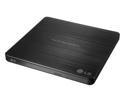
LG Ultra Slim External DVDRW with Mac and Surface Compatible Model GP60NB50
Pros: Good solid little drive. Inexpensive when I got it and writes to M-DISC media. Works great when you have a good cable hooked to it. If you don't know what M-DISC is, go look it up. You want it.
Cons: The cable mine came with doesn't work. I subbed out an old, thin junky one without a ferrite choke (what would be seem to be in all respects a junk cable) and was instantly in business. I grabbed my multimeter to test and found that ALL the connections in the cable it shipped with have breaks in them. This points to a stiff cable that became brittle during storage and cracked internally.
Overall Review: It gets minus 2 eggs for the bad cable. I know that seems harsh, but if I didn't have other mini USB cables I would have had to either purchase an overpriced one locally with my fingers crossed that it worked or RMA the drive. So the cable itself gives it -1, and for it being such a forehead slappingly stupid mistake I'm docking it one more for a total of -2 eggs. 3/5
11/13/2013See more detail
Solid
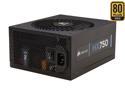
CORSAIR HX Series HX750 750 W ATX12V 2.3 / EPS12V 2.91 SLI Ready CrossFire Ready 80 PLUS GOLD Certified Modular Active PFC Power Supply New 4th Gen CPU Certified Haswell Ready
Pros: Read the reviews from professionals. Hardware Secrets and JonnyGURU both rated these PSUs very highly for a reason. Personally I can say that this unit has been running perfectly fine since 2013 in a moderately high end gaming system that has been upgraded along the way. The unit stay cool and makes no excessive noise/coil whine. I can't speak to ripple since I lack that gear, but it delivers accurate and stable voltages under all load ranges I tried. The fan bearing appears to be orientation agnostic, which is definitely a good thing.
Cons: There's pretty much nothing to put here. I wish the HX750i was around when I made this purchase, but it wasn't. Not exactly a dealbreaker.
Overall Review: The whole kit comes with nice storage bags for your excess cables and whatnot so you don't misplace them, which is a nice touch.
3/24/2015See more detail
A Good Fan
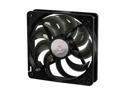
Cooler Master SickleFlow 120 - Sleeve Bearing 120mm Silent Fan for Computer Cases, CPU Coolers, and Radiators (Smoke Color)
Pros: Very quiet even at 100% power and definitely makes its rated 69CFM.
Cons: There's only one time I've caught it making a weird noise and it's in the transition from about 85% to 90% of full speed. A tiny little bit of bearing noise. If you keep it steady in this power range it goes away in less than a quarter second though.
Overall Review: Honestly a great performing fan. The bearing noise would have gone entirely unnoticed if I hadn't been playing with it on a external fan controller outside of a case right next to my head in a quiet room. Seriously. This fan's 69CFM makes me doubt some other manufacturers' CFM ratings!
11/10/2013See more detail
What you should be using
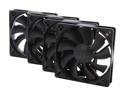
Cougar Turbine CFT12SB4 Case Fan
Pros: Short version: If you're looking for a set of 120mm fans that are quiet and move plenty of air you've found them. Just add them to your cart now. Details: No fan is truly silent as all sound is air movement, but these come very close. Honestly the quietest 1200RPM fans I have ever (not) heard. Manufacturers love to pad out their CFM and dBA numbers since testing these is difficult without specialized gear, but Cougar seems to be pretty honest. The noise level is lower and the airflow virtually the same as my old high flow Scythe S-FLEX fans. The air movement is louder than the fan. One last odd observation; if you need to use the molex to 3 pin adapters that are included they're of remarkable quality. Silly to note of course, but I noticed when I was playing around with different installs that these are the least troublesome molex connectors I've ever used.
Cons: I've pretty much got only two gripes and they're nit picky and cosmetic. Black fans with chrome mounting screws. Bleh. I know it's impractical but I'd like the cables in all black too.
10/29/2013See more detail
As advertised
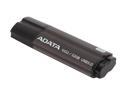
ADATA 32GB S102 Pro Advanced USB 3.0 Flash Drive, Speed Up to 100MB/s (AS102P-32G-RGY)
Pros: For sequential transfers you get the rated speed. I've written this drive over probably 100+ times so far and still zooms along.
Cons: None really. Small file read and write speeds suffer on all USB drives, 2.0 - 3.0 see notes as to why.
Overall Review: The way USB spec handles file transfers is at fault for low performance when you're reading or writing lots of small files. If you don't believe me read up on BOT (Bulk Only Transfer) and UAS (USB Attached SCSI) protocols and you'll get the gist of it. UAS is rarer than unicorns right now so don't hold your breath.
8/21/2013See more detail