




 here!
I’m your shopping assistant for PC builds, upgrades, and everything tech.
Got questions? Ask away!
Start a conversation
here!
I’m your shopping assistant for PC builds, upgrades, and everything tech.
Got questions? Ask away!
Start a conversation


| Best Seller Ranking | #11 in Microphone |
|---|
| Brand | FIFINE |
|---|---|
| Model | AM8S |
| Color | Black |
|---|---|
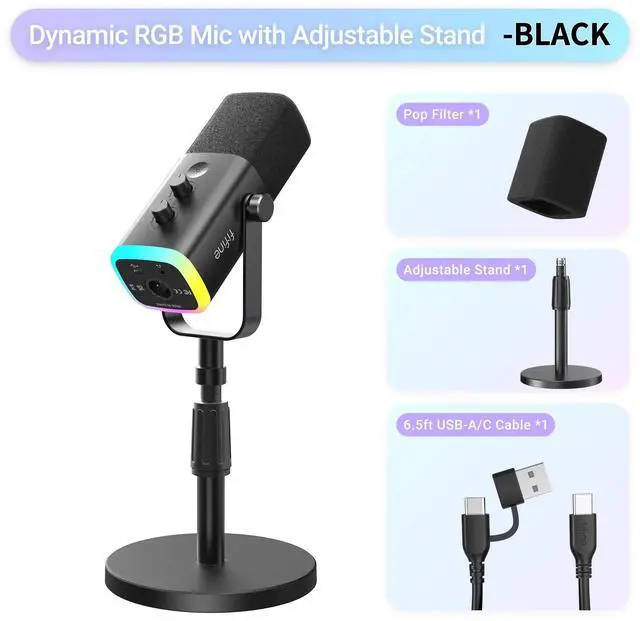
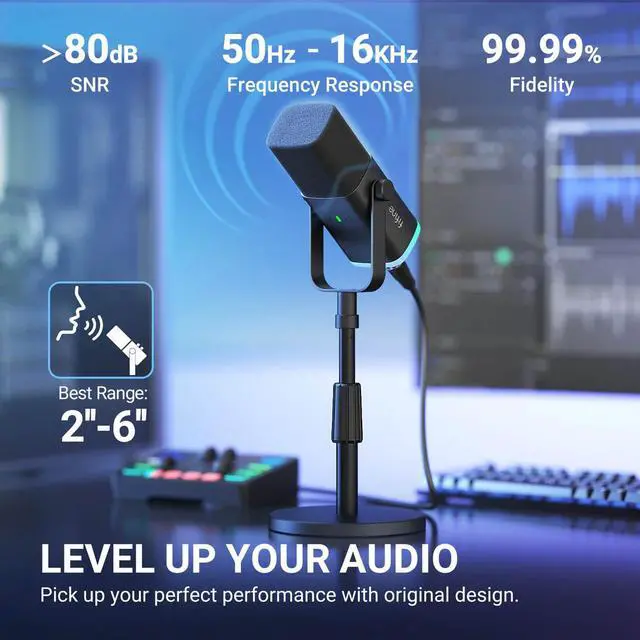
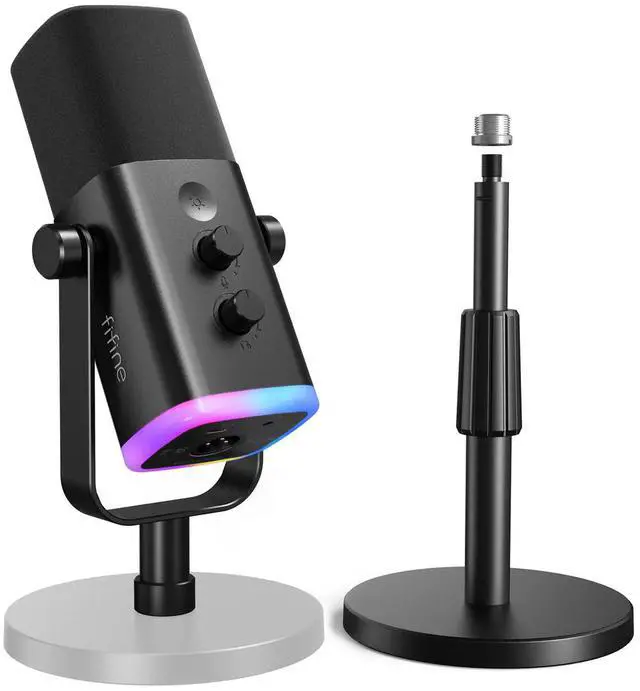
| Specification | Type: Dynamic Power Supply: 5V Frequency Response: 50Hz -16KHz Polar Pattern: Uni-directional Sensitivity: -50 +- 3dB S/N Ratio: >= 80dBA Max.SPL: 120dB(at 1kHz <= 1%T.H.D) What's in the box? 1X Dynamic Microphone with Windscreen 1X 6.5ft (2m) USB C to USB Cable 1X Adjustable Mic Based Stand 1X User's Manual |
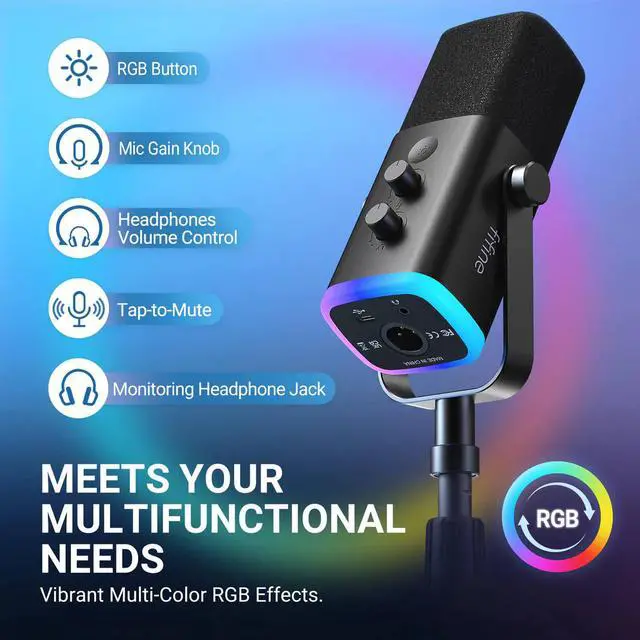
| Features | 1.Touch RGB light button 2.Beef up the audio by XLR Connection 3.Three types of RGB mode and eight single-color lights 4.Real-time monitoring 5.USB Type-C (Plug&Play) |
|---|
| First Listed on Newegg | June 11, 2026 |
|---|
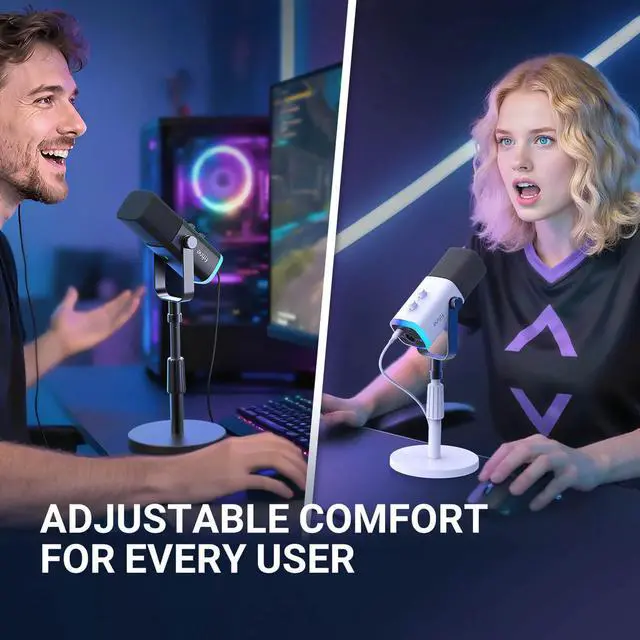
The FIFINE AM8S is a dynamic gaming microphone with a height-adjustable desktop stand, USB-C plug-and-play setup, real-time headphone monitoring, and XLR support, making it a strong fit for streamers, gamers, and beginner creators who want clear voice capture with flexible desktop use.
| Attribute | Value |
|---|---|
| Best For | Gaming and streaming desktop use that benefits from a plug-and-play dynamic USB-C microphone with unidirectional pickup, RGB lighting, and hardware monitoring for close-up voice capture |
| Microphone Type & Pickup | Dynamic design with a uni-directional polar pattern for focused, close-mic vocal capture |
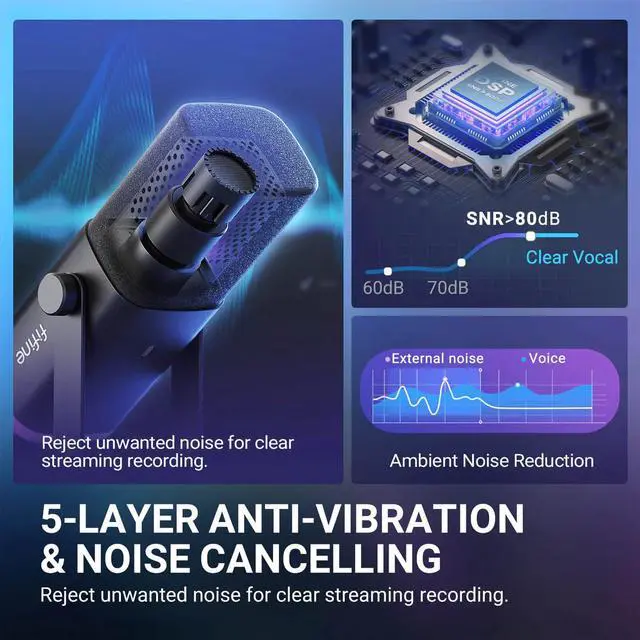
| Audio Performance | Frequency response 50Hz–16kHz, sensitivity -50 ± 3 dB, signal-to-noise ratio ≥ 80 dBA, and max SPL 120 dB (at 1 kHz ≤ 1% T.H.D) for typical vocal recording scenarios |
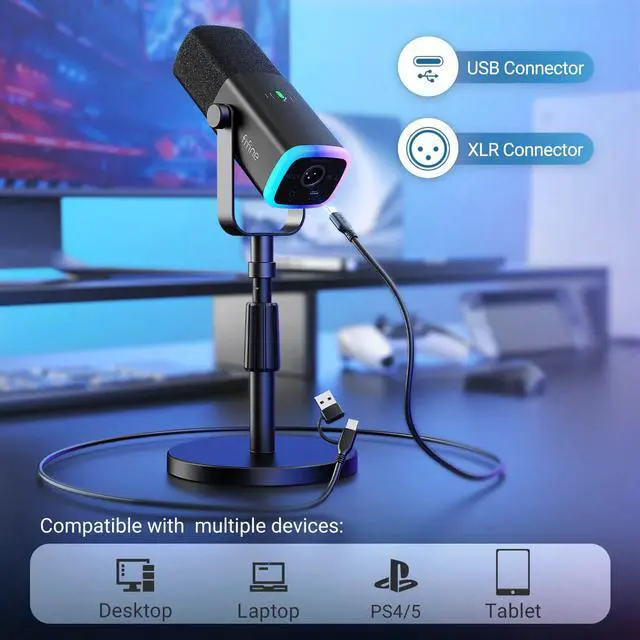
| Connectivity & Power | USB Type-C plug-and-play primary connection with 5V power supply; includes a 6.5 ft (2 m) USB-C to USB cable; also supports an XLR connection for use with alternate audio interfaces |
| Controls & Lighting | Touch RGB light button with three dynamic RGB modes plus eight single-color options and support for real-time monitoring |
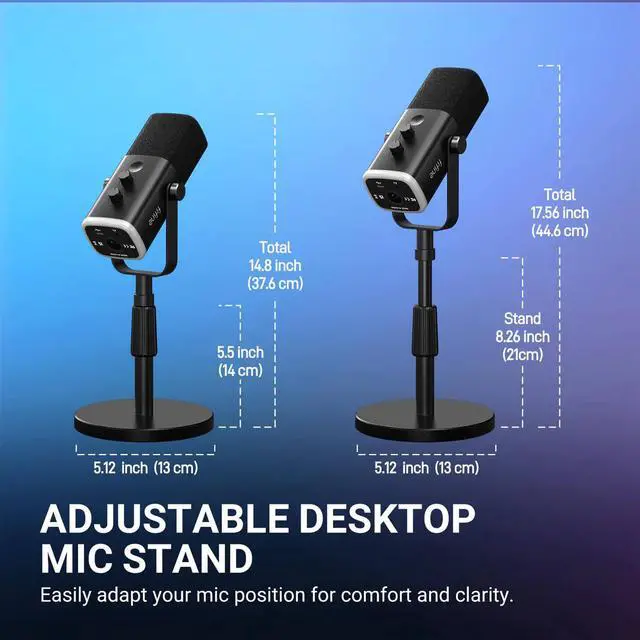
| Physical & Mounting | Includes an adjustable mic-based stand and ships in a black finish |
| What's Included | Dynamic microphone with windscreen, 6.5 ft (2 m) USB-C cable, adjustable mic-based stand, and user manual |
| Model Identifiers | FIFINE AM8S (black) |
Q: Should I get the FIFINE AM8S or a HyperX SoloCast for gaming and streaming?
A: Choose the FIFINE AM8S if you want a microphone that is more forgiving in untreated rooms and gives you an upgrade path beyond USB. The AM8S is a dynamic mic with both USB-C and XLR support, while the SoloCast is a USB condenser mic. In practice, buyers comparing these models usually prefer the AM8S for desk setups with keyboard noise, PC fans, or shared-room use, and prefer the SoloCast when they want a simpler USB-only mic that captures more room detail and a more open condenser-style sound.
Q: Is the FIFINE AM8S worth it over a basic USB condenser mic?
A: Yes, if your main goal is cleaner voice pickup at a desk and the option to move into an XLR setup later. Compared with entry USB condensers, the FIFINE AM8S trades some ambient detail for a tighter dynamic-mic presentation that many streamers and gamers find easier to manage in normal rooms. A basic USB condenser still makes sense if you want the simplest low-cost setup and you record in a quieter space.
Q: FIFINE AM8S vs Shure MV7: which one should I buy?
A: Buy the FIFINE AM8S if you want the lower-cost USB/XLR dynamic mic for gaming, streaming, and first-time voice work. Buy the Shure MV7 if you want a more premium voice-focused package with Shure's stronger software ecosystem and voice-isolation positioning. Both target users who want dynamic microphones with USB and XLR, but the MV7 is the better fit for buyers prioritizing refinement and tuning controls, while the AM8S is the better fit for value and basic dual-connection flexibility.
Q: FIFINE AM8S vs RODE PodMic USB: which is better for a long-term setup?
A: Choose the FIFINE AM8S if you want a lower-cost entry into dual USB/XLR dynamic microphones. Choose the RODE PodMic USB if you are willing to pay more for a more developed creator ecosystem, broader processing features, and a mic that is commonly recommended for users building a more serious podcast or content setup. The main trade-off is budget versus feature depth rather than a completely different use case, since both are designed around dynamic voice capture with USB and XLR connectivity.
Q: Should I choose the FIFINE AM8S or step up to a FIFINE K688?
A: Choose the FIFINE AM8S if you want the more gaming-oriented package with RGB lighting, desktop convenience, and straightforward plug-and-play use. Step up to the FIFINE K688 if you care more about a traditional broadcast-style presentation and you are comparing within FIFINE's USB/XLR dynamic lineup for voice content. FIFINE's own comparison and review content positions the AM8 as the brighter, crisper option and the K688 as an alternative for buyers who want a different form factor and voicing rather than a simple across-the-board upgrade.
Q: Is the FIFINE AM8S a good choice for gaming, streaming, and voice chat in a noisy room?
A: Yes, if your main use is spoken voice. The AM8S is a dynamic, uni-directional microphone with a 50Hz-16kHz response and built-in anti-vibration/noise-reduction positioning, so it is better suited than many USB condenser gaming mics for rejecting room noise, keyboard sounds, and distant background sound. The trade-off is that dynamic mics usually need closer mic placement and are less ideal if you want a more open, room-detailed sound.
Q: Is the FIFINE AM8S good for Zoom meetings, Discord, and everyday office voice use?
A: Yes. It is a practical fit for meetings, calls, and voice chat if you want clearer speech than a laptop mic. USB-C plug-and-play makes setup simple, the quick mute is useful for calls, and the headphone jack supports real-time monitoring. Its main downside for office use is size: this is a desktop microphone with a stand, so it is less compact and less travel-friendly than a small USB mic or headset.
Q: Should I buy the FIFINE AM8S if I may upgrade to XLR later?
A: Yes, that is one of its strongest reasons to buy. The AM8S works as a plug-and-play USB mic now, but it also supports XLR for later use with an audio interface or mixer. That makes it a better long-term option than USB-only microphones if you expect to improve your setup over time. The trade-off is that XLR benefits require extra gear that is not included in the box.
Q: Is the headphone jack on the FIFINE AM8S for game audio, or just mic monitoring?
A: Primarily mic monitoring. On microphones in this category, the built-in 3.5mm jack is typically meant for real-time listening to your microphone signal with low latency, not as a full replacement for your normal gaming audio output. If your goal is to hear both your voice and system audio, that depends on how your computer or console routes audio over USB and may require separate setup.
Q: How does the FIFINE AM8S compare with a typical USB condenser gaming mic like the HyperX QuadCast S?
A: The AM8S is usually the better fit if you want spoken voice with more background-noise rejection and the option to move to XLR later. A condenser USB mic like the QuadCast S is often preferred by users who want more sensitivity, more room detail, or multiple pickup patterns, but it can also pick up more desk noise and room sound. In short: AM8S favors focused voice capture and upgrade flexibility; condenser gaming mics favor feature variety and a more sensitive sound.
Q: Is the FIFINE AM8S a good choice for gaming, streaming, or voice chat?
A: Yes for budget-focused voice use. It is a dynamic, uni-directional microphone with USB-C plug-and-play, headphone monitoring, quick mute, and onboard gain control, which fits streaming, Discord, and everyday gaming setups. Reddit discussions around the AM8 repeatedly describe it as usable for streaming, podcasting, Zoom, and gameplay chat, especially when the goal is better voice isolation than a typical headset mic. The main trade-off is that results depend on setup and mic technique rather than sounding optimal out of the box.
Q: Who is the FIFINE AM8S most suitable for?
A: It is best suited to beginners and budget buyers who want a desktop dynamic mic for a PC setup without buying an audio interface first. The included stand, USB connection, monitoring jack, and basic onboard controls make it practical for first-time streaming, meetings, and content creation. It is less suitable for buyers who want a finished broadcast sound with minimal setup, or who expect strong pickup from farther away.
Q: What are the main trade-offs of choosing the FIFINE AM8S?
A: The main trade-offs are setup sensitivity and consistency. Community discussion around the AM8 often mentions that placement matters, that the mic works best close to the mouth, and that some users adjust gain, EQ, compression, or Windows audio settings to get clearer results. Product-wise, the AM8S gives useful features such as USB-C, XLR support, monitoring, and RGB, but its published frequency response tops out at 16 kHz, so it should be viewed as a practical voice mic rather than a premium all-purpose recording mic.
Q: Is the FIFINE AM8S worth buying if you may upgrade later?
A: Yes if you want a low-cost starting point with room to expand. The AM8S supports USB for immediate use and XLR for later connection to a mixer or interface, so it can fit a simple beginner setup first and a more flexible setup later. Reddit discussion around the AM8 regularly treats that USB/XLR path as part of its value. It is a stronger buy for users upgrading from a headset mic than for users already comparing it against more established midrange vocal mics.



