
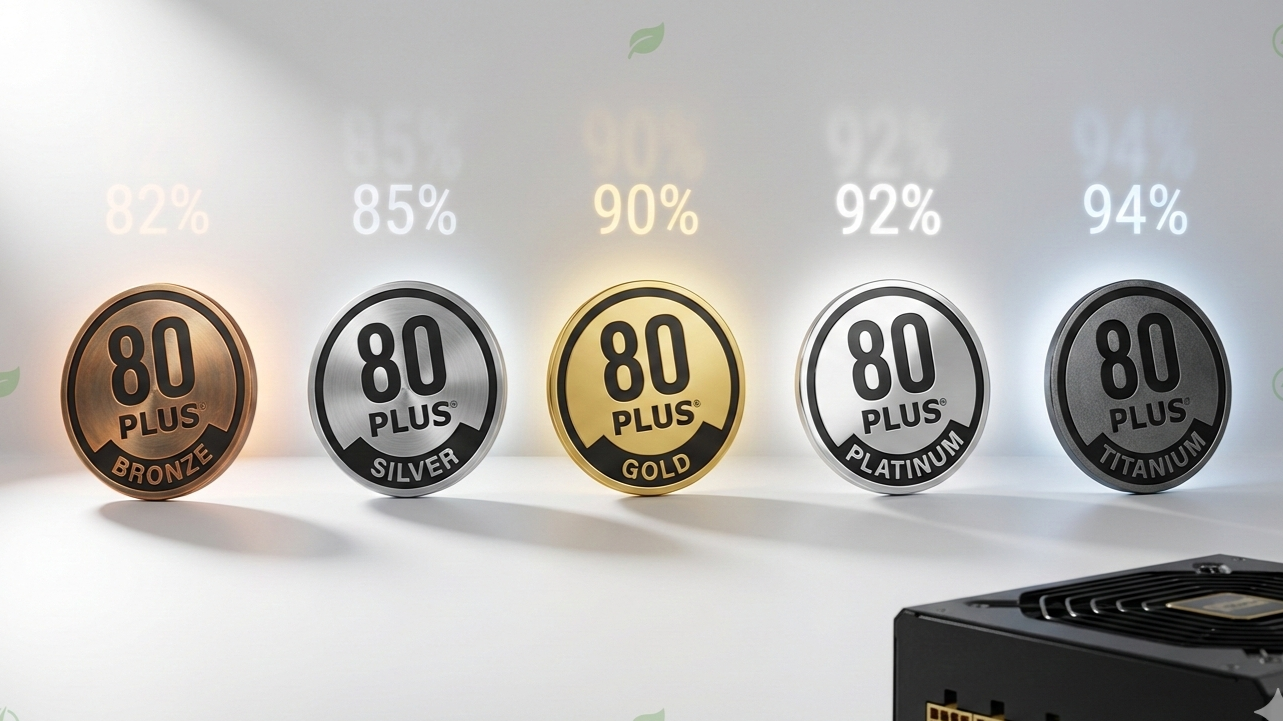
When building or upgrading a computer system in 2026, selecting the right power supply extends far beyond simply matching wattage requirements. Power supply efficiency ratings—particularly the widely recognized 80 Plus certification system—play a crucial role in determining your system’s energy consumption, operating costs, and environmental impact. Understanding these efficiency standards empowers you to make informed decisions that benefit both your wallet and the planet.
What is 80 Plus Certification?
The 80 Plus certification program represents an independent testing and certification standard for power supply units (PSUs). Launched in 2004 and continually refined, this program verifies that power supplies meet specific efficiency thresholds at various load levels. The “80 Plus” name originates from the baseline requirement: certified units must maintain at least 80% efficiency at 20%, 50%, and 100% load conditions.
Efficiency in this context refers to how effectively a PSU converts alternating current (AC) from your wall outlet into the direct current (DC) that computer components require. A power supply operating at 80% efficiency delivering 400 watts to your components actually draws 500 watts from the wall—the remaining 100 watts dissipates as heat. Higher efficiency ratings mean less wasted energy, reduced electricity bills, and lower heat generation requiring less aggressive cooling solutions.
For those building complete systems, exploring Power Supply options alongside the Custom PC Builder tool helps visualize how PSU selection impacts overall system design and budget allocation.
The 80 Plus Certification Tiers Explained
The 80 Plus program features six distinct certification levels, each with progressively stringent efficiency requirements. Understanding these tiers helps match power supply selection to specific use cases and budget considerations.
80 Plus Bronze Certification
Bronze-certified power supplies represent the entry point for 80 Plus certification. These units must achieve 82% efficiency at 20% load, 85% at 50% load, and 82% at 100% load. Bronze PSUs offer a significant improvement over non-certified units while maintaining accessible price points, making them ideal for budget-conscious builds and systems with moderate power requirements.
Bronze certification works well for office workstations, entry-level gaming systems, and home computers with power consumption below 500 watts. While not the most efficient option available, Bronze units deliver meaningful energy savings compared to uncertified alternatives.
80 Plus Silver Certification
Silver-certified power supplies raise efficiency standards to 85% at 20% load, 88% at 50% load, and 85% at 100% load. This tier occupies the middle ground between Bronze and Gold, though it’s less commonly found in the consumer market compared to its neighbors.
Silver certification suits users seeking better efficiency than Bronze without the premium pricing of Gold-tier units. These PSUs work well in mid-range gaming systems and productivity workstations where improved efficiency justifies modest price increases.
80 Plus Gold Certification
Gold-certified power supplies represent the sweet spot for many enthusiasts and system builders in 2026. Gold units must achieve 87% efficiency at 20% load, 90% at 50% load, and 87% at 100% load. This certification level has become the de facto standard for quality gaming systems, professional workstations, and performance-oriented builds.
The efficiency improvements of Gold certification translate into measurable electricity cost savings over the PSU’s lifespan, particularly in systems that run continuously or under heavy loads. Gold-rated units also typically feature higher-quality components, better voltage regulation, and improved reliability compared to Bronze and Silver alternatives.
When planning system configurations, the PC Power Supply Calculator helps determine appropriate wattage requirements, allowing you to select Gold-certified units that match your specific power needs without over-provisioning.
80 Plus Platinum Certification
Platinum-certified power supplies target enthusiast and professional markets with efficiency requirements of 90% at 20% load, 92% at 50% load, and 89% at 100% load. These premium units incorporate advanced circuit designs, superior component selection, and refined engineering to achieve exceptional efficiency levels.
Platinum PSUs excel in high-performance gaming systems, content creation workstations, and servers where systems operate under sustained loads. The reduced heat generation from improved efficiency often allows for quieter operation, as cooling fans don’t need to work as aggressively. For users building systems around high-end GPUs and powerful CPUs, Platinum certification ensures stable, efficient power delivery even under demanding workloads.
80 Plus Titanium Certification
Titanium-certified power supplies represent the pinnacle of consumer PSU efficiency, requiring 90% efficiency at 10% load, 92% at 20% load, 94% at 50% load, and 90% at 100% load. Note that Titanium certification includes an additional 10% load test, reflecting the stringent standards at this tier.
Titanium units command premium pricing but deliver maximum efficiency for users who demand the absolute best. These PSUs suit high-end workstations, rendering farms, cryptocurrency mining operations, and enthusiast systems where every percentage point of efficiency matters. The superior components and engineering in Titanium units often correlate with exceptional reliability and extended warranties.
 Real-World Efficiency Impact: Calculating Cost Savings
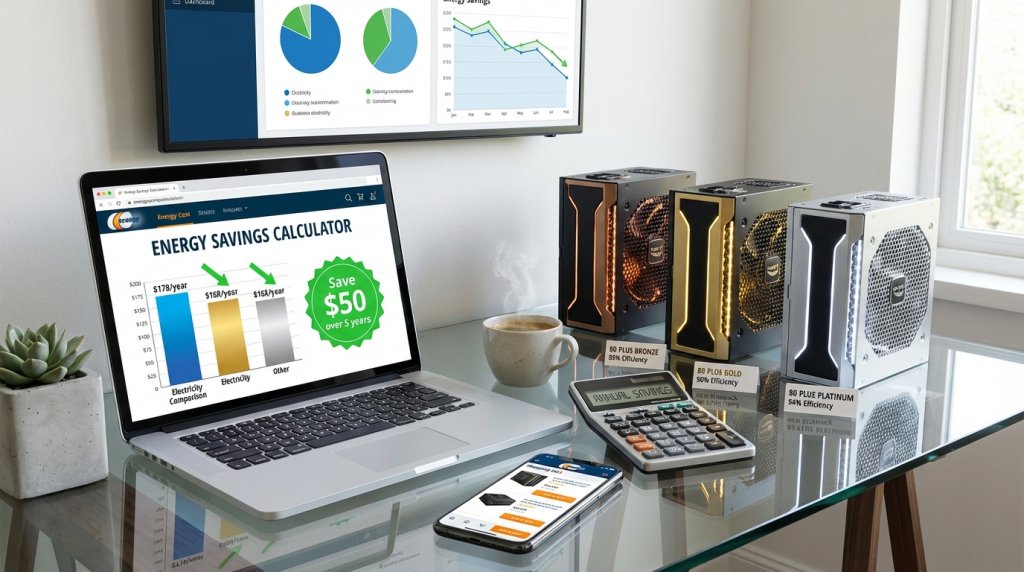
Understanding efficiency ratings in abstract percentages is one thing; translating those numbers into tangible cost savings provides clearer perspective. Consider a system drawing 400 watts from the PSU under typical load, running 8 hours daily:
Bronze Certification (85% efficiency):
- Wall power draw: 470 watts
- Annual consumption: 1,373 kWh
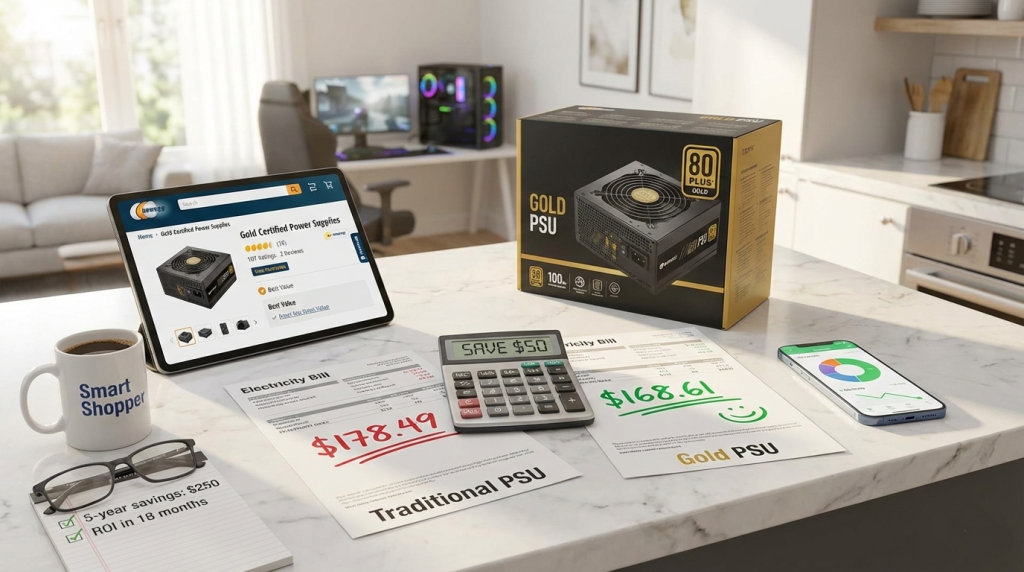
- Annual cost (at $0.13/kWh): $178.49
Gold Certification (90% efficiency):
- Wall power draw: 444 watts
- Annual consumption: 1,297 kWh
- Annual cost (at $0.13/kWh): $168.61
Platinum Certification (92% efficiency):
- Wall power draw: 435 watts
- Annual consumption: 1,270 kWh
- Annual cost (at $0.13/kWh): $165.10
Titanium Certification (94% efficiency):
- Wall power draw: 426 watts
- Annual consumption: 1,244 kWh
- Annual cost (at $0.13/kWh): $161.72
Over five years, upgrading from Bronze to Gold certification saves approximately $50, while moving from Gold to Titanium saves an additional $35. These savings increase proportionally with higher power consumption, longer operating hours, and elevated electricity rates. For systems running 24/7 or drawing significantly more power, efficiency improvements pay for themselves more quickly.
 Choosing the Right Certification Level for Your Needs
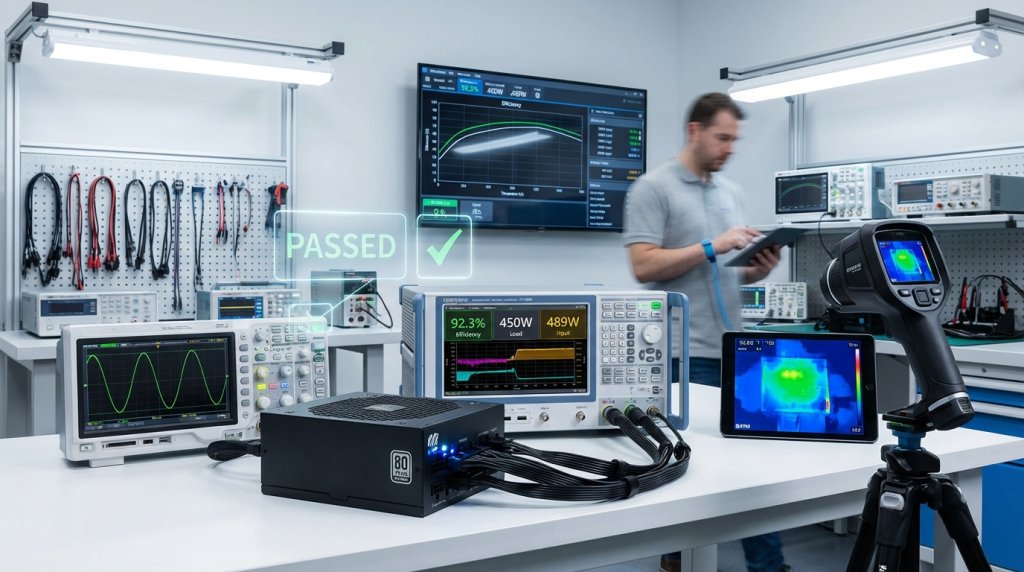
Selecting appropriate efficiency certification depends on several factors including system power consumption, usage patterns, electricity costs, and budget constraints.
Budget-Conscious Builds: Bronze certification offers meaningful efficiency improvements over non-certified units at accessible price points. For systems drawing under 400 watts with moderate usage patterns, Bronze represents a practical choice that balances cost and efficiency.
Mainstream Gaming and Productivity: Gold certification has emerged as the standard for quality builds in 2026. The efficiency improvements justify modest price premiums, especially for systems with powerful motherboards, multiple storage drives, and substantial RAM configurations.
High-Performance Workstations: Platinum certification suits professional workstations, high-end gaming systems, and content creation rigs where sustained high loads are common. The reduced heat generation and superior component quality provide tangible benefits beyond pure efficiency metrics.
Enthusiast and Professional Systems: Titanium certification targets users who demand maximum efficiency and are willing to pay premium prices for top-tier performance. These units excel in always-on systems, rendering workstations, and applications where efficiency directly impacts operational costs.
 Beyond Efficiency: Additional Considerations
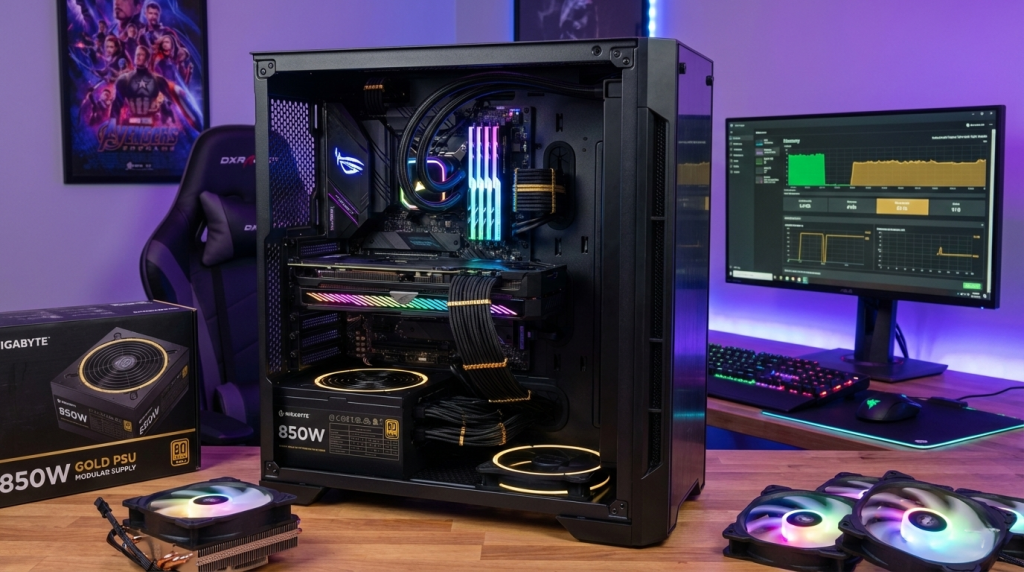
While efficiency ratings provide important guidance, comprehensive PSU evaluation considers additional factors. Build quality, voltage regulation, ripple suppression, warranty coverage, and cable management options all contribute to overall value. Higher efficiency certifications often correlate with superior specifications in these areas, though certification level alone doesn’t guarantee excellence.
Modular cable designs, available across all efficiency tiers, improve airflow and aesthetics by eliminating unused cables. Form factor considerations—particularly ATX versus SFX sizing—affect compatibility with different chassis designs.
For critical systems requiring uninterrupted operation, pairing quality PSUs with Battery Backup (UPS) solutions provides protection against power fluctuations and outages, complementing the stable power delivery that efficient PSUs provide.
 2026 Efficiency Trends and Future Developments
The power supply market in 2026 continues evolving with several notable trends. Gold certification has become increasingly affordable, with many mainstream units offering Gold efficiency at prices previously associated with Bronze units. Platinum and Titanium options have expanded significantly, providing more choices for enthusiasts and professionals.
Manufacturers are incorporating advanced features including digital monitoring, software-based power management, and improved standby efficiency. These enhancements complement traditional efficiency certifications, offering users greater control and visibility into their system’s power consumption.
Environmental considerations and energy costs continue driving demand for higher efficiency ratings. As component power requirements increase—particularly with high-performance graphics cards and processors—efficient power delivery becomes increasingly important for managing system thermals and operating costs.
 Conclusion: Efficiency as Investment
Power supply efficiency certification represents more than marketing terminology—it’s a quantifiable measure of real-world performance with tangible financial and environmental implications. Whether selecting Bronze certification for budget builds, Gold for mainstream systems, or Titanium for premium configurations, understanding efficiency ratings empowers informed decision-making.
As you plan your next build or upgrade, consider efficiency certification alongside wattage, form factor, and feature requirements. The modest price premium for higher efficiency tiers often pays dividends through reduced electricity costs, lower heat generation, and improved component longevity. In 2026’s computing landscape, efficient power supplies aren’t luxuries—they’re smart investments in system performance, reliability, and sustainability.