
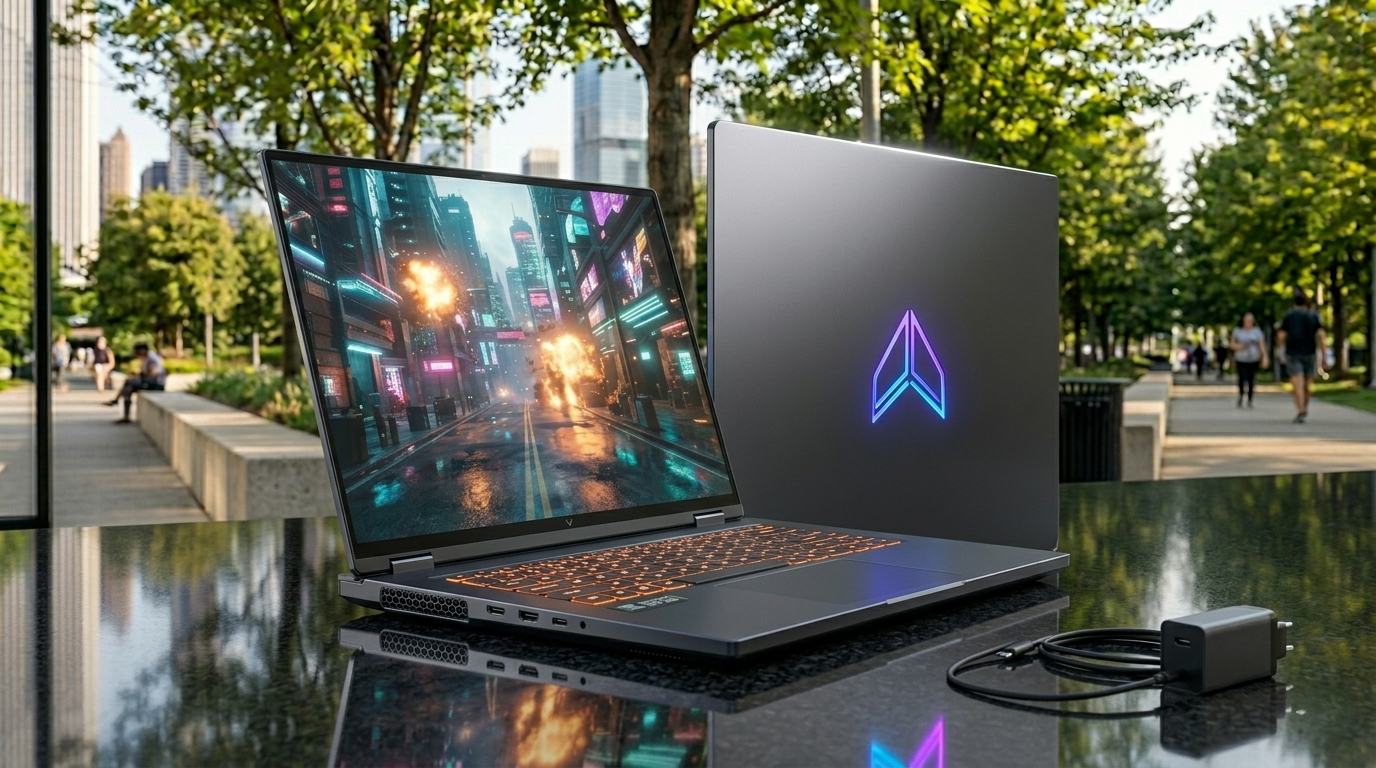
When most people think about gaming laptops, they focus on the GPU spec sheet: how many CUDA cores, what VRAM capacity, which generation of ray tracing hardware. Those metrics matter. But the questions that determine whether a gaming laptop actually improves your daily life are different ones: How does the screen look playing games at midnight with the room lights off? Can you use this machine on a two-hour flight without hunting for an outlet? Does it fit in the bag you already carry? In 2026, the answers to those questions have dramatically improved, and the display, design, and battery story of this year’s gaming laptop generation is arguably more impressive than the GPU improvements.
Displays in 2026: OLED Goes Mainstream in Gaming Laptops
The display is the component you interact with every single second of your time using a laptop. In gaming laptops, that screen has historically been a compromise: manufacturers prioritized high refresh rates for competitive gaming or high resolution for visual fidelity, but rarely delivered both in a panel that also offered accurate colors and comfortable viewing outside dark rooms.
The 2026 class of gaming laptops has effectively ended that compromise. OLED display panels have dropped sufficiently in production cost that they are now available across mid-range and flagship tiers, not just in the most expensive configurations. A 2026 OLED gaming laptop display combines 0.03ms pixel response time — eliminating motion blur entirely at the hardware level — with infinite contrast ratios that make black scenes in games actually appear black rather than gray, 1 billion color rendering for HDR content that genuinely looks different rather than just brighter, and up to 240Hz refresh rates in 1440p panels.
Samsung’s QD-OLED panels and LG’s WOLED technology, both now appearing in gaming laptop configurations, deliver up to 1,000 nits of sustained brightness and over 1,600 nits peak, making these screens genuinely usable in bright office environments for the first time. ASUS and Razer have both announced partnerships with display manufacturers to use mini-LED panels with local dimming zones as an alternative for buyers who game extensively in bright environments and prioritize peak brightness over perfect blacks.
Use the Laptop Finder tool at Newegg to filter specifically for OLED display options across different price points and GPU tiers.
 Refresh Rates and Resolution: The 1440p Sweet Spot
The resolution and refresh rate debate that dominated gaming laptop discussions in 2024 has largely settled. 2560×1600 (16:10 aspect ratio) at 240Hz has emerged as the consensus optimal configuration for the 16-inch gaming laptop class. The 16:10 ratio provides more vertical screen real estate than the traditional 16:9 format, improving usability in productivity applications, web browsing, and creative software without any disadvantage in gaming.
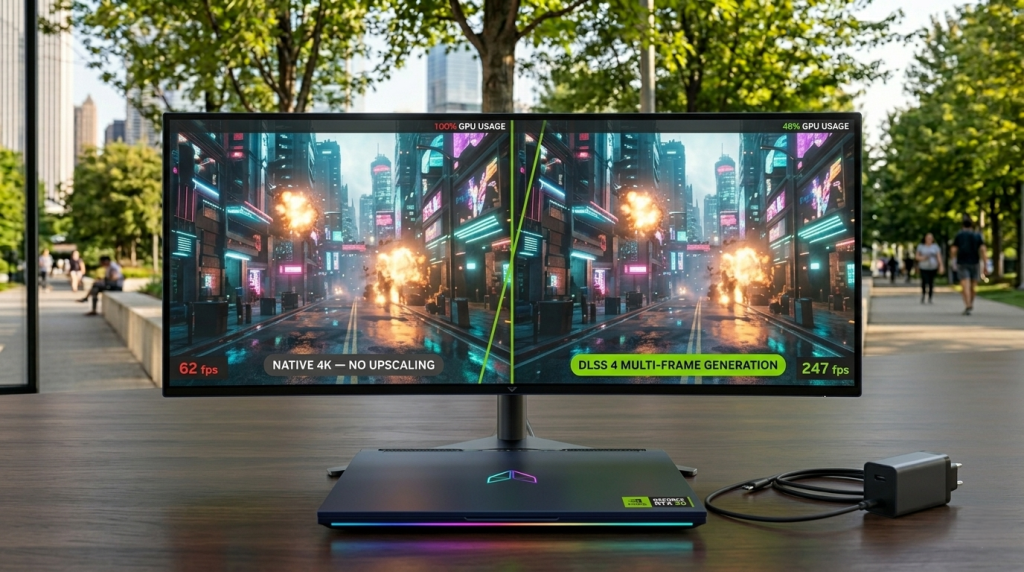
At 1440p, current-generation GPUs — including NVIDIA RTX 50 Series and AMD Radeon RX 9000M options — can deliver native framerates that actually utilize the full 240Hz without relying exclusively on upscaling. This is a meaningful improvement over 4K gaming laptop panels, where even flagship GPUs frequently cannot maintain 120fps natively in demanding titles.
For buyers focused on competitive gaming and content creation simultaneously, the 1440p 240Hz OLED combination is the clear recommendation. For buyers in the creative professional space who also game, 4K OLED at 120Hz delivers visual quality that professional photographers and video editors can use for color-critical work.
 Chassis Design: Thinner, Lighter, Still Powerful
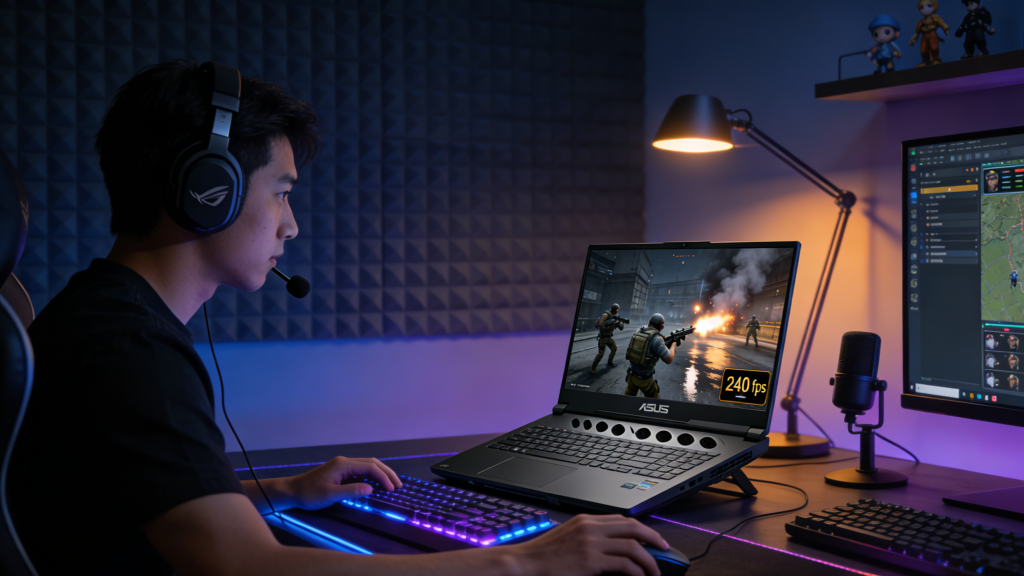
Gaming laptop chassis design in 2026 reflects a genuine shift in how OEMs understand their customer. The market segment that wanted a 30mm thick gaming laptop with a full numeric keypad and six USB-A ports has not disappeared, but it has been joined by an equally large segment that wants a machine under 20mm thick and under 2kg that still runs games well.
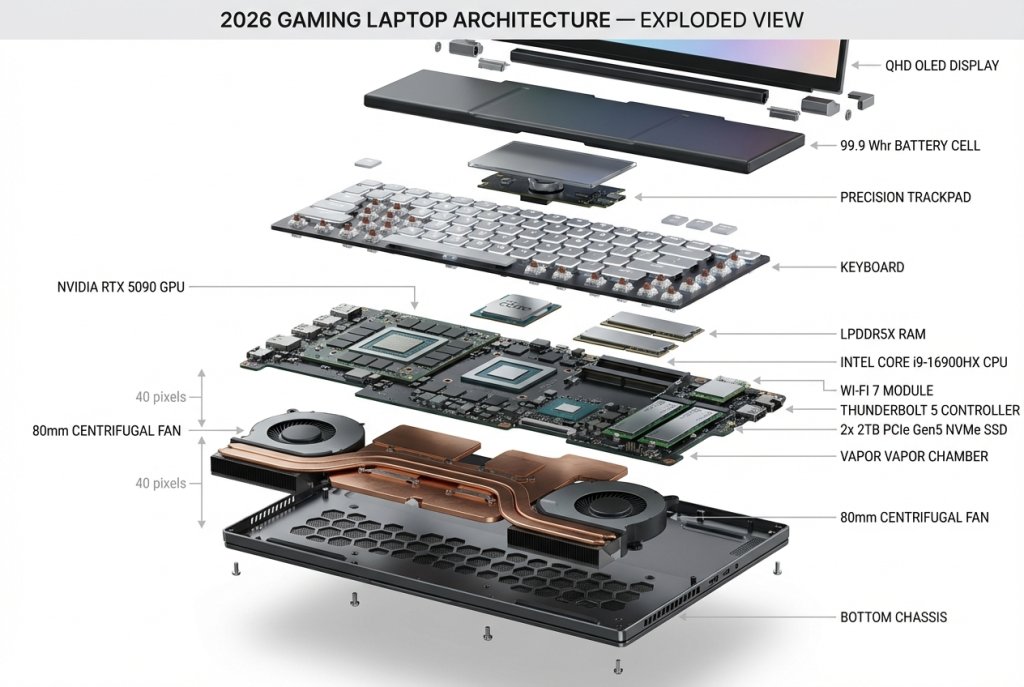
Razer’s Blade 16 2026 edition achieves a chassis thickness of 16.8mm while housing an RTX 5080 Laptop GPU, a feat made possible by vapor chamber cooling spanning the full chassis width and a Razer-developed dynamic fan control algorithm that anticipates thermal demands rather than reacting to them. The chassis is machined from a single block of CNC-milled aerospace-grade aluminum, giving it a rigidity that thick plastic gaming laptops cannot match and a surface finish that does not look like a gaming laptop in a business meeting.
ASUS’s ROG Zephyrus G16 and the Lenovo Legion Slim 7 represent the same design philosophy from different directions: premium materials, aggressive weight reduction, and thermal solutions sophisticated enough to handle GPU loads in a slim form factor. For buyers who carry their laptops daily and game in the evenings, these machines make the trade-offs worth it.
Buyers who game primarily at a desk and prioritize sustained maximum performance over portability should look at the gaming laptop selection on Newegg that includes larger 17 and 18-inch desktop replacement configurations from MSI and ASUS ROG, which run higher TGP values and deliver closer-to-desktop GPU performance.
Battery Life: The Most Improved Category
Battery life has historically been the most embarrassing specification category in gaming laptops. A machine that lasted three hours under moderate workloads in 2022 was considered acceptable. In 2026, that standard has been completely reset.
The combination of efficient mobile CPUs, intelligent power management, and larger battery capacities has pushed real-world battery life during productivity and media consumption tasks to 8-12 hours on flagship thin-and-light gaming laptops. Copilot+ PC certified gaming laptops running Intel Core Ultra 200H or Qualcomm Snapdragon X Elite processors are particularly notable here — these NPU-equipped platforms intelligently route workloads to the lowest-power processor capable of handling them, preserving battery for tasks that actually need GPU performance.
Quick charging has also become a standard feature. Most 2026 gaming laptop flagships support 140W USB-C PD charging that can deliver 50 percent battery capacity in under 30 minutes, meaning a brief airport power outlet stop before a flight meaningfully extends usable time. The included power bricks have also shrunk — some models ship with 140W GaN chargers compact enough to fit in a jacket pocket.
During gaming sessions, the equation changes: GPU workloads remain power-hungry regardless of chassis efficiency. Running an RTX 5080 laptop at full performance limits battery life to 45-90 minutes depending on workload. But the improved baseline efficiency means casual gaming — playing less demanding titles at reduced GPU clock speeds — can sustain 2-3 hours of battery gaming that was impossible with the previous generation.
 Keyboard, Trackpad, and Audio: The Forgotten Differentiators
A gaming laptop that doubles as a daily driver needs to feel good to type on for eight hours before the gaming session starts. In 2026, keyboard quality across premium gaming laptops has meaningfully improved. Per-key RGB mechanical-feel keyboards with 1.7mm to 2.0mm key travel now appear in slim chassis designs that would have been keyboard compromises two years ago.
Trackpad quality, long a weakness in gaming laptops relative to MacBook standards, has improved through the adoption of large glass-surface haptic trackpads from manufacturers like Synaptics. The ASUS ROG Zephyrus G16 and Razer Blade 16 both feature trackpads that are genuinely pleasant to use for extended periods.
Audio output has also improved: six-speaker arrays with dedicated woofers are now appearing in 18-inch gaming laptops, and even slim 16-inch models typically include stereo Dolby Atmos-certified speaker systems that sound significantly better than the single-speaker configurations that were acceptable in 2020.
 Making Your Choice: Which Gaming Laptop Design Fits Your Life?
The gaming laptop category in 2026 offers more legitimate options across more design priorities than any previous year. If portability and daily usability matter as much as gaming performance, the slim OLED gaming laptop segment — under 2kg, under 20mm, RTX 5070 or 5080 — represents the best value-per-compromise ratio the market has ever produced.
If you game at a desk most of the time and occasionally move the machine, a 17-inch gaming laptop with a higher TGP GPU delivers closer-to-desktop performance in a form factor that remains transportable. For students and young professionals who game on a budget, check the current Premium Laptop Upgrades deals at Newegg for discounts on previous-generation configurations that still represent strong value in 2026.
The Windows gaming laptops category provides a broad starting point, and Newegg’s Laptop Finder helps narrow choices based on your specific screen preference, weight limit, and GPU tier. The right gaming laptop in 2026 is one that fits your life beyond gaming — and for the first time, there are enough options to actually find that machine.