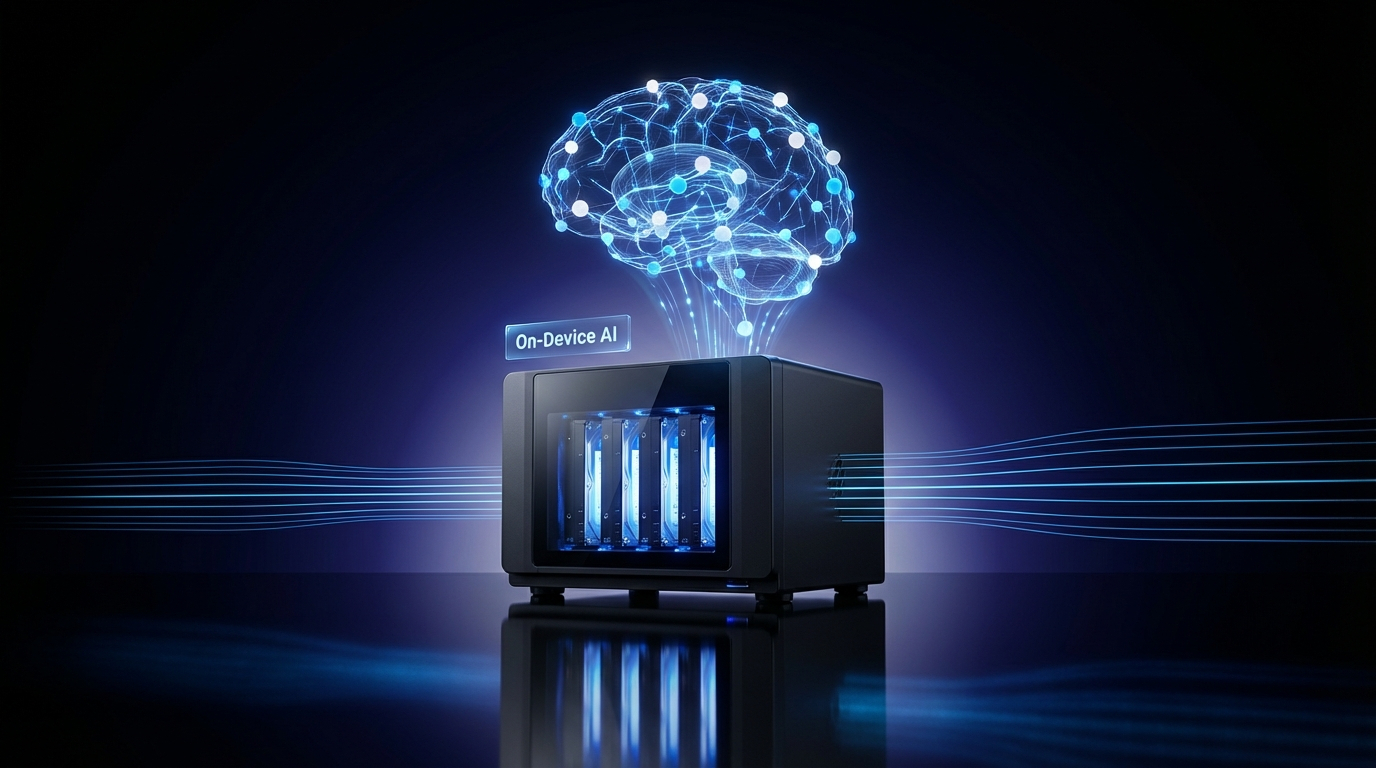
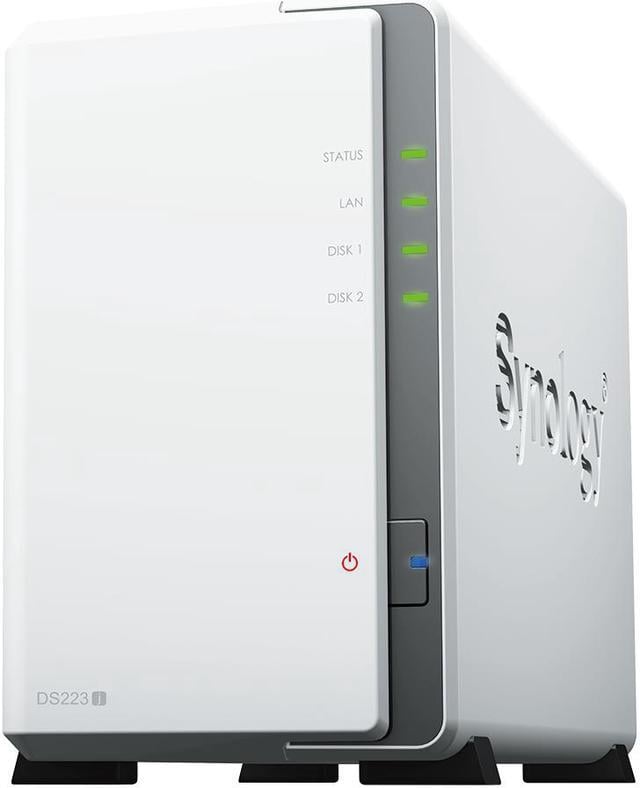
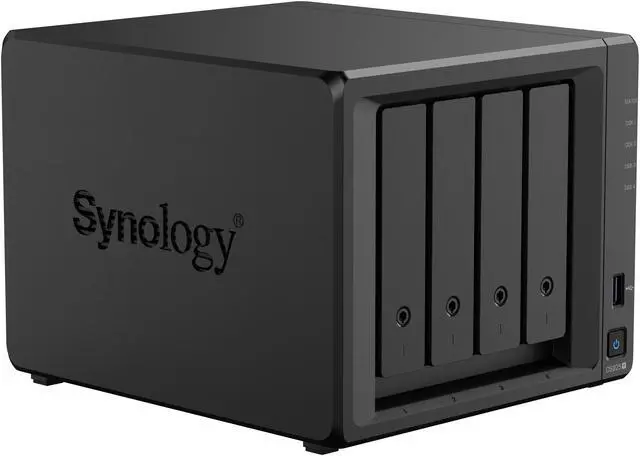
Artificial intelligence has moved from the cloud into the device itself. In 2026, the NAS — Network Attached Storage — is no longer just a box of hard drives that sits on your shelf serving files. The latest generation of NAS hardware and software integrates on-device AI inference engines, machine learning-powered organization tools, and intelligent automation that fundamentally changes what private storage can do. If you last looked at NAS devices a few years ago and found them complicated and passive, the AI-enhanced NAS platforms available today are worth a second look.
Why AI Belongs on a NAS
The case for running AI workloads on a NAS rather than in the cloud is straightforward: privacy and cost. Cloud AI services for photo recognition, video analysis, and document organization send your data to remote servers owned by third parties. Every family photo uploaded to a cloud AI photo service is processed — and potentially retained — on infrastructure you don’t control. On-device AI, running on the NAS itself, keeps your data entirely within your network. The AI model is local, the processing is local, and nothing leaves your home or office.
The cost argument is equally compelling. Subscription services charge monthly fees indefinitely. A NAS with on-device AI capabilities is a one-time hardware purchase that continues performing those AI tasks for years without recurring costs. In 2026, the combination of efficient ARM-based NAS processors and highly optimized neural network inference libraries has made running useful AI models on low-power NAS hardware genuinely practical. Synology, QNAP, and TerraMaster have each invested significantly in AI features within their NAS operating systems, and the results are now mature enough to recommend confidently.
 AI Photo Management: Face Recognition and Scene Classification
The most immediately useful AI feature on a modern NAS is intelligent photo management. Traditional photo storage on a NAS is just folders — organizing by date, camera, or manually created albums. AI photo management adds a different capability layer: the NAS analyzes every image in your collection and builds a searchable index based on faces, objects, scenes, locations, and events.
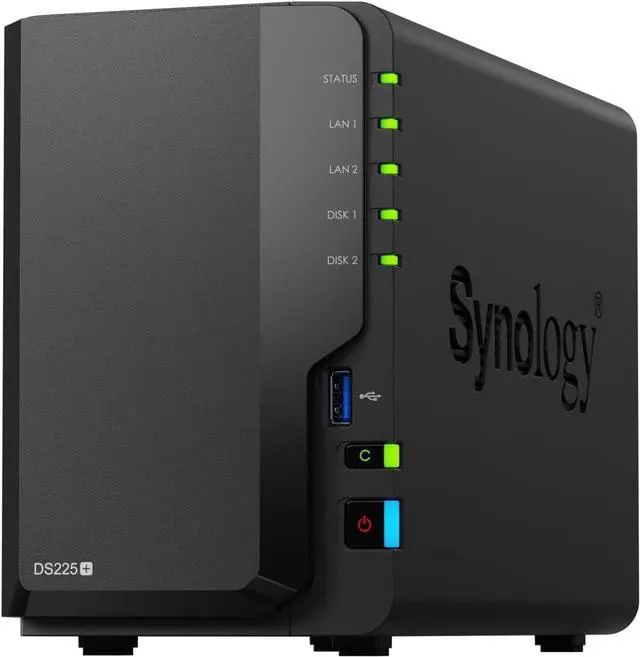
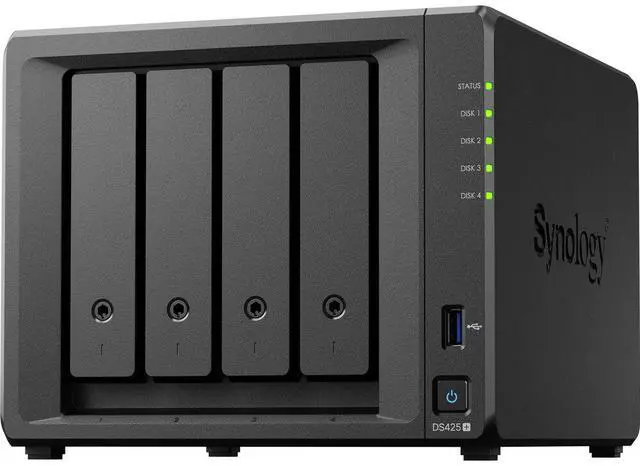
Synology’s Photos application with AI People Albums automatically identifies every person appearing in your photo collection and groups images by individual without requiring manual tagging. After an initial processing period, searching “Mom” or “birthday 2024” returns relevant images instantly from a collection of hundreds of thousands of photos. Scene recognition identifies outdoor settings, indoor rooms, food, animals, vehicles, and hundreds of additional categories. QNAP’s QuMagie application provides similar functionality with a neural network engine that runs directly on supported NAS hardware, including their TS-AI642 series built specifically for AI inference workloads.
These face and scene recognition models run entirely on the NAS using purpose-built neural processing capabilities integrated into newer NAS SoCs. The processing is slower than cloud services with massive GPU infrastructure, but the privacy preservation is complete. For families with decades of photo archives — often 50,000 to 200,000 images — on-device AI organization delivers genuine time savings over manual management.
 Intelligent Surveillance and Video Analytics
AI-powered video surveillance is one of the fastest-growing NAS use cases in 2026. IP cameras have become affordable and capable, and a NAS serves as both the recording storage and the intelligence layer for analyzing that footage. Instead of reviewing hours of video manually, AI-enhanced NAS surveillance platforms analyze footage continuously and surface only the events that matter.
QNAP’s QVR Pro surveillance platform now integrates motion-zone AI that distinguishes between a car entering a driveway, a person walking along a perimeter, a delivery package being left on a porch, and an animal moving through the yard. Each event type generates a tagged notification with a timestamped clip rather than a continuous motion-triggered alert. Person detection with silhouette recognition — without facial identification, preserving privacy — can filter out false positives from swaying tree branches or changing shadows, dramatically reducing alert fatigue.
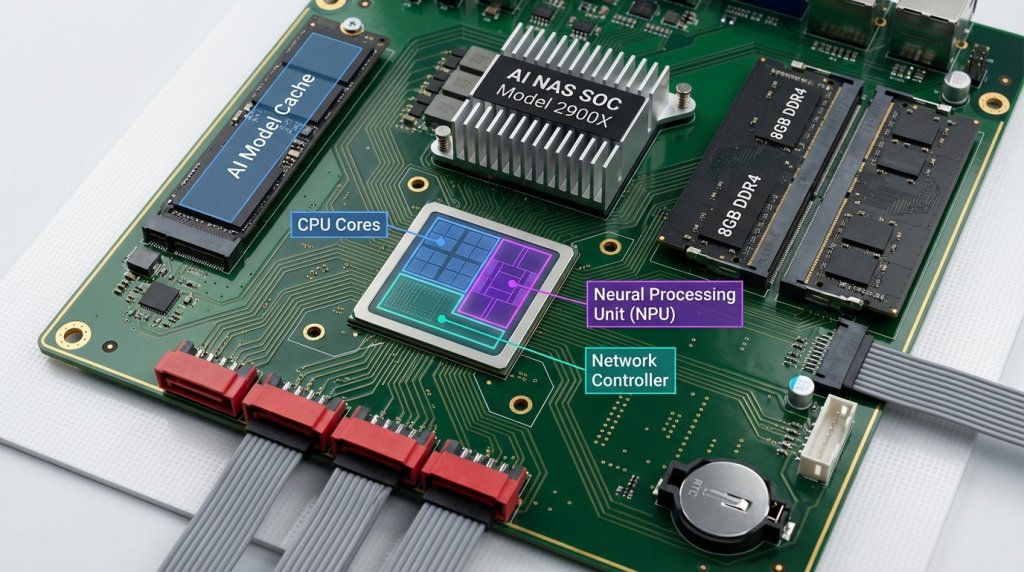
The processing happens on the NAS itself using its NPU (Neural Processing Unit) or AI-accelerated CPU cores. Desktop NAS devices from QNAP with integrated AI engine SoCs can handle four to eight simultaneous AI analytics camera streams without a dedicated GPU, making intelligent home surveillance achievable without enterprise infrastructure costs. For larger deployments with 12 or more cameras, rackmount NAS systems with dedicated NPU expansion cards handle the additional inference workload.
 AI-Assisted Backup and Data Protection
One of the subtle but significant AI applications in NAS software is intelligent data protection. Traditional backup systems are rule-based — back up these folders at this schedule to this destination. AI-enhanced backup systems understand what your data is and apply protection policies accordingly.
Synology Active Backup for Business and QNAP Hybrid Backup Sync now include anomaly detection algorithms that monitor backup job behavior over time. If a backup suddenly writes ten times the normal amount of data to the backup destination, the system flags it as a potential ransomware encryption event and alerts the administrator before the backup overwrites the last known good snapshot. This detection has become critical: ransomware targeting NAS devices has increased significantly through 2025 and 2026, and AI anomaly detection provides a layer of protection that rule-based systems cannot.
Intelligent deduplication — already a standard NAS feature — is enhanced by AI in the latest NAS platforms. The deduplication engine learns which file types and content categories are most likely to contain redundant data and applies deduplication resources accordingly, improving storage efficiency without the CPU overhead of scanning every file uniformly. For users with large media collections or VM image libraries on their NAS hard drives, this intelligence meaningfully extends drive longevity.
 Local LLM Integration: The Emerging Frontier
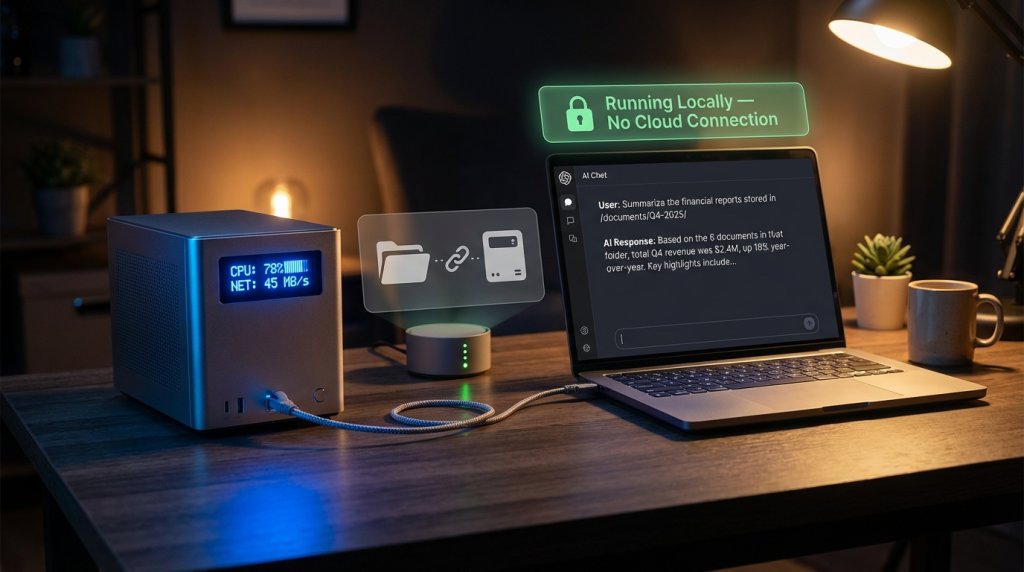
The most forward-looking AI development in the NAS ecosystem in 2026 is integration with locally hosted large language models. QNAP has introduced Container Station workflows that allow users to deploy lightweight LLM inference containers — Ollama, LM Studio, or custom deployments — directly on their NAS hardware with GPU passthrough to compatible expansion cards.
This enables a private AI assistant hosted on your own hardware: a chatbot that can answer questions about documents stored on the NAS, summarize PDFs from your archive, generate responses based on your private notes, and perform text analysis tasks — all without sending a single byte of your data to an external server. The NAS becomes a private AI infrastructure node, not just a file server.
Hardware requirements for LLM inference on a NAS are meaningful — models at the 7-billion-parameter scale require 8–16GB of VRAM and benefit significantly from GPU acceleration — but the ecosystem is advancing rapidly. Several 2026 NAS models include PCIe expansion slots that accept consumer GPU cards for exactly this purpose. Browse the full NAS category at Newegg to compare AI-capable models with expansion options.
 Getting Started with an AI-Capable NAS
Selecting an AI-capable NAS in 2026 requires attention to hardware specifications beyond drive capacity. Look for models with NPU integration in the SoC — Synology’s AS6706T and QNAP’s TS-AI642 and TS-AI1282Z series explicitly support AI engine acceleration. Ensure the NAS has sufficient RAM for AI inference: 8GB is a minimum for photo recognition workloads, and 16GB or more is recommended for video analytics or LLM applications.
Newegg’s NAS Builder tool helps configure a complete AI-capable NAS system by pairing enclosures with compatible NAS hard drives, memory upgrades, and network interface cards optimized for high-throughput file serving alongside AI processing workloads.
The AI-powered NAS is not a future product — it is available today, shipping in consumer-priced hardware, and running software that genuinely delivers on the promise of private, on-device intelligence. For anyone building or upgrading a home or small business storage system in 2026, AI capabilities should be at the top of the evaluation criteria alongside capacity and connectivity.