NVIDIA at CES 2026: GPUs Beyond Graphics
 |
 |
 |
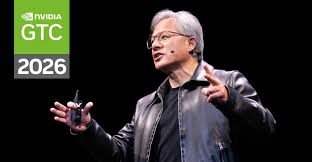
NVIDIA’s CES 2026 presence focuses less on a single product announcement and more on how its GPU platform continues to expand in scope. With CEO Jensen Huang returning to the CES stage, attention turns to how Blackwell-era technologies are moving from large AI systems into everyday PCs.
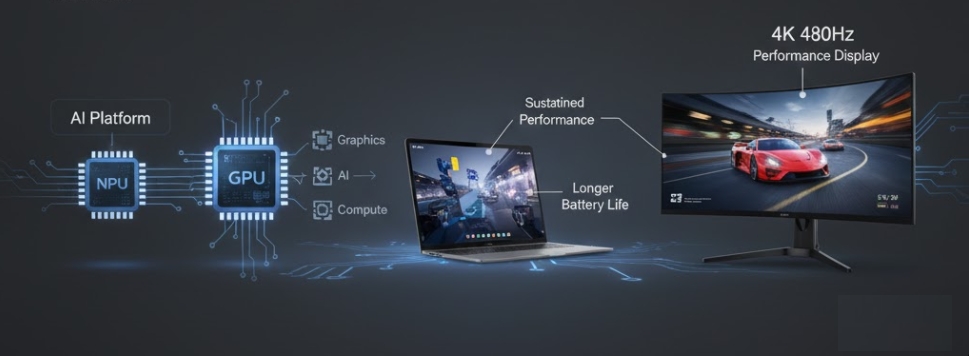
NVIDIA no longer treats GPUs as graphics-only hardware. At CES 2026, the company presents the GPU as a core system component that supports far more than games. Modern RTX GPUs now handle local AI workloads, content creation, and system-level acceleration alongside traditional rendering tasks. As more software relies on on-device inference and automation, GPUs increasingly work alongside CPUs and NPUs to manage parallel workloads and high-bandwidth tasks.
Industry discussion ahead of CES also points to growing interest in NVIDIA’s consumer graphics roadmap. CES is not usually the company’s primary venue for launching new GeForce cards, but many observers expect added clarity around the next phase of the RTX 50-series. The focus is shifting away from raw performance alone. Instead, attention centers on VRAM capacity, power efficiency, and how GPUs support mixed gaming-and-AI workloads.
On the software side, NVIDIA continues to highlight platform features rather than individual specifications. Reflex and G-SYNC remain important for competitive gaming. At the same time, AI-focused tools increasingly target creators and professionals who want to automate parts of their workflow.
For PC buyers, CES 2026 reinforces a clear takeaway. Graphics cards are no longer judged only by frame rates. Through AI-assisted creation, real-time encoding, and background acceleration, GPUs now shape how PCs behave throughout the day.
Intel at CES 2026: Panther Lake and a More Integrated PC Platform
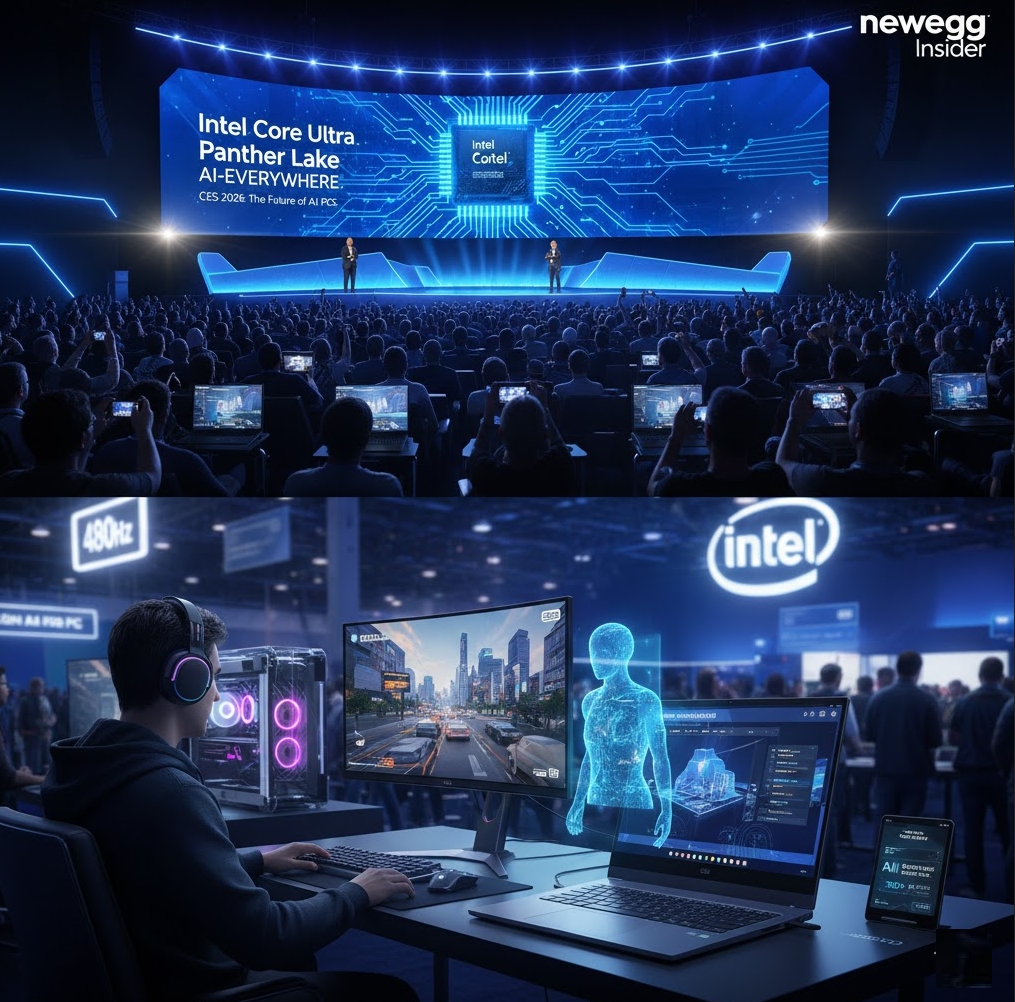
Intel arrives at CES 2026 with a clear priority: bringing AI capability into mainstream PCs without sacrificing efficiency. The company uses the show to introduce its Core Ultra Series 3 processors, built around the Panther Lake architecture.
Panther Lake shifts attention away from peak clock speeds. Intel instead focuses on efficiency, especially in mobile systems. Built on Intel’s latest manufacturing process, these processors aim to deliver stronger performance per watt—a metric that matters most in modern laptops.
The platform combines traditional CPU cores, integrated Arc graphics, and dedicated neural processing units (NPUs). This design allows the system to assign each task to the most efficient hardware block instead of pushing everything onto the CPU.
This approach reflects a wider industry trend. At CES 2026, vendors no longer treat AI as an optional feature. Processors now support continuous background tasks such as media processing, voice enhancement, and system-level optimization by default. Panther Lake fits this model well, particularly in thin-and-light laptops where battery life and sustained responsiveness matter more than short benchmark bursts.
The same focus on balance appears in the CES Innovation Awards. Several recognized products highlight how supporting components evolve alongside CPUs and NPUs. One example is Samsung’s PM9E1 compact NVMe SSD, honored in the Computer Hardware & Components category. Its small form factor and high throughput show how storage adapts to AI-ready laptops without adding unnecessary power draw or heat.
Taken together, Intel’s CES 2026 showcase presents a practical view of where PC hardware is heading. Instead of redefining performance through raw numbers, the focus shifts to how CPUs, NPUs, graphics, and storage work together. For buyers, that means PCs that feel consistently fast and responsive during everyday use.
AMD at CES 2026: Keynote and CPU Roadmap Direction
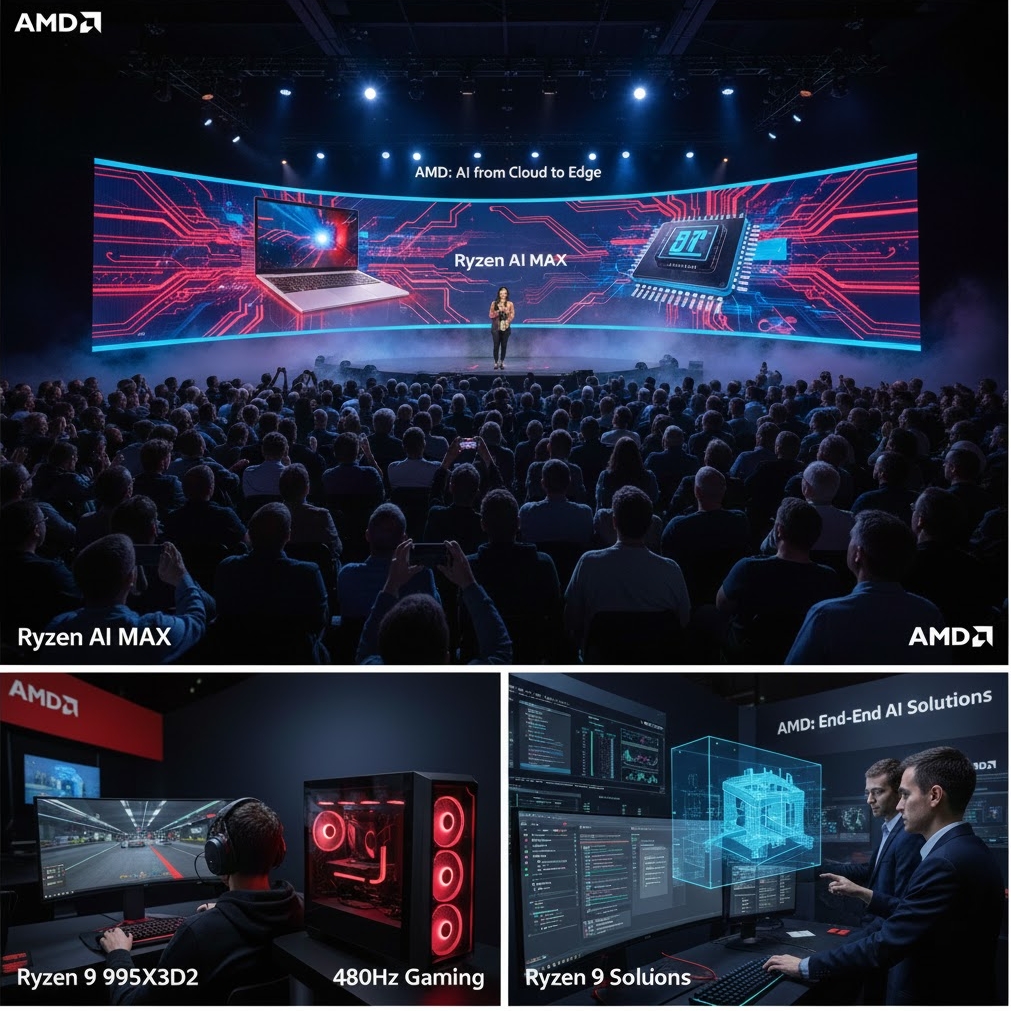
AMD returns to the CES keynote stage with CEO Dr. Lisa Su, continuing the company’s effort to frame AI as something that spans every type of device. At CES 2026, AMD focuses less on changing direction and more on tightening the connection between its existing CPU and GPU strengths.
A recurring theme in AMD’s CES presence is how components work together. Ryzen CPUs and Radeon GPUs increasingly operate as a unified platform, supporting gaming and productivity without forcing trade-offs. This approach reflects how people actually use PCs, often switching between work, creation, and play throughout the day.
For desktop enthusiasts, attention centers on AMD’s next wave of X3D processors, with the Ryzen 7 9850X3D often mentioned as a reference point. Building on the success of earlier 3D V-Cache designs, these processors continue to target high frame rates and stable gaming performance. AMD’s strategy here is evolutionary, refining a formula that already resonates with performance-focused users.
AMD’s roadmap also extends beyond desktops. Architectures such as Gorgon Point and Strix Point aim to bring stronger integrated graphics and expanded NPU capability to handheld devices and creator-focused laptops. By pairing RDNA-based graphics with on-device AI acceleration, AMD supports workloads that mix gaming, media processing, and background AI tasks within tighter power limits.
Software plays a steady supporting role. Updates to FSR show how AMD uses software to extend hardware capability, whether through improved image quality, smarter frame generation, or broader game support. These changes arrive gradually, but they shape the overall experience AMD highlights at CES.
NPUs: A Quiet but Important Shift in PC Design
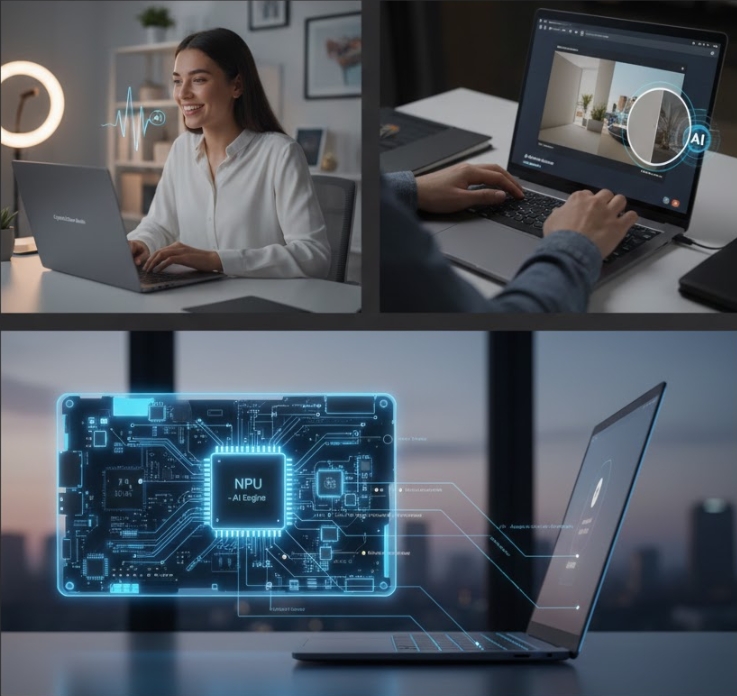
NPUs may not dominate CES headlines, but their role continues to grow. At CES 2026, manufacturers treat neural processing units as standard parts of modern processors rather than experimental features.
Unlike CPUs or GPUs, NPUs run continuously and efficiently. They handle background AI tasks that benefit from staying active at all times. Common examples include noise reduction during calls, real-time image enhancement, and system intelligence that adapts to user behavior.
Running these tasks on a CPU or GPU wastes power. In laptops, that directly affects battery life and thermal limits. By offloading them to NPUs, systems stay responsive without generating extra heat.
The result is simple. Users rarely notice NPUs directly. They work in the background, improving efficiency and consistency without changing how PCs feel to use—and that quiet role is exactly why they matter.
Laptops and Desktops: Practical Refinement
 |
 |
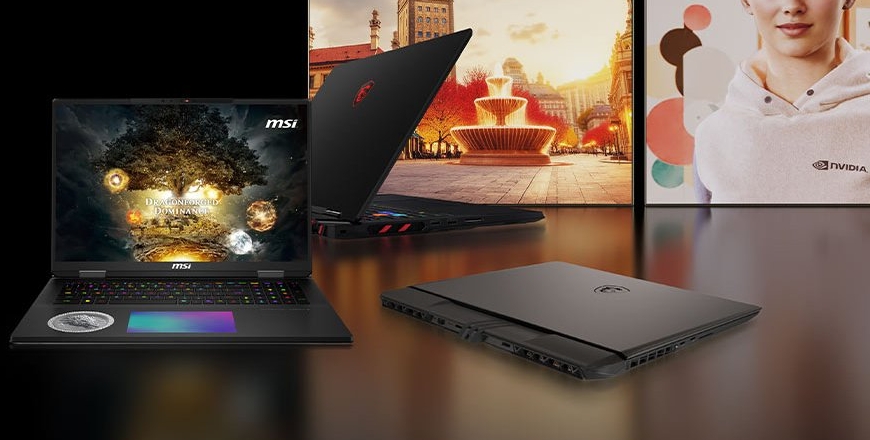
CES 2026 does not reinvent the PC, but it shows how laptops and desktops continue to improve in measurable ways. Across systems built on platforms from Intel, AMD, and NVIDIA, several shared priorities stand out.
Laptops emphasize efficiency first. Vendors focus on thermal balance, display quality, and sustained performance rather than peak specifications. OLED panels and higher refresh-rate displays appear more often, while AI features remain subtle and supportive.
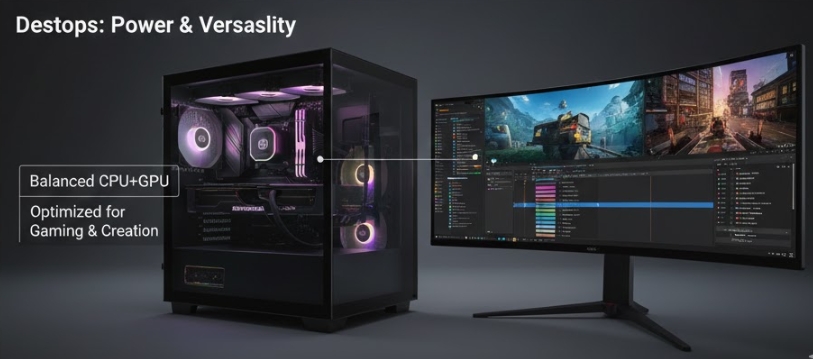
Desktops follow a different path. With fewer constraints, builders concentrate on refinement. Balanced CPU-GPU pairings, cleaner designs, and flexible configurations support gaming, streaming, and content creation within a single system.
Monitors: Displays Catch Up to Performance
As system performance climbs, displays face pressure to keep up. CES 2026 places renewed attention on monitors, especially as GPUs and CPUs outgrow older panels.
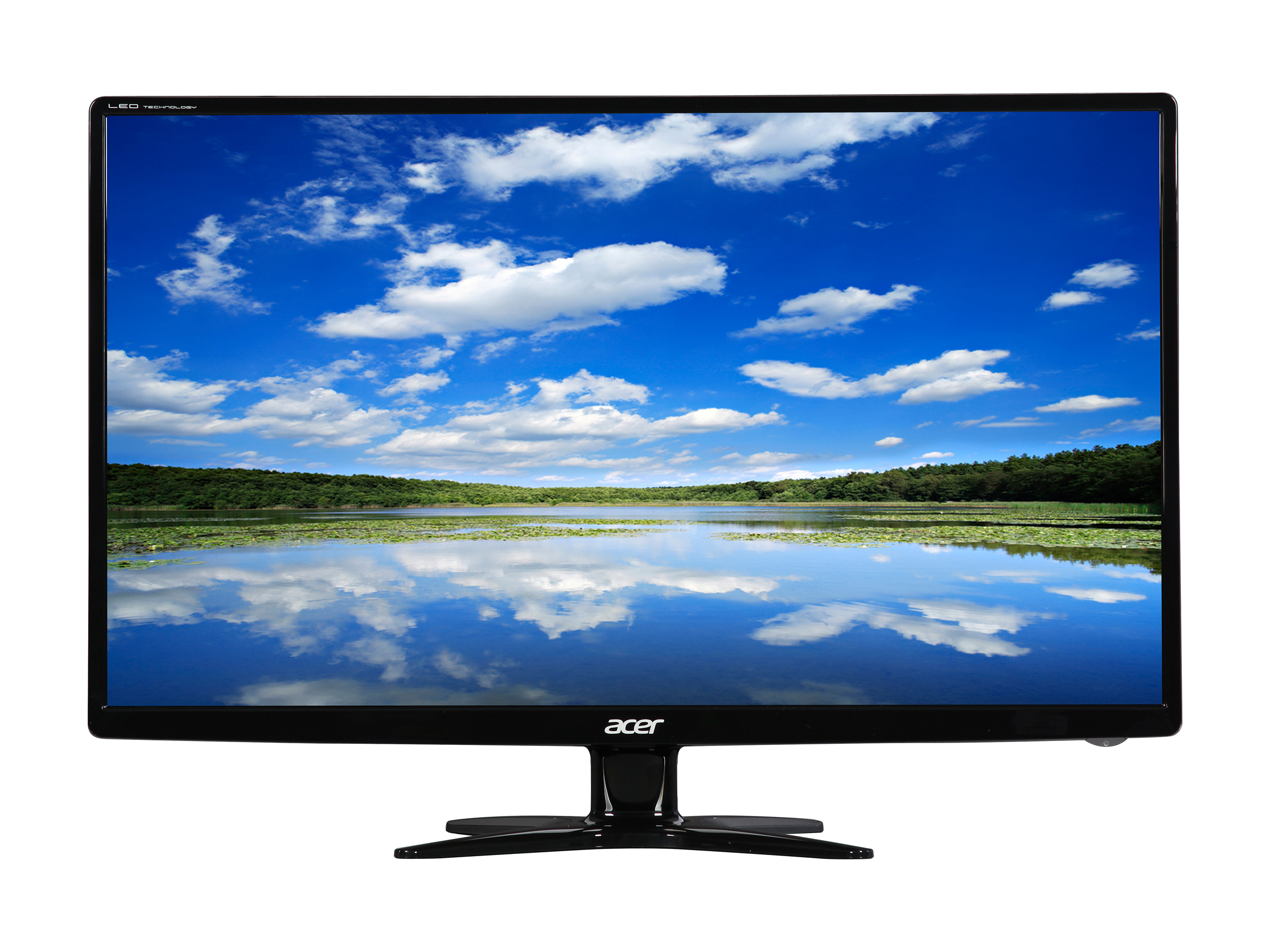
Manufacturers highlight higher refresh rates, better color accuracy, and stronger HDR support. OLED and advanced LCD displays now appear beyond premium models, reaching gaming and productivity-focused screens. Ultrawide and larger formats continue to gain popularity among multitaskers and creators.
CES sends a clear message. Monitors no longer serve as secondary accessories. They directly shape how users perceive system performance.
Printers and Supporting Hardware
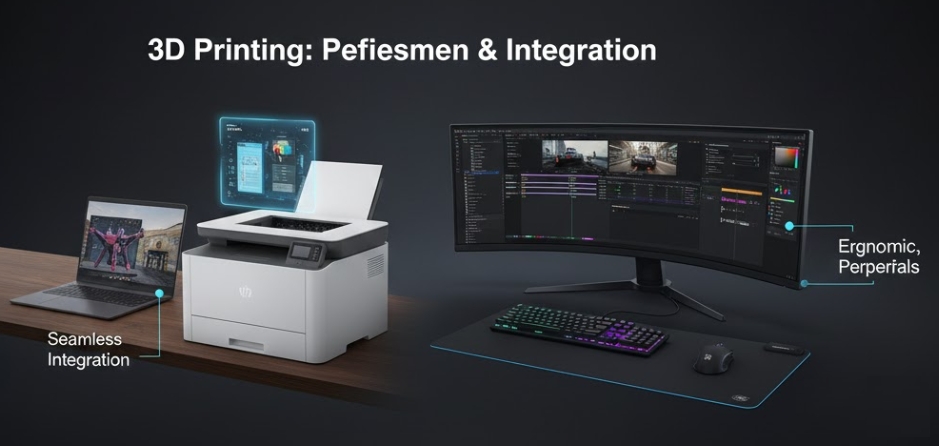
Beyond PCs and displays, CES also showcases steady progress in supporting hardware. Printers, 3D printing solutions, and peripherals may not lead headlines, but they remain essential for many setups.
Improvements here focus on reliability, software integration, and ease of use. These quieter advances help round out the mature PC ecosystem on display at CES.
What CES 2026 Signals for PC Buyers
CES 2026 does not hinge on one disruptive announcement. Instead, it reflects a steady shift toward systems that behave more intelligently and manage resources more efficiently.
Key signals for buyers include:
-
CPUs and NPUs working together as standard platform features
-
GPUs expanding beyond graphics into broader acceleration roles
-
Laptops prioritizing efficiency and consistency
-
Monitors evolving into true performance components
Together, these trends offer a grounded preview of where consumer hardware is heading—not through hype, but through incremental improvements that add up over time.