

Crimson Desert is Pearl Abyss’s most ambitious open-world RPG to date — a sprawling, visually spectacular game featuring large-scale combat, dynamic weather systems, rich NPC ecosystems, and environments built to test modern gaming hardware. Like every demanding open-world RPG in its class — from Black Myth: Wukong to Elden Ring to The Witcher series — Crimson Desert rewards players who bring properly configured hardware to the table. Getting the best experience from this genre requires more than raw power. It requires smart component choices, dialed-in in-game settings, and hardware working in precise harmony. This guide covers every tuning decision that matters, whether you are upgrading a current build or planning something entirely new.
GPU: Your Most Important Tuning Decision
The graphics card defines your performance ceiling for every open-world RPG. These games render vast environments with dynamic lighting, volumetric weather, complex particle effects, and layered shadow cascades — all in real time, at every moment of gameplay. Crimson Desert’s combat arenas, mountain passes, and coastal environments are GPU-bound at any resolution above 1080p.
For smooth 60+ fps at 1440p ultra settings, the NVIDIA RTX 4070 Ti Super or AMD RX 7900 XTX represent the right performance tier. Targeting 4K demands more: cards with 16GB or more of VRAM handle open-world texture streaming without compression artifacts at maximum settings. Browse Newegg’s GPU catalog or the GPUs & Video Graphics Cards subcategory to compare current options and pricing.
One upgrade that costs nothing: enable DLSS on NVIDIA cards or FSR on AMD cards. Quality-mode AI upscaling delivers near-native resolution visuals at 30–50% lower GPU load — one of the most impactful optimizations available for demanding open-world titles.
 CPU: Power the World Simulation
Open-world RPGs are more CPU-intensive than their visual focus suggests. Beyond rendering, these games continuously simulate AI behavior, dynamic weather transitions, day-night cycles, crowd systems, and physics interactions across the entire game world. Crimson Desert’s large-scale battle sequences — where dozens of enemy types act simultaneously — push multi-core CPU performance hard.
A modern 8 to 12-core processor is the recommended foundation. The Intel Core i9-14900K, AMD Ryzen 9 7950X, or the current-generation Ryzen 9 9900X each deliver the sustained multi-threaded throughput these games demand. Pair your processor with a platform-matched motherboard — AMD AM5 for Ryzen 9000 series, or Intel’s current socket for Core processors — and verify your power supply provides adequate headroom, particularly for high-end GPU configurations. Visit Newegg’s CPU & Processor category for detailed spec comparisons across platforms.
RAM: Give the Open World Room to Breathe
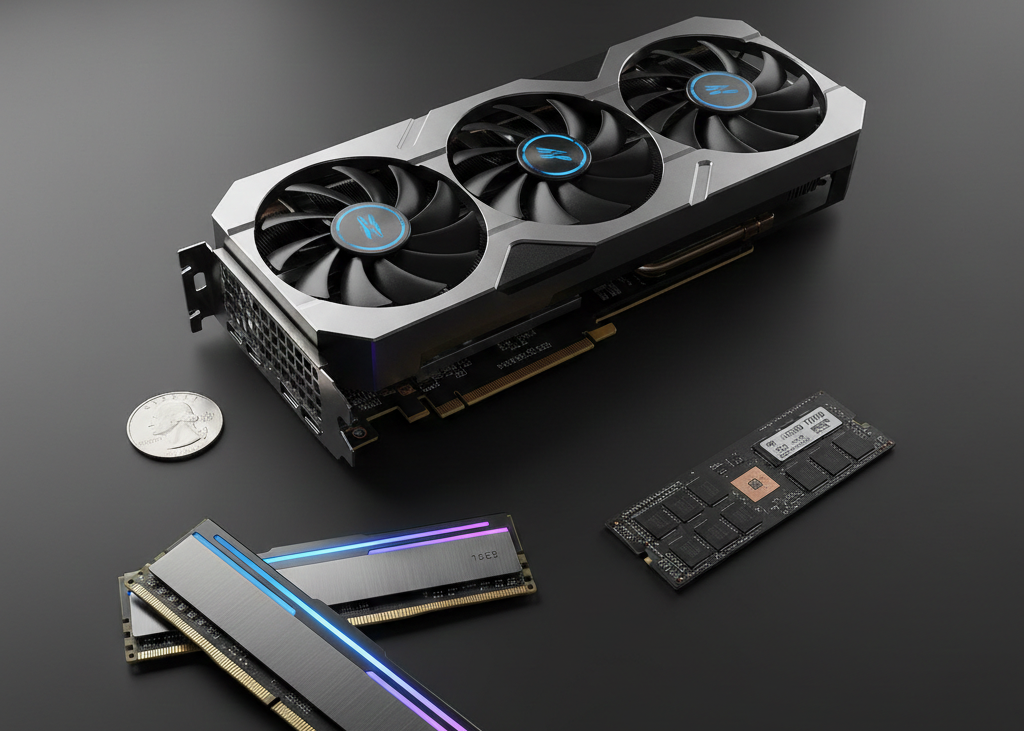
Open-world RPGs stream enormous amounts of data — geometry, textures, audio, NPC state information — from storage into RAM continuously during gameplay. With 16GB, transitions between zones, fast travel events, and dense combat scenarios can produce visible stutter as the system struggles to fit active game data into memory. 32GB DDR5 eliminates that pressure entirely and gives comfortable headroom for streaming software, Discord, and a browser running simultaneously.
DDR5 at 6000MHz or higher provides meaningful bandwidth gains in memory-intensive workloads — exactly the profile open-world texture streaming creates. Look for kits with XMP or EXPO profiles for one-click performance activation. Explore Newegg’s Memory category for DDR5 options across budget and performance tiers.
 Storage: Eliminate Immersion-Breaking Load Pauses
Fast storage directly determines how seamless an open-world RPG feels. Slow drives produce texture pop-in when the game world streams faster than storage can deliver assets, loading delays during fast travel, and brief stutters entering new zones — each one an immersion break in a genre built on seamless world continuity.
A PCIe Gen 4 NVMe SSD with sequential read speeds of 5,000 MB/s or higher eliminates these artifacts. Gen 5 drives push beyond 10,000 MB/s for even faster streaming, though Gen 4 remains the best performance-per-dollar choice for most builds. Plan for at least 2TB of game storage — Crimson Desert, combined with a typical RPG library, consumes space rapidly. A secondary hard drive handles media archives and keeps your fast SSD reserved for active games.
In-Game Settings: Which Levers Move the Needle
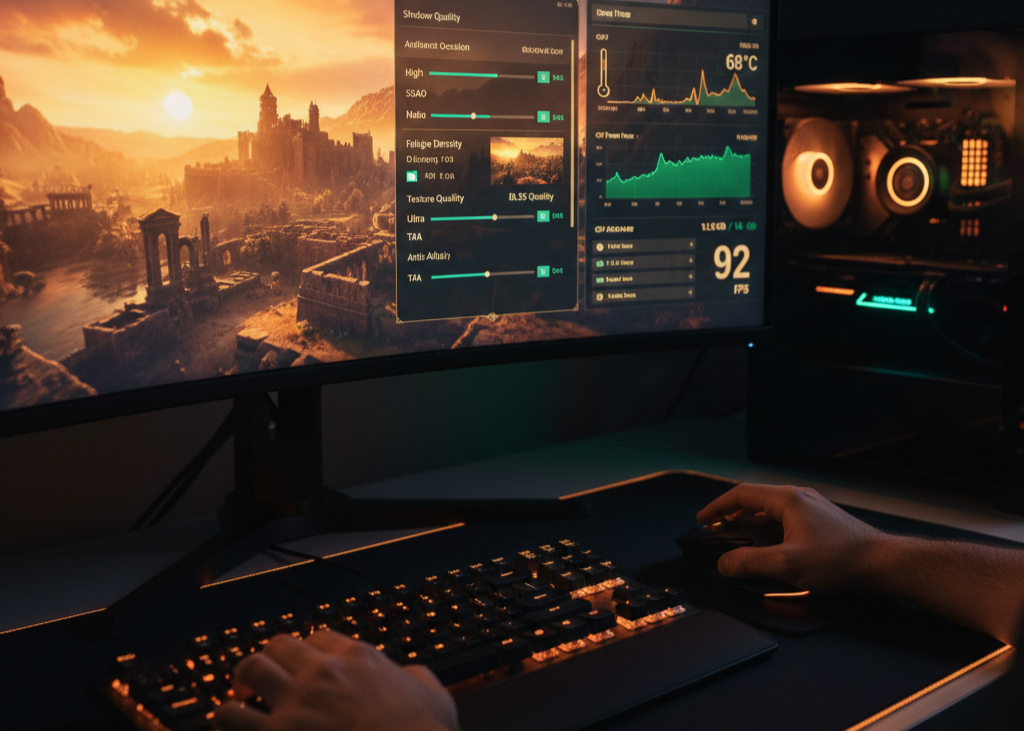
Even powerful hardware benefits from knowing which settings to prioritize. These adjustments apply broadly across Crimson Desert and similar open-world RPG titles:
Shadow Quality: The single largest performance drain in most open-world games. Dropping from Ultra to High typically recovers 15–25% frame rate with minimal visible difference in most gameplay scenarios.
Ambient Occlusion: SSAO delivers near-identical visual quality to HBAO+ at significantly lower GPU cost. This is often the best invisible performance gain available.
Texture Quality: Keep at Ultra if your GPU carries 8GB or more of VRAM. Reducing texture quality degrades visual fidelity more dramatically than any other setting — protect this one.
Foliage Density: Vegetation rendering in open-world environments is GPU-expensive. Reducing by one tier recovers meaningful frame rate during overworld exploration, where foliage is densest.
AI Upscaling (DLSS / FSR / XeSS): Enable this first, before reducing any other setting. Quality mode delivers near-native resolution visuals at a fraction of native rendering cost. For open-world RPGs, this is the highest-impact single optimization available.
Anti-Aliasing: Use TAA or allow your upscaler to handle AA. Disable legacy MSAA in open-world titles — it offers minimal visual return at high performance cost.
 Display and Peripherals: Complete the Experience
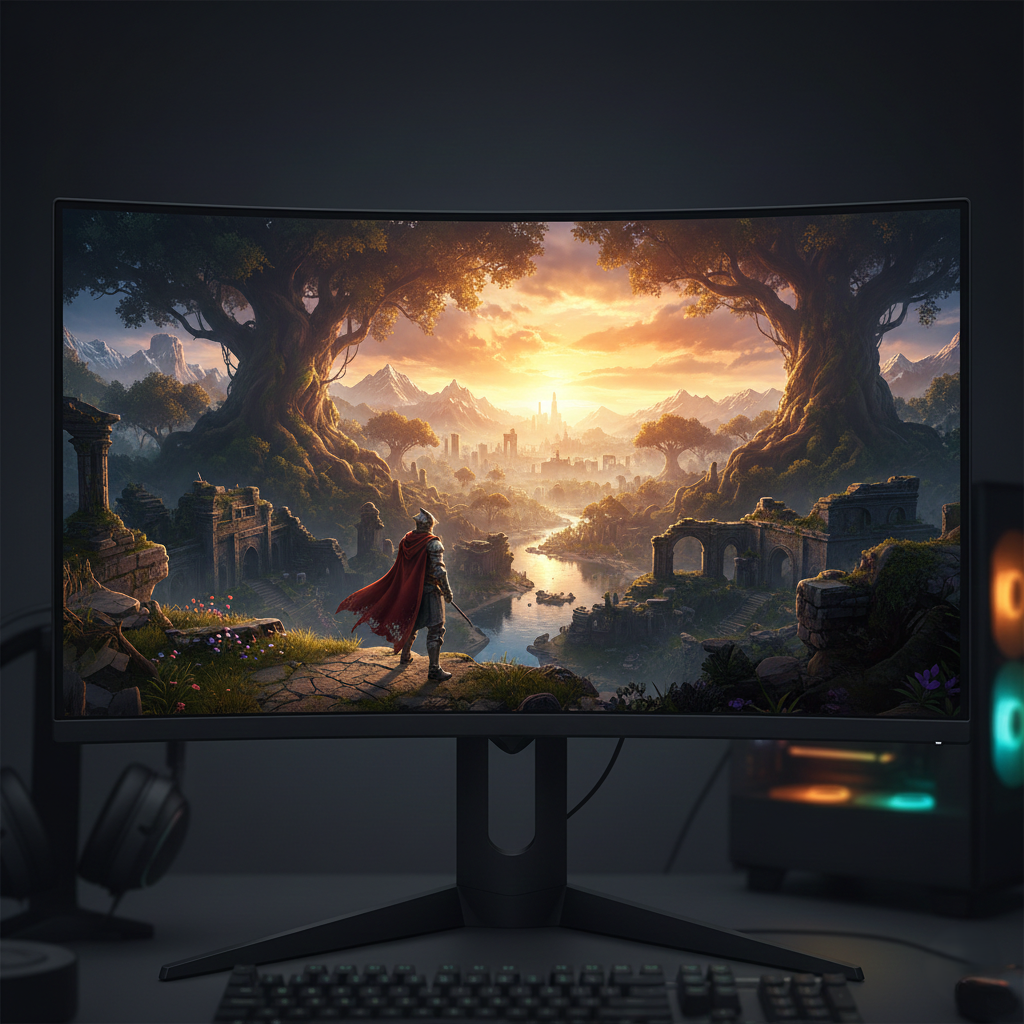
The right monitor transforms how open-world RPGs feel. For Crimson Desert’s wide vistas and cinematic combat sequences, a 4K gaming monitor with 144Hz refresh rate and HDR support reveals the full visual scope of Pearl Abyss’s world-building. A 1440p 165Hz display offers the ideal resolution-to-frame-rate balance for the widest range of hardware configurations.
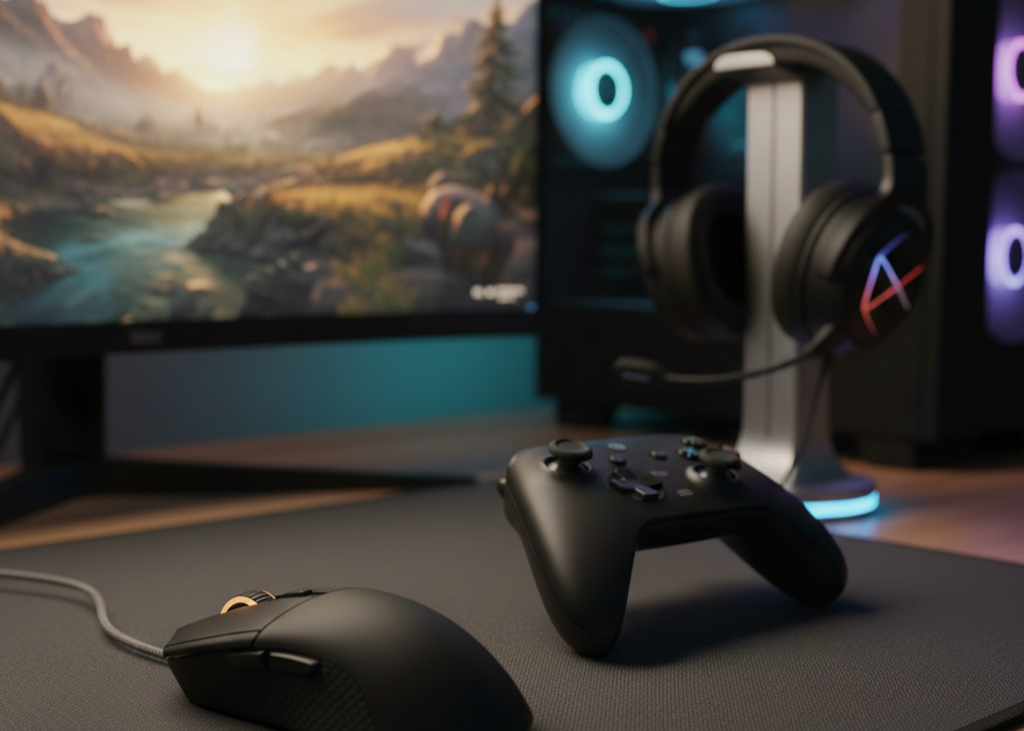
Open-world RPGs reward dual-input setups. A precision gaming mouse handles camera control and targeting with accuracy that analog sticks cannot match. A quality PC game controller excels during exploration, mounted combat, and cinematic story moments — many open-world players switch fluidly between both. A gaming headset with spatial audio brings the environmental depth these games build into every scene: wind through mountain passes, distant battle audio, and layered ambient sound design that rewards listening.
 Build Custom or Buy Ready-Made
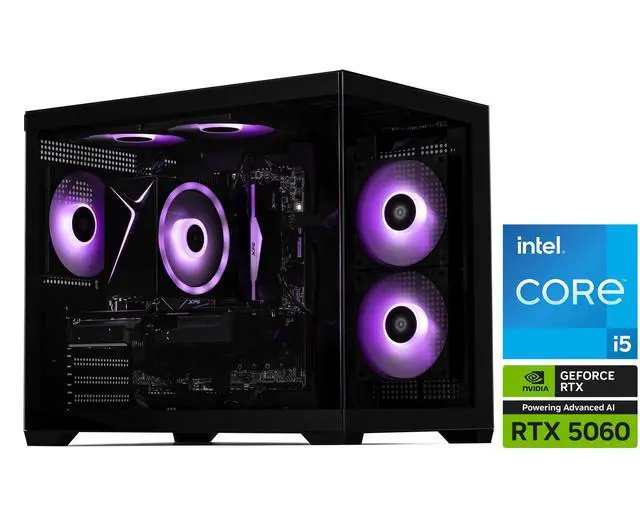
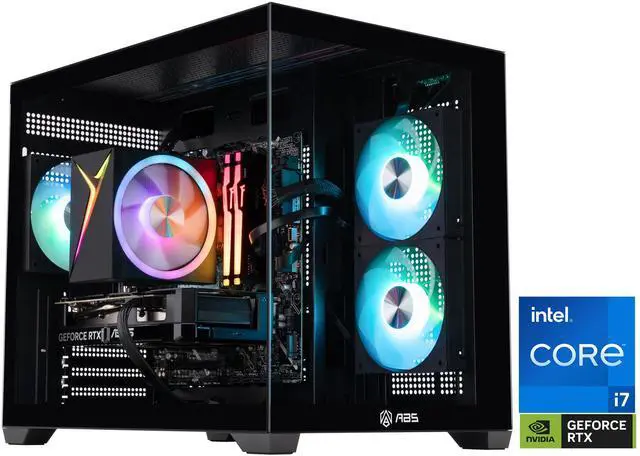
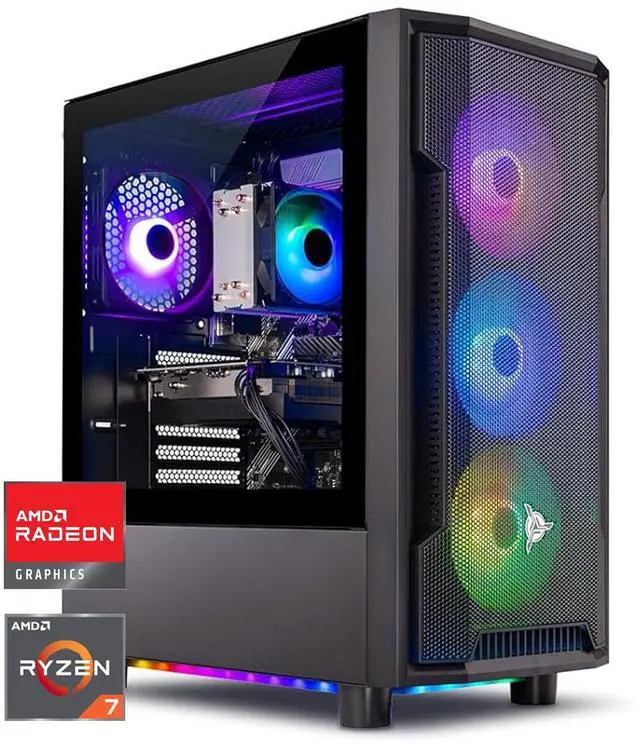
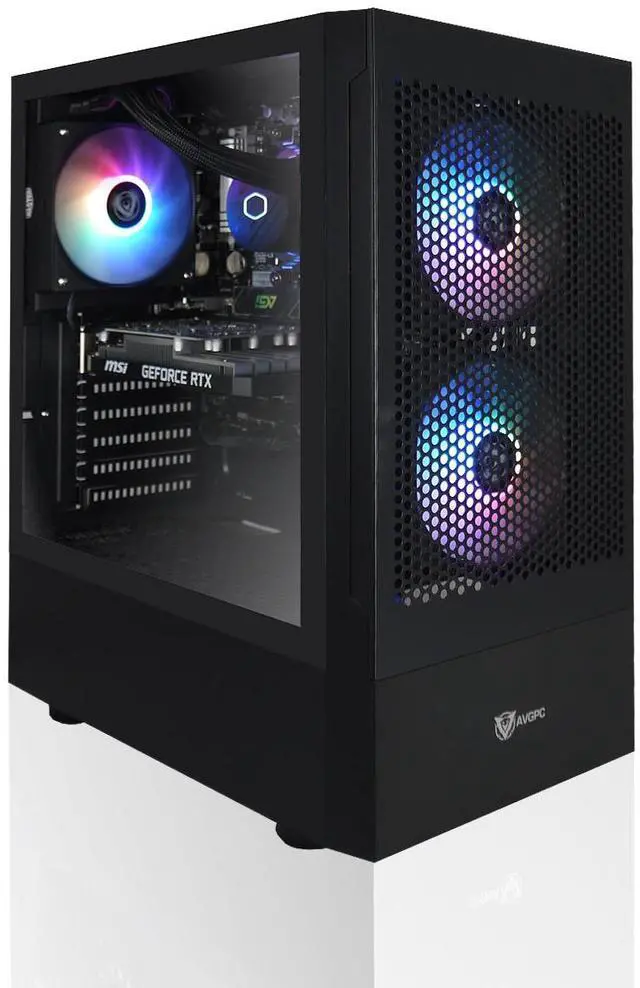
Not every Crimson Desert player wants to build from scratch — and that is entirely valid. Pre-built gaming desktop PCs offer immediate out-of-box readiness, warranty coverage, and zero assembly friction. Newegg’s best-selling desktop computers and lowest-priced desktop computers list strong options at multiple price points.
For those who prefer a custom build, Newegg’s Custom PC Builder handles component compatibility verification automatically. The Gaming PC Finder delivers curated hardware recommendations matched to your budget and performance goals — a useful starting point whether you are a first-time builder or a veteran upgrader.
Tune Smart, Play Without Limits
Crimson Desert and the open-world RPGs that follow will continue raising the performance bar. The hardware decisions and settings optimizations in this guide apply directly to the entire genre — building a strong foundation now means you are ready for every ambitious title ahead, not just the next one. Prioritize your GPU and storage investment, secure 32GB of DDR5, apply the in-game optimizations above, and pair it all with the right display and peripherals. The result is not just a better-looking game — it is a fundamentally more immersive experience, the way every open-world RPG was designed to be played.