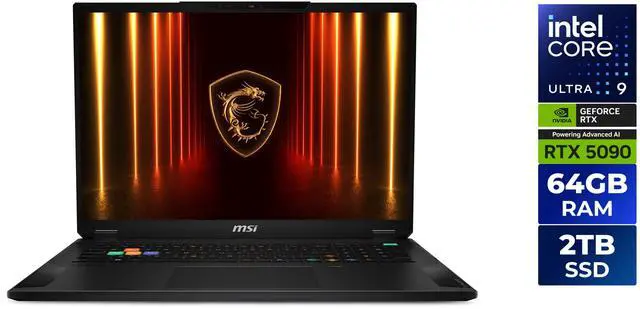
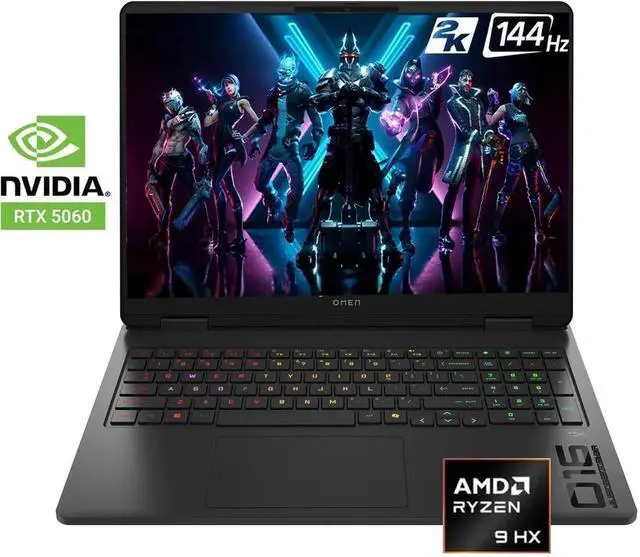
Gaming laptops in 2026 are no longer the thermal compromises they once were. The gap between desktop and portable gaming performance has narrowed to a point where most buyers will find little reason to sacrifice mobility for raw power. At the center of this shift sits NVIDIA’s GeForce RTX 50 series, built on the Blackwell GPU architecture and arriving across gaming laptops from every major manufacturer. Whether you’re a competitive esports player chasing maximum frame rates or a content creator who also games, understanding what the RTX 50 series delivers — and why it matters — is essential before making a purchasing decision this year.
The Blackwell Architecture: What Actually Changed
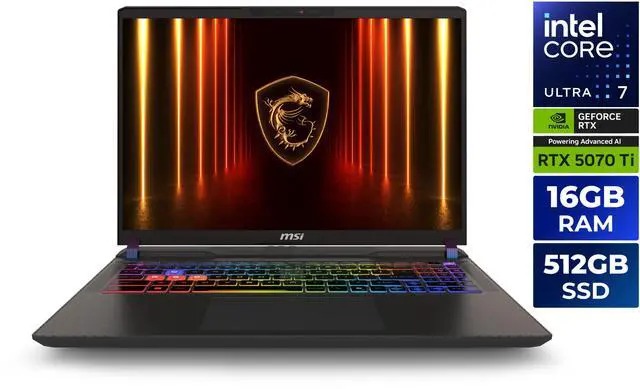
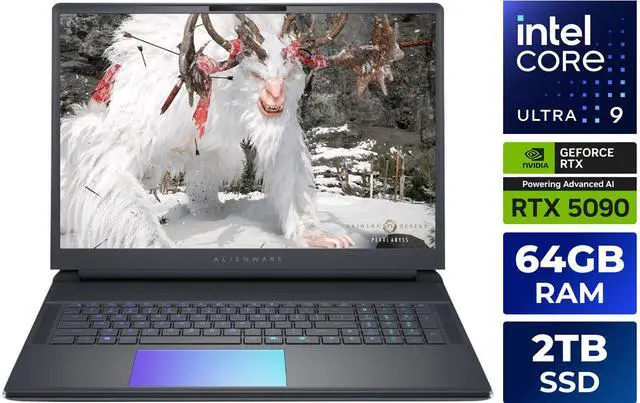
NVIDIA’s Blackwell architecture made its debut in data center and desktop GPUs before moving into mobile form factors with full gaming feature parity. The RTX 5090 Laptop GPU and RTX 5080 Laptop GPU represent the flagship options, while the RTX 5070 Ti, RTX 5070, and RTX 5060 cover the performance segments where most buyers will land.
The core advancement in Blackwell is the fifth-generation Tensor Core design, enabling a significant leap in AI-accelerated rendering without proportional increases in power consumption. Shader performance has increased by approximately 30 percent over the previous Ada Lovelace generation at equivalent power budgets. For gaming laptops — where thermal headroom is always the limiting constraint — this efficiency improvement has immediate, practical consequences. You get more frames per second without additional heat or battery drain, which is exactly what portable gaming hardware needs.
NVIDIA has also introduced Blackwell’s new Streaming Multiprocessor design, which improves thread scheduling efficiency and reduces latency in rendering pipelines. Games that previously exhibited micro-stuttering due to CPU-GPU synchronization issues see smoother frame delivery with Blackwell’s improved async compute capabilities.
 DLSS 4 and Multi-Frame Generation: The AI Rendering Revolution
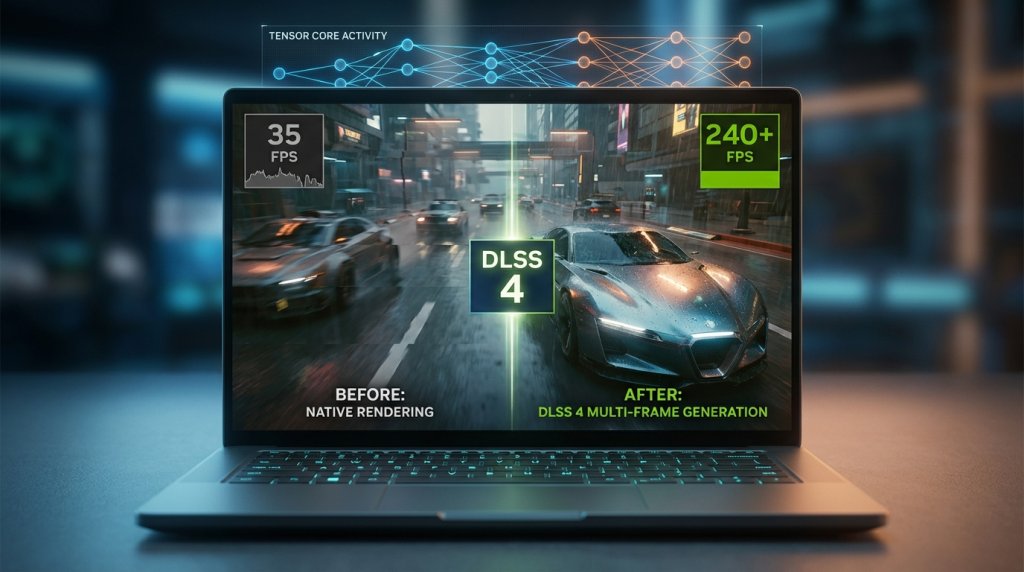
The defining feature of RTX 50 series gaming in 2026 is DLSS 4, NVIDIA’s fourth-generation AI super sampling and frame generation platform. Where DLSS 3 introduced Frame Generation to supplement upscaled resolution reconstruction, DLSS 4 advances the concept dramatically with Multi-Frame Generation — the ability to synthesize up to three additional frames for every natively rendered frame.
In practice, a gaming laptop equipped with an RTX 5070 running a demanding title at 1440p can sustain frame rates that previously required desktop-class RTX 4080 hardware. DLSS 4’s AI models were retrained on significantly larger datasets using NVIDIA’s Blackwell-based data center clusters, producing measurable improvements in temporal stability, motion clarity, and fine-detail preservation compared to DLSS 3. Ghost artifacts on fast-moving objects — a persistent criticism of earlier Frame Generation implementations — are substantially reduced.
This technology is particularly valuable for competitive gaming laptop buyers who want high refresh-rate gameplay at 1440p without sacrificing visual quality. The RTX 50 series makes that combination genuinely achievable in a portable form factor. Browse NVIDIA GeForce RTX 50 Series gaming laptops on Newegg to compare currently available models and configurations.
 Ray Tracing at Laptop Scale: Finally Practical
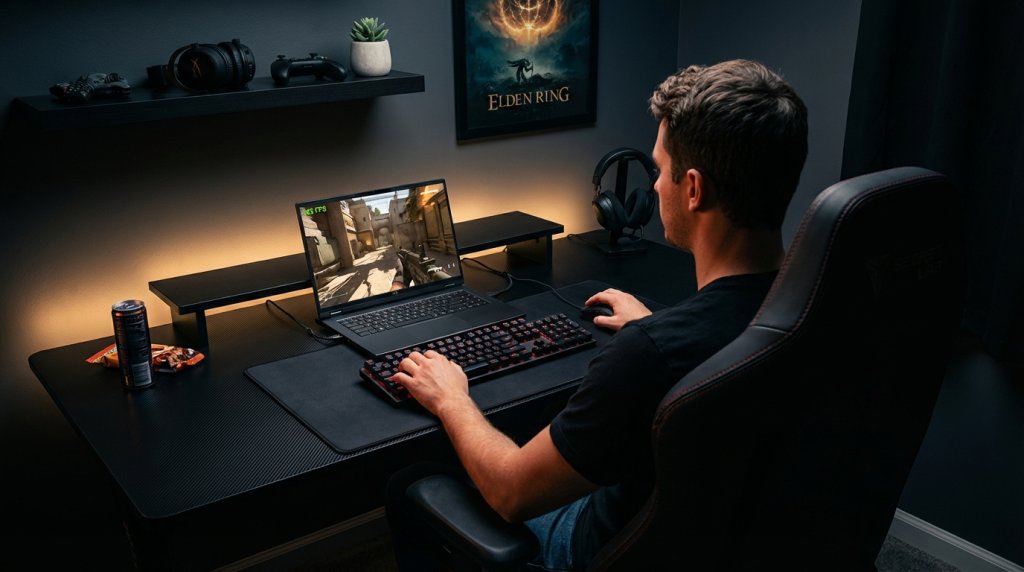
Hardware-accelerated ray tracing debuted with the RTX 20 series in 2018, but delivering it smoothly on a laptop GPU took several additional generations. The RTX 50 series represents the first laptop generation where full ray tracing at 1080p and 1440p becomes genuinely practical without DLSS as a crutch.
Blackwell’s fourth-generation RT Cores deliver roughly twice the ray-triangle intersection throughput of Ada Lovelace, enabling ray-traced global illumination, reflections, and area shadows to run with frame rate impacts that are no longer prohibitive. Games like Cyberpunk 2077 with path tracing enabled, Alan Wake 2, and upcoming 2026 titles built specifically with hardware ray tracing in mind run at playable settings on RTX 5070 and above configurations.
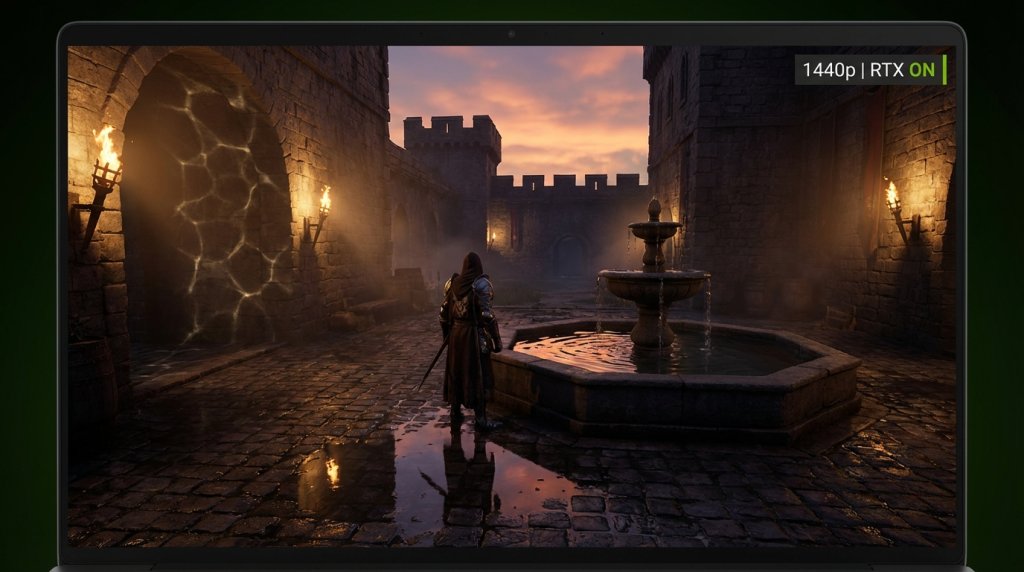
The visual difference hardware ray tracing provides — accurate light bouncing through environments, photorealistic glass and water reflections, and contact shadows with soft falloff — transforms presentation in ways rasterization fundamentally cannot replicate. If you’re buying a gaming laptop in 2026 and planning to use it through 2028 or 2029, an RTX 50 series GPU ensures compatibility with the visual standard that next-generation titles will require. Explore the complete selection of gaming laptops at Newegg to find models equipped with RTX 50 series mobile GPUs at your target price.
 Thermal Efficiency and the Thin-and-Light Breakthrough
One of the less-discussed improvements in RTX 50 series mobile GPUs is the process node advancement. NVIDIA moved to TSMC’s 4nm-class process for Blackwell mobile dies, reducing power leakage and enabling higher clock speeds at lower operating voltages. The RTX 5070 Laptop GPU sustains gaming performance at a 115W TGP (Total Graphics Power) that would have required 150W in the previous generation, creating meaningful chassis and battery life headroom.
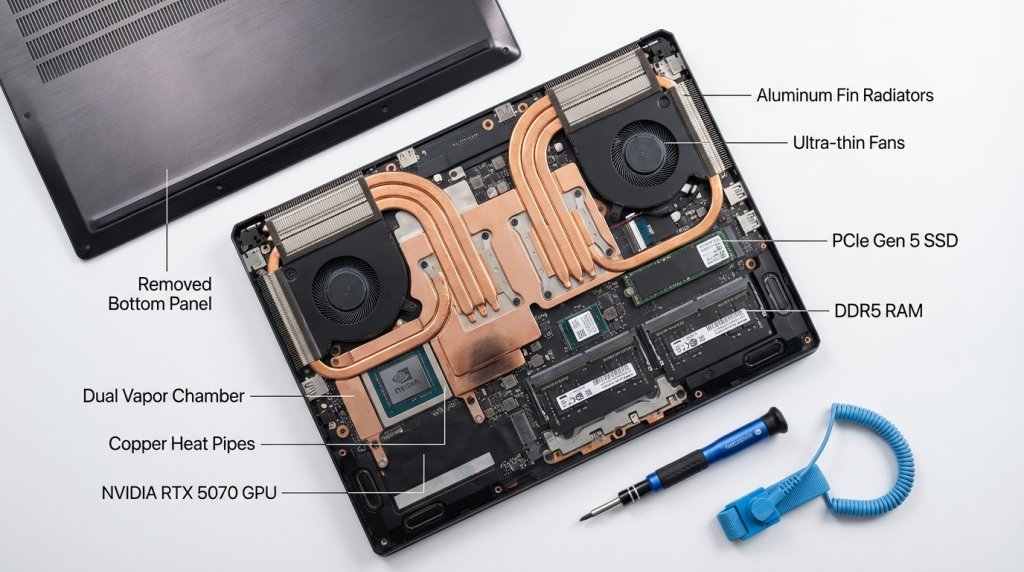
This efficiency enables a new class of thin gaming laptops that previously required compromises unacceptable to serious gamers. RTX 5070 configurations in 18mm or 19mm chassis can now sustain the performance that previously required 25mm-thick designs with large vapor chambers. Manufacturers including ASUS ROG, MSI, Razer, and Lenovo Legion have redesigned their 2026 cooling systems — incorporating dual vapor chambers, advanced thermal interface materials, and wider heat pipe arrays — specifically to extract the performance headroom Blackwell’s efficiency creates.
For buyers who carry their laptop daily but still want serious gaming capability, this efficiency story is compelling. The RTX 50 series makes a genuinely portable gaming laptop viable without the thermal throttling that plagued previous slim-chassis designs.
 Choosing the Right RTX 50 Series Configuration
Not every buyer needs the flagship RTX 5090 Laptop GPU. The right configuration depends on your resolution target, game library, and total budget. For 1080p gaming at 144Hz and above in competitive titles, the RTX 5060 delivers excellent frame rates at a price point that makes premium gaming laptops more accessible. For 1440p gaming with ray tracing enabled, the RTX 5070 is the clear choice for value-to-performance ratio. The RTX 5080 and RTX 5090 are for buyers targeting 4K gaming, demanding content creation workloads, or professional-grade AI inference tasks alongside gaming.
AI workloads are an increasingly important consideration in GPU selection. RTX 50 series mobile GPUs support local AI inference for image generation, video upscaling, and productivity tools — the same Tensor Cores powering DLSS 4 handle these workloads natively, with no dedicated AI hardware required. Tools like Newegg’s Laptop Finder allow filtering by GPU tier, display resolution, RAM, and price to identify exactly the configuration that matches your use case. With RTX 50 series gaming laptops now spanning the $999 to $3,999 range, there is a portable gaming solution for almost every serious buyer in 2026.