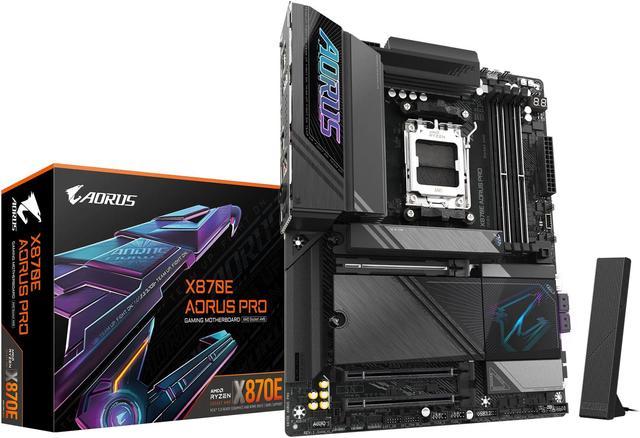
If Gigabyte’s lifestyle segment is about refinement, the gaming segment at CES 2026 is about raw, unfiltered power. The gloves are off. While the mainstream market worries about efficiency, the enthusiast crowd has only one question: How fast can it go — and how long can it stay there?
Gigabyte’s gaming division, AORUS, is leaning into that reality. At CES 2026, AORUS isn’t just refreshing specs. Instead, it’s rethinking how next-generation hardware manages heat, airflow, and sustained boost clocks.
With NVIDIA’s Blackwell architecture pushing performance density higher than ever, and AMD’s X3D chips continuing to dominate gaming workloads, AORUS is building hardware meant to tame the beasts of 2026.
The 3-Core Message from AORUS at CES 2026
AORUS’s CES 2026 lineup is built around three principles:
- More airflow through the GPU to sustain boost clocks under extreme load
- Smarter motherboard tuning for X3D CPUs to push competitive performance further
- Cleaner interiors for better airflow through reverse-connector designs and STEALTH-ready chassis
1) AORUS RTX 5090 Infinity: Rethinking Airflow for the Blackwell Era

NVIDIA’s RTX 50-series doesn’t just bring more performance. It also brings extreme thermal density. Flagship-class desktop GPUs now push power levels that can overwhelm traditional case airflow. As a result, cooling becomes the true bottleneck for builders chasing peak 4K ray tracing performance.
Gigabyte’s answer is the AORUS GeForce RTX 5090 Infinity, built around a new cooling system called WINDFORCE HYPERBURST. Gigabyte describes the design as a “double flow-through” layout. It also includes a third “overdrive” fan designed to activate during heavier loads.
Instead of only scaling fan size, AORUS is redesigning how air moves through the card. Coverage highlights a flow-through structure that pushes airflow through both sides of the GPU. It also uses advanced thermal solutions, including superconducting heatpipes and upgraded thermal materials designed for sustained high load.
Key Highlights
- WINDFORCE HYPERBURST cooling with a “double flow-through” airflow design
- Third “overdrive” fan for heavy-load scenarios
- Advanced heat transfer materials + superconducting heatpipe approach
- Compact size for flagship class: 330mm x 145mm x 65mm
- Vertical 16-pin 12V-2×6 power connector + dual BIOS
- RGB Halo lighting for flagship presentation
Why it matters
For RTX 5090-tier builds, heat extraction is the new bottleneck. Better airflow design helps the GPU avoid becoming a thermal wall inside your case. That can translate into higher sustained boost clocks, especially during long sessions and heavy ray tracing workloads.
2) X3D Turbo Mode 2.0: Squeezing Every Drop from AMD’s Gaming Kings
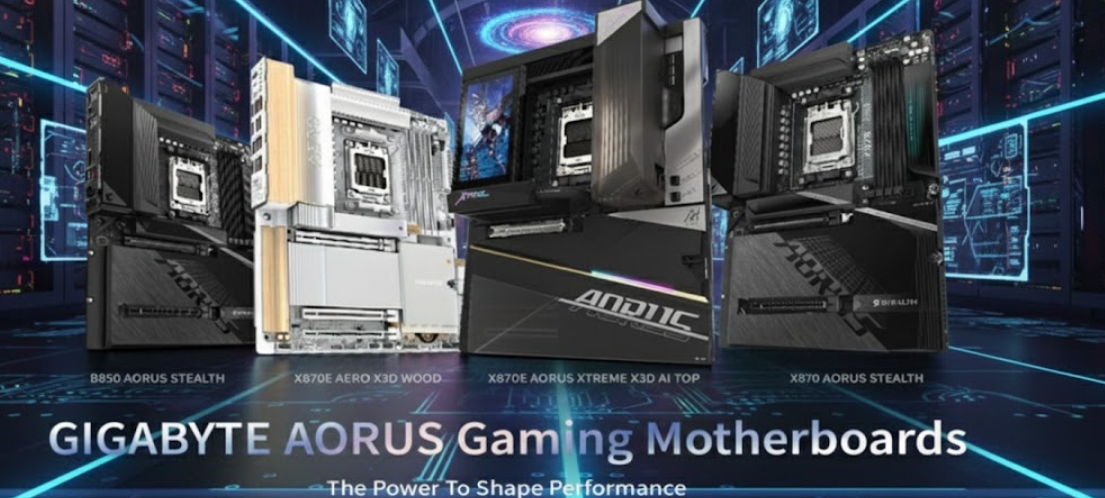
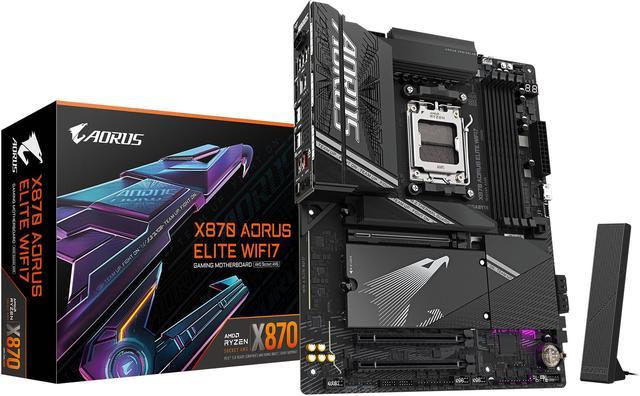
The GPU is only half the battle. On the CPU side, AMD’s Ryzen X3D chips remain the gaming performance benchmark. To support that ecosystem, AORUS is positioning its flagship AM5 motherboard as a true performance amplifier — not just a platform.
That board is the X870E AORUS XTREME X3D AI TOP, built around a feature called X3D Turbo Mode 2.0. Gigabyte describes it as a dynamic AI overclocking model trained on large datasets. The goal is per-chip optimization and custom tuning profiles that better match the unique behavior of X3D CPUs.
Gigabyte also claims Turbo Mode 2.0 can deliver up to 25% gaming performance improvements and 14% multitasking productivity gains, depending on workload and configuration.
Beyond BIOS tuning, the board leans into “overbuilt” enthusiast design. Official highlights include DDR5 overclocking up to 9000 MT/s, a high-phase VRM solution, and advanced cooling zones designed to manage heat across the VRM and memory areas under sustained load.
Key Highlights
- Flagship AM5 platform: X870E AORUS XTREME X3D AI TOP
- X3D Turbo Mode 2.0 for X3D-specific tuning + per-chip optimization
- Claimed gains: up to 25% gaming and 14% multitasking productivity
- DDR5 up to 9000 MT/s support
- High-phase VRM + advanced cooling zones for sustained loads
Why it matters
X3D chips reward tuning differently than traditional CPUs. A motherboard that treats X3D as its own platform category can improve gaming stability, frame pacing, and lows — especially for competitive players who care about consistency more than peaks.
3) Project STEALTH: The Cleanest Kill (and Better Airflow by Design)
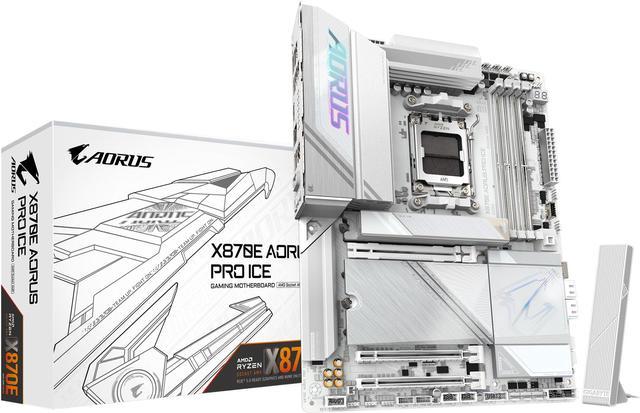
For builders who want their rig to look as sharp as their aim, the Project STEALTH ecosystem returns at CES 2026 with updates designed for modern X870 and B850 platforms.
STEALTH’s reverse-connector design places power and headers on the back of the motherboard. The result is simple: cleaner interiors, easier airflow paths, and builds that look like display pieces instead of wiring projects.
Gigabyte also ties STEALTH to full system compatibility. A key example is the C500 PANORAMIC STEALTH ICE chassis, which creates a panoramic view of a cable-free interior — and reinforces that high-end gaming builds are increasingly judged by both performance and presentation.
Key Highlights
- Reverse-connector “back-connect” design for cleaner interiors
- Better airflow paths with fewer cable obstructions
- Full ecosystem compatibility with STEALTH-ready chassis
- Showcase build aesthetic: C500 PANORAMIC STEALTH ICE
Why it matters
Less cable clutter isn’t just aesthetic. Cleaner airflow can reduce heat buildup around GPUs and VRMs. That becomes even more critical as GPUs push higher sustained wattage in the Blackwell era.

Build Your Next AORUS Rig with Newegg
If CES 2026 has you thinking about upgrading, start with what shapes real-world gaming. First, choose the GPU tier your games need. Next, prioritize a cooling design that can sustain that performance. Finally, pair the system with airflow-friendly cases and cleaner layouts that help your components breathe.
Newegg makes it easy to compare AORUS motherboards, RTX 50-series GPUs, and high-airflow chassis side by side. That way, you can build a setup that hits your target FPS today — and stays ready for what’s next.
As CES 2026 hardware rolls out through the year, Newegg is also a simple way to track availability and grab your next performance upgrade when it lands.