"RTX 5070 Ti" and "RX 9070 XT" both sit near the top of Newegg's hot searches, and they keep getting compared for a good reason. They're the two 16GB cards most people shopping for 1440p end up deciding between.
I won't pretend one is better for everyone. Here's how they compare where it matters, and which one I'd pick for different kinds of players.
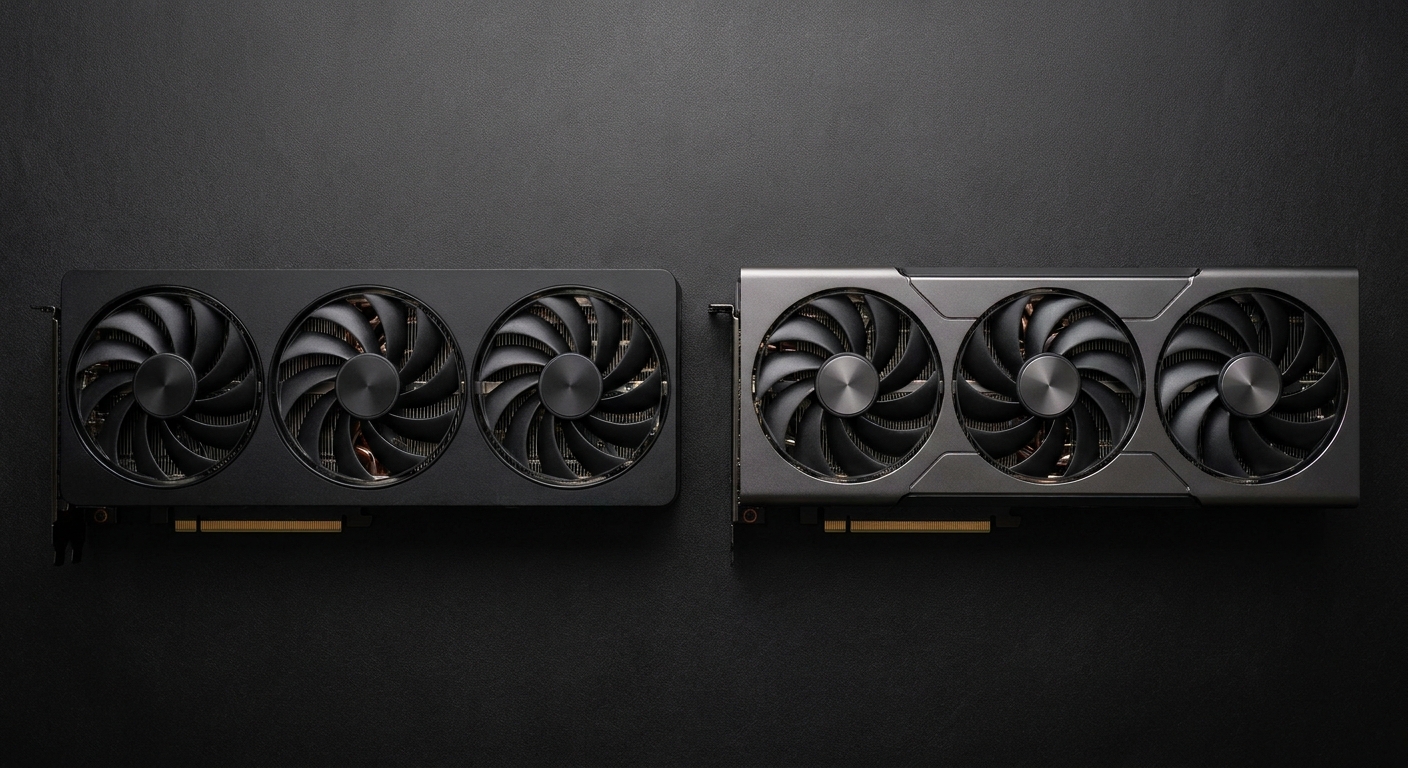
The contenders
The RTX 5070 Ti is NVIDIA's Blackwell card with 8,960 CUDA cores and 16GB of GDDR7. The RX 9070 XT is AMD's RDNA 4 card with 4,096 stream processors and 16GB of GDDR6.
Side-by-side
| Spec | RTX 5070 Ti | RX 9070 XT |
|---|---|---|
| Memory | 16GB GDDR7 | 16GB GDDR6 |
| Memory speed and bus | 28Gbps, 256-bit | 20Gbps, 256-bit |
| Upscaling | DLSS 4 with Multi Frame Generation | FSR 4 |
| Interface | PCIe 5.0 x16 | PCIe 5.0 x16 |
| Best known for | Ray tracing, NVIDIA software | Strong raster performance |
Deep dive: memory and bandwidth
Both cards have 16GB on a 256-bit bus, which is the main reason I'd pick either over a 12GB card for big open-world games. The 5070 Ti's faster GDDR7 gives it more raw memory bandwidth, which helps most at higher resolutions and with heavy ray tracing.
Deep dive: ray tracing and upscaling
If you play games with heavy ray tracing or path tracing, independent reviews have generally favored the RTX 5070 Ti. DLSS 4 is also supported in a large number of games, and Multi Frame Generation is exclusive to RTX 50 cards.
AMD closed much of the image-quality gap with FSR 4, its machine-learning upscaler, built for RX 9000 cards. Game support is the thing to check. If your favorite games support FSR 4, the RX 9070 XT looks a lot stronger.
Deep dive: power and size
Power is close. Newegg's listing for the SAPPHIRE PULSE RX 9070 XT shows 304W board power and a 750W recommended PSU, and factory-overclocked models can be higher. The 5070 Ti sits in a similar range, so plan on a quality 750W to 850W unit either way.
Size varies a lot more by model than by GPU, so check card length against your case before you order.
Deep dive: 1440p versus 4K
At 1440p, both cards are comfortable in most games, and the choice comes down to features. At 4K, both lean more on upscaling. That's where DLSS 4 and FSR 4 support in your specific games matters most, and where the 5070 Ti's extra memory bandwidth helps. If you play mostly at 4K, I'd check reviews of the exact games you play before deciding.
Deep dive: software and drivers
NVIDIA's app handles driver updates, recording and game settings in one place, and features like NVIDIA Broadcast are handy if you stream. AMD's Adrenalin software covers the same ground and includes its own recording and performance tools. Both companies release Game Ready-style drivers around big launches, so keep either one updated.
The cards I'd look at
RTX 5070 Ti: The ASUS TUF Gaming RTX 5070 Ti OC is the one I'd pick for a premium cooler and a sturdy build. The GIGABYTE WindForce RTX 5070 Ti and the PNY RTX 5070 Ti OC are simpler triple-fan designs. For a compact build, the ZOTAC RTX 5070 Ti Solid SFF OC is an SFF-ready model.

RX 9070 XT: The SAPPHIRE NITRO+ RX 9070 XT shares the highest boost clock in this group, up to 3,060MHz. The GIGABYTE Gaming OC RX 9070 XT lists the same 3,060MHz boost. The PowerColor Reaper and ASRock Challenger stick closer to reference clocks, with boost up to 2,970MHz.

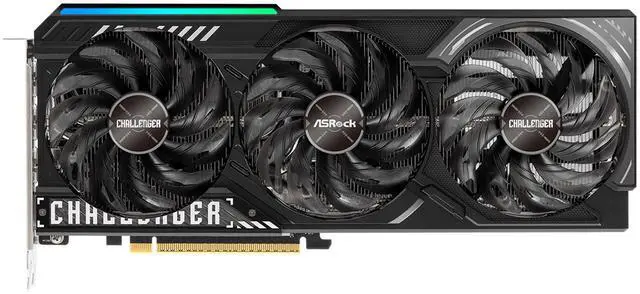
Whichever card you choose, check three things on the listing before ordering: the card's length against your case, the power connectors it needs, and the recommended PSU wattage. Those details vary much more between partner models than the GPU itself does.
Who wins, by situation
- You play lots of ray-traced or path-traced games: RTX 5070 Ti.
- You play mostly competitive and raster-heavy games: RX 9070 XT.
- You also use local AI tools or CUDA apps: RTX 5070 Ti.
- You're on Linux: I'd lean RX 9070 XT for AMD's open-source driver support.
My take
Both are good 1440p cards with enough VRAM to last. If they cost about the same when you're ready to buy, I'd take the RTX 5070 Ti for its ray tracing and broader software support. If the RX 9070 XT costs noticeably less, it's the better value, and FSR 4 makes that an easy call.
Frequently Asked Questions
Is the RTX 5070 Ti or RX 9070 XT better for 1440p? Both are strong 1440p cards with 16GB of VRAM. I lean RTX 5070 Ti for heavy ray tracing and NVIDIA's software features, and RX 9070 XT for strong raster performance and AMD's FSR 4.
Do both cards have 16GB of VRAM? Yes. The RTX 5070 Ti uses 16GB of GDDR7 at 28Gbps on a 256-bit bus. The RX 9070 XT uses 16GB of GDDR6 at 20Gbps on a 256-bit bus.
What power supply do I need for an RX 9070 XT? Check your specific card's listing. For example, Newegg's listing for the SAPPHIRE PULSE RX 9070 XT shows 304W board power and a 750W recommended power supply. Factory-overclocked models can draw more.
Does the RX 9070 XT support FSR 4? Yes. FSR 4 is AMD's machine-learning upscaler. It was built for RX 9000 cards, and AMD has since added official FSR 4.1 support for RX 7000 cards. The RTX 5070 Ti supports DLSS 4, including Multi Frame Generation.
Which card is better for AI apps? For local AI tools, I'd lean toward the RTX 5070 Ti, because many apps are built around NVIDIA's CUDA software stack first.
Read More
- GeForce RTX 5070 Family (NVIDIA): NVIDIA's official specs and feature list for the RTX 5070 Ti.
- Radeon RX 9070 XT (AMD): AMD's official specs for the RX 9070 XT.
- GPU Benchmarks Hierarchy (Tom's Hardware): Independent performance rankings across many games.
- Best Graphics Cards for Open-World Games in 2026 (Newegg Insider): Our GPU picks for big open-world games.
- Microsoft's Big DirectX Ray Tracing Update, Explained (Newegg Insider): What the new DXR features mean for VRAM.