CES 2026 has made one thing clear. The era of the “beige box” is gone. Furthermore, the era of the “RGB disco” is evolving into something far more refined. The PC is no longer just a tool for creators, remote professionals, and design-first buyers. It is becoming part of the room. Consequently, it belongs in the home office, the living room studio, and the modern workspace. In these spaces, looks matter as much as performance.
This year, Gigabyte is leaning into that shift. They have introduced a design philosophy called “Refine & Define.” The message is simple. High performance doesn’t have to look aggressive. Instead, it can look intentional. Moreover, it can look warm. Also, in an era where AI workloads are moving from the cloud to local execution, it can be smarter at the same time.
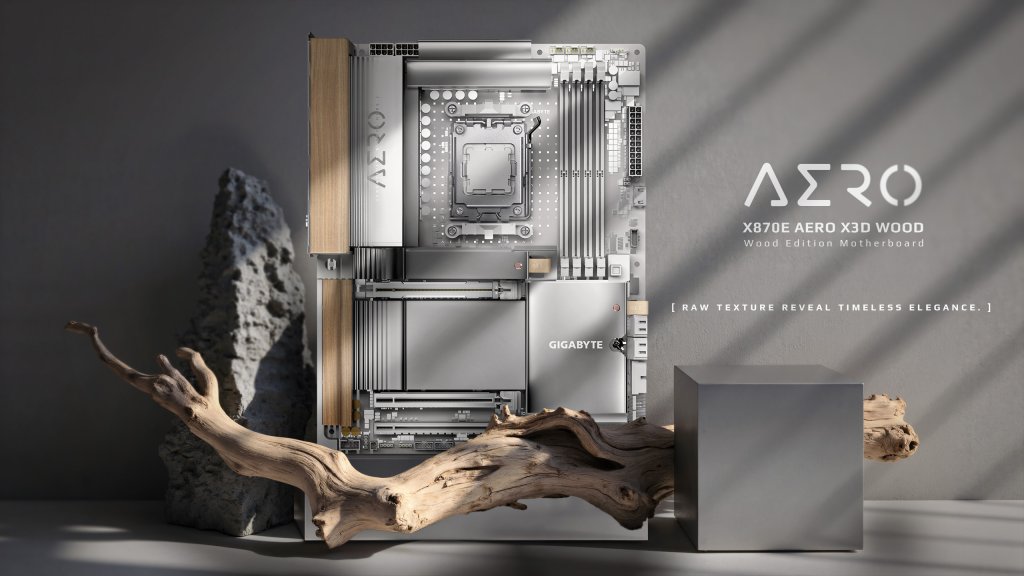 The standout star of Gigabyte’s lifestyle-driven CES 2026 hardware is the X870E AERO X3D WOOD. In a sea of metal and plastic, it is the rare PC component that stops you in your tracks. This is not because it is louder. Rather, it is because it is calmer.
Gigabyte integrates real wood-grain accents directly into the heatsink design. This turns a high-end motherboard into something that feels organic. On its own, this board reads like a design object. However, in a build, it becomes part of the aesthetic. This is especially true for minimalist creators building into furniture-inspired cases.
Gigabyte frames the board as a “statement piece.” It is made for buyers who want a PC that looks premium and intentional. The materials feel lifestyle-first. Nevertheless, the platform underneath is all performance. It is based on the AMD X870E chipset. Therefore, it is designed to support modern AM5 CPUs and high-performance creator workflows.
Why it matters: The AERO X3D WOOD represents a new kind of enthusiast component. It is for the buyer who cares about thermal design and PCIe lanes. But, equally, they want the system to feel like it belongs in a modern workspace.
The standout star of Gigabyte’s lifestyle-driven CES 2026 hardware is the X870E AERO X3D WOOD. In a sea of metal and plastic, it is the rare PC component that stops you in your tracks. This is not because it is louder. Rather, it is because it is calmer.
Gigabyte integrates real wood-grain accents directly into the heatsink design. This turns a high-end motherboard into something that feels organic. On its own, this board reads like a design object. However, in a build, it becomes part of the aesthetic. This is especially true for minimalist creators building into furniture-inspired cases.
Gigabyte frames the board as a “statement piece.” It is made for buyers who want a PC that looks premium and intentional. The materials feel lifestyle-first. Nevertheless, the platform underneath is all performance. It is based on the AMD X870E chipset. Therefore, it is designed to support modern AM5 CPUs and high-performance creator workflows.
Why it matters: The AERO X3D WOOD represents a new kind of enthusiast component. It is for the buyer who cares about thermal design and PCIe lanes. But, equally, they want the system to feel like it belongs in a modern workspace.
Refine & Define: When PC Hardware Starts to Feel Like Furniture
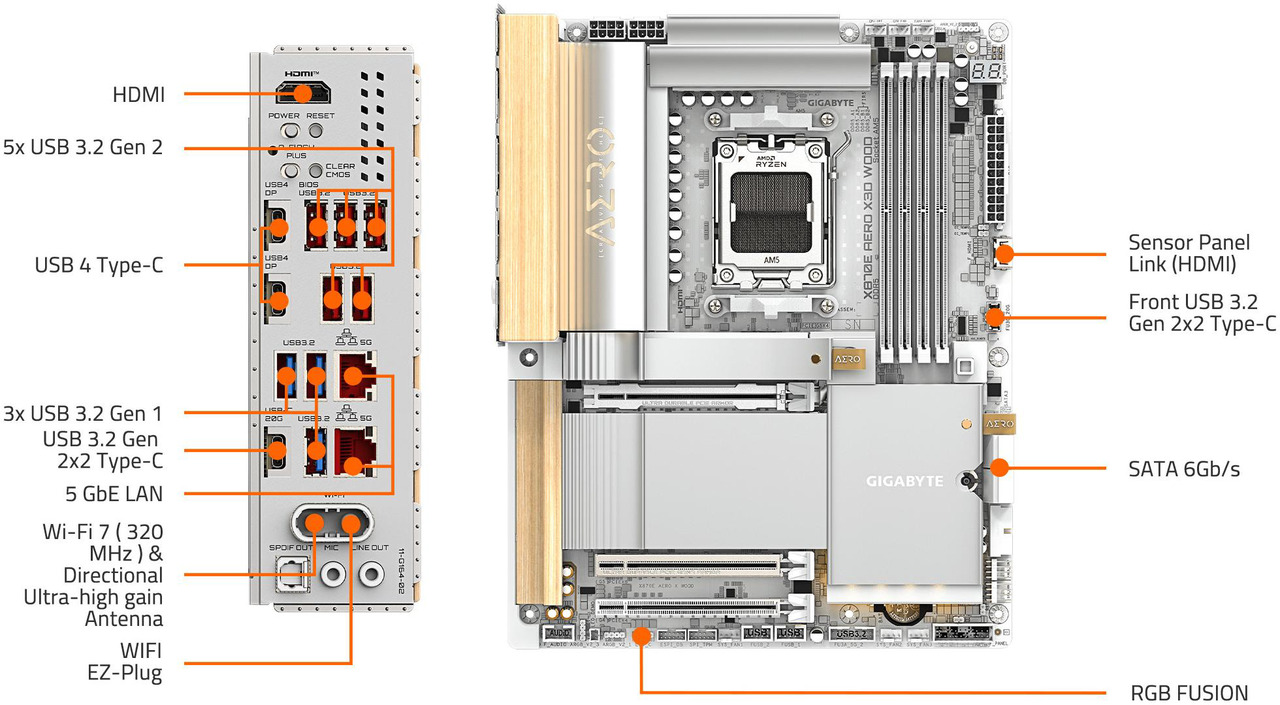
For years, PC components chased a single vibe. They had more angles, more RGB, and a "gamer" look. However, at CES 2026, Gigabyte is showing a different future. This future feels more lifestyle-driven and home-friendly. That shift is visible across everything Gigabyte is showcasing this year. For example, they have wood-accented creator motherboards and cleaner back-connect platforms. Additionally, they introduced an AI-forward ecosystem designed to support local AI workflows. Together, it feels like a brand trying to meet a new kind of user. This user wants a powerful system. Yet, they also want it to belong in their space.The AERO X3D WOOD: High-Tech Meets High-Touch
The standout star of Gigabyte’s lifestyle-driven CES 2026 hardware is the X870E AERO X3D WOOD. In a sea of metal and plastic, it is the rare PC component that stops you in your tracks. This is not because it is louder. Rather, it is because it is calmer.
Gigabyte integrates real wood-grain accents directly into the heatsink design. This turns a high-end motherboard into something that feels organic. On its own, this board reads like a design object. However, in a build, it becomes part of the aesthetic. This is especially true for minimalist creators building into furniture-inspired cases.
Gigabyte frames the board as a “statement piece.” It is made for buyers who want a PC that looks premium and intentional. The materials feel lifestyle-first. Nevertheless, the platform underneath is all performance. It is based on the AMD X870E chipset. Therefore, it is designed to support modern AM5 CPUs and high-performance creator workflows.
Why it matters: The AERO X3D WOOD represents a new kind of enthusiast component. It is for the buyer who cares about thermal design and PCIe lanes. But, equally, they want the system to feel like it belongs in a modern workspace.
AI TOP: Your Local Genius (and the Shift Away from the Cloud)
Gigabyte isn’t only making hardware prettier. They are also making it smarter. The introduction of AI TOP signals a major shift. It changes how the company wants users to interact with their PCs. AI workloads are moving from cloud services to local execution. Consequently, your hardware needs to handle constant processing and training tasks efficiently. Gigabyte’s AI TOP concept centers around on-device intelligence. Furthermore, it focuses on system-level tuning. This optimizes how the CPU, GPU, and dedicated AI acceleration share resources under load. That matters because “AI PC” usage isn’t a short burst. Instead, it is sustained. It is background automation. It is local model execution. If a system isn’t tuned for it, it becomes loud and hot fast. Gigabyte’s broader CES 2026 theme is “AI Forward.” This reinforces their direction across the ecosystem. It covers personal devices, edge systems, and AI infrastructure. In other words, AI TOP isn’t just a feature label. It is part of a larger strategy. Gigabyte is building the backbone for the next phase of AI. This ranges from local assistants to enterprise-scale AI factories.