
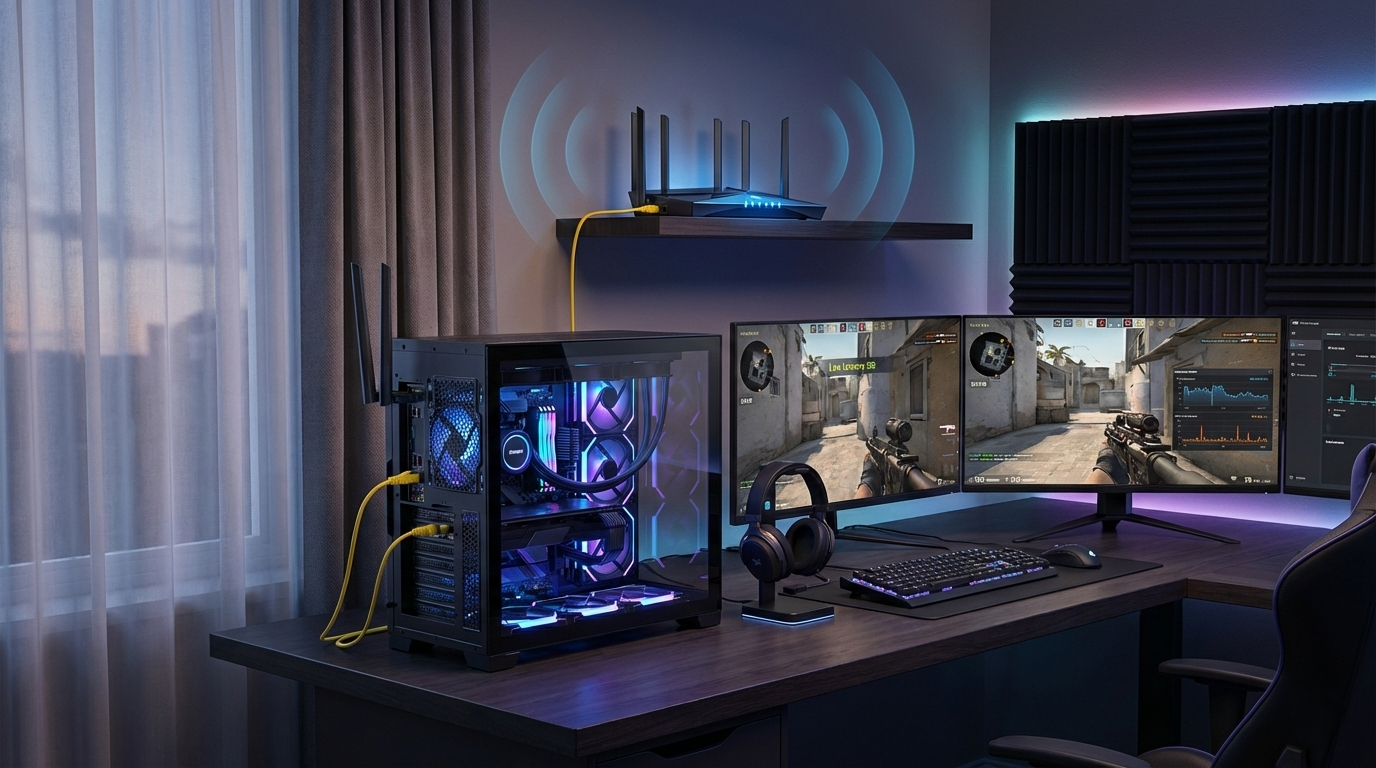
The eternal debate between wireless freedom and wired reliability has reached a fascinating turning point in 2026. With Wi-Fi 6E technology now mature and widely adopted, gamers face a genuinely difficult decision: should they embrace the liberating convenience of cutting-edge wireless connectivity, or stick with the proven performance of traditional Ethernet cables? The answer isn’t as straightforward as it once was. Modern Wi-Fi 6E has closed the performance gap dramatically, while Ethernet continues evolving with multi-gigabit standards becoming commonplace. Understanding the real-world implications of each technology helps you build the optimal gaming setup for your specific needs, budget, and home environment.
Understanding Wi-Fi 6E Technology
Wi-Fi 6E represents a revolutionary leap forward in wireless networking, introducing access to the pristine 6GHz frequency band alongside the traditional 2.4GHz and 5GHz spectrums. This additional spectrum provides up to 1,200MHz of new bandwidth—more than double what was previously available. For gamers, this translates into dramatically reduced interference, lower latency, and higher throughput, especially in dense residential environments where older Wi-Fi networks create congestion.
The technology employs advanced features like OFDMA (Orthogonal Frequency-Division Multiple Access) and Target Wake Time, which optimize how data packets are transmitted and managed. These improvements mean your gaming data receives priority treatment, reducing the micro-stutters and lag spikes that plagued previous wireless generations. When properly configured with a quality router and compatible hardware, Wi-Fi 6E can deliver sub-5ms latency in ideal conditions—approaching the performance that was once exclusive to wired connections.
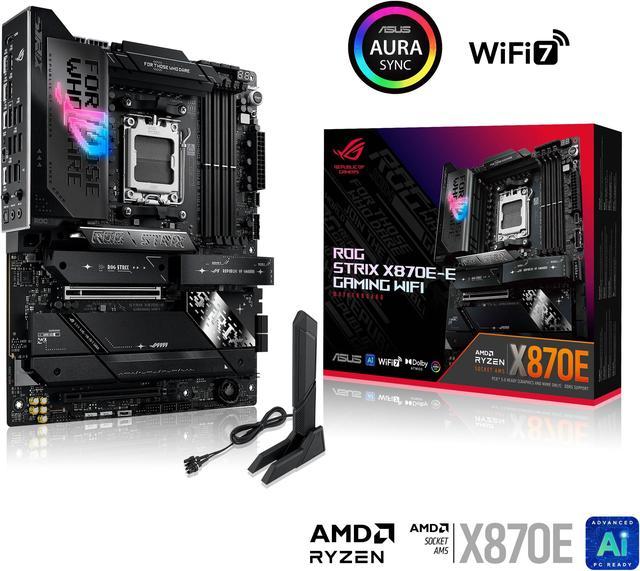
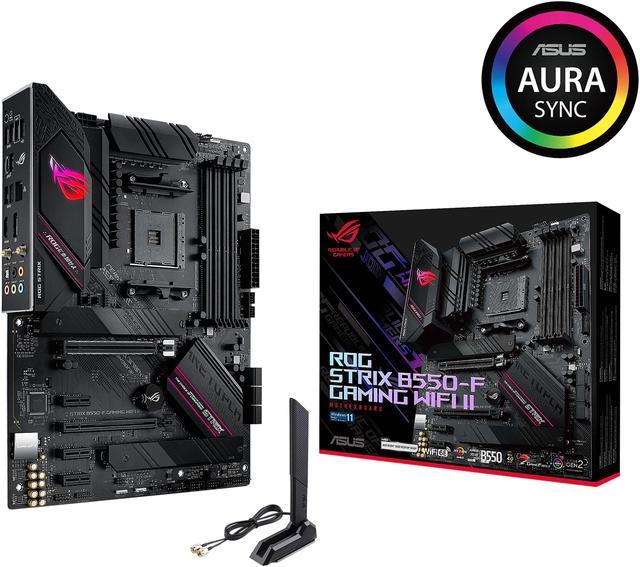
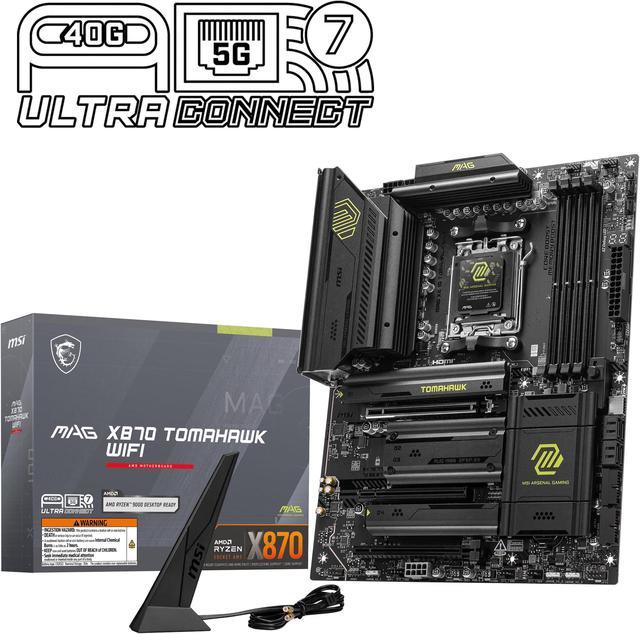
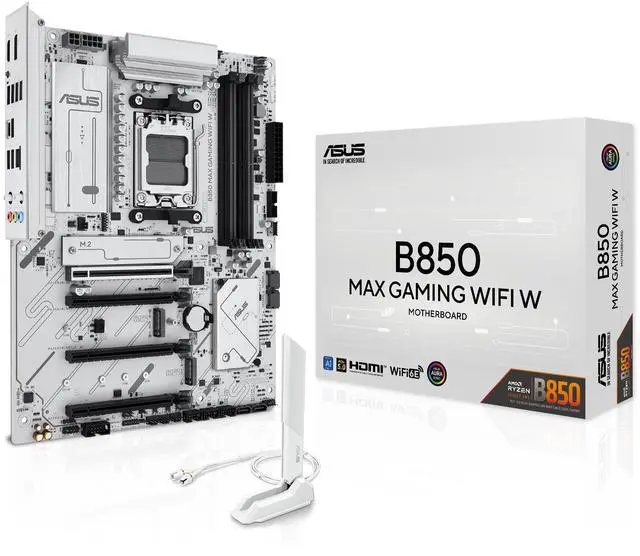
Modern Wi-Fi motherboards integrate advanced wireless adapters directly into the board, eliminating the need for external dongles or cards that might create bottlenecks. Premium manufacturers like ASUS, GIGABYTE, MSI, and ASRock offer boards with Wi-Fi 6E support across various price points, making wireless gaming more accessible than ever.
 The Enduring Strengths of Ethernet
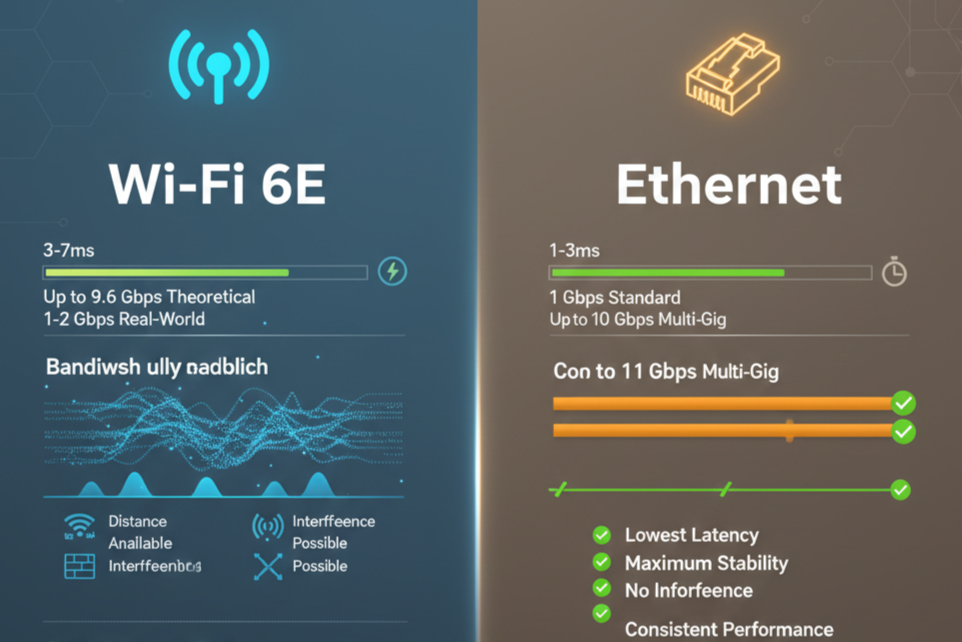
Despite wireless advances, Ethernet maintains significant advantages that serious gamers appreciate. The fundamental physics of wired connections provides inherent benefits: electrical signals traveling through copper cables experience consistent, predictable behavior without the interference issues that plague wireless signals. A quality Cat 6 or Cat 6a Ethernet cable delivers rock-solid 1-2ms latency with virtually zero packet loss, regardless of what your neighbors’ networks are doing or how many walls stand between your PC and router.
Ethernet also offers superior bandwidth scalability. Multi-gig Ethernet standards (2.5GbE, 5GbE, and 10GbE) are increasingly common on modern motherboards, providing enormous headroom for future bandwidth demands. This matters not just for gaming but for simultaneous activities like streaming your gameplay, downloading updates, or accessing cloud gaming services. The connection stability means consistent frame times and predictable network behavior—crucial factors for competitive gaming where every millisecond matters.
Additionally, Ethernet eliminates concerns about signal strength, interference from other devices, or physical obstacles degrading performance. Your connection quality remains constant whether you’re gaming during peak evening hours or quiet morning sessions. This reliability makes Ethernet the preferred choice for professional esports players and competitive gamers who demand absolute consistency.
Real-World Gaming Performance Comparison
When examining actual gaming scenarios, both technologies excel in different situations. For competitive multiplayer games like Valorant, Counter-Strike 2, or League of Legends, Ethernet maintains a slight but measurable advantage. Testing shows average latency of 1-3ms for Ethernet versus 3-7ms for Wi-Fi 6E in optimal conditions. While this 2-4ms difference might seem negligible, competitive players notice the improved responsiveness, especially during high-stakes tournament play.
However, Wi-Fi 6E has closed the gap sufficiently for most gaming scenarios. In single-player games, cooperative multiplayer, or battle royale titles where sub-10ms latency is acceptable, Wi-Fi 6E performs indistinguishably from Ethernet for the vast majority of players. Modern gaming motherboards with integrated Wi-Fi 6E deliver smooth, responsive gameplay that satisfies all but the most demanding professional players.
Bandwidth rarely becomes a limiting factor for either technology. Modern games typically consume 50-150Mbps during online play, well within the capabilities of both Wi-Fi 6E (theoretical speeds up to 9.6Gbps) and gigabit Ethernet. The real differentiator is consistency rather than raw speed. Ethernet maintains its performance regardless of environmental factors, while Wi-Fi 6E performance can vary based on distance from the router, interference sources, and physical obstacles.
 Practical Setup Considerations
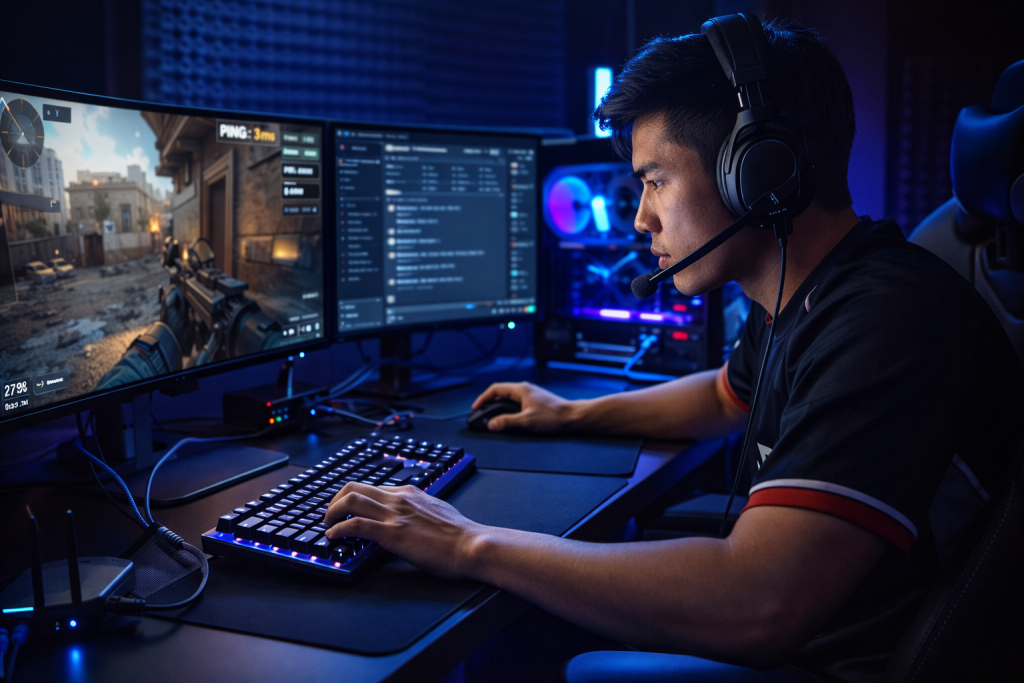
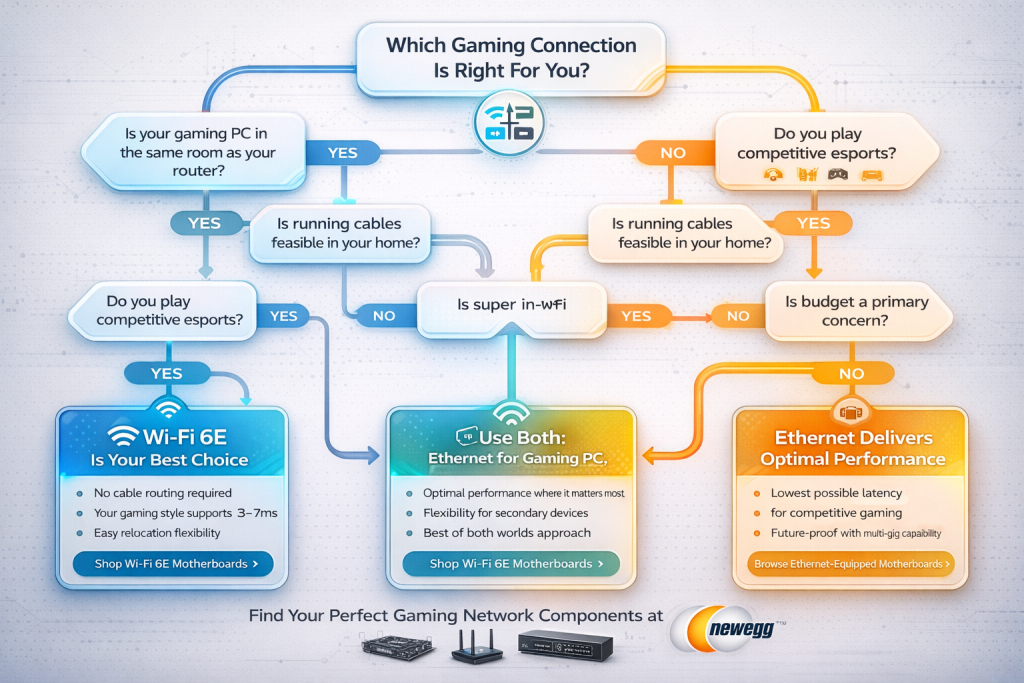
Your home environment significantly influences which technology serves you better. If your gaming PC sits in the same room as your router or you have convenient cable routing options, Ethernet represents the simplest, most reliable choice. A single quality Ethernet cable provides optimal performance without complex configuration or troubleshooting. Pairing a high-performance Intel CPU processor or AMD CPU processor with a motherboard featuring multi-gig Ethernet ensures you’re prepared for future bandwidth demands.
Conversely, if your gaming setup occupies a different floor or distant room from your router, Wi-Fi 6E becomes increasingly attractive. Running Ethernet cables through walls, across ceilings, or between floors requires significant effort, potential professional installation, and can create aesthetic challenges. Wi-Fi 6E eliminates these complications entirely, providing excellent performance with zero installation hassle. The freedom to relocate your setup without rewiring offers genuine lifestyle benefits.
Consider also your broader home network ecosystem. If you’re building a new system with components from the extensive Computer Case, Power Supply, and GPU Video Graphics Device selections available, matching your network technology to your motherboard choice ensures optimal integration. Modern systems benefit from balanced component selection where no single element creates a bottleneck.
 Making Your Decision
The choice between Wi-Fi 6E and Ethernet ultimately depends on your specific circumstances and priorities. Competitive esports players, streamers who demand absolute reliability, and users with convenient cable routing should choose Ethernet for its unmatched consistency and minimal latency. The performance advantage, while small, remains measurable and meaningful at the highest competitive levels.
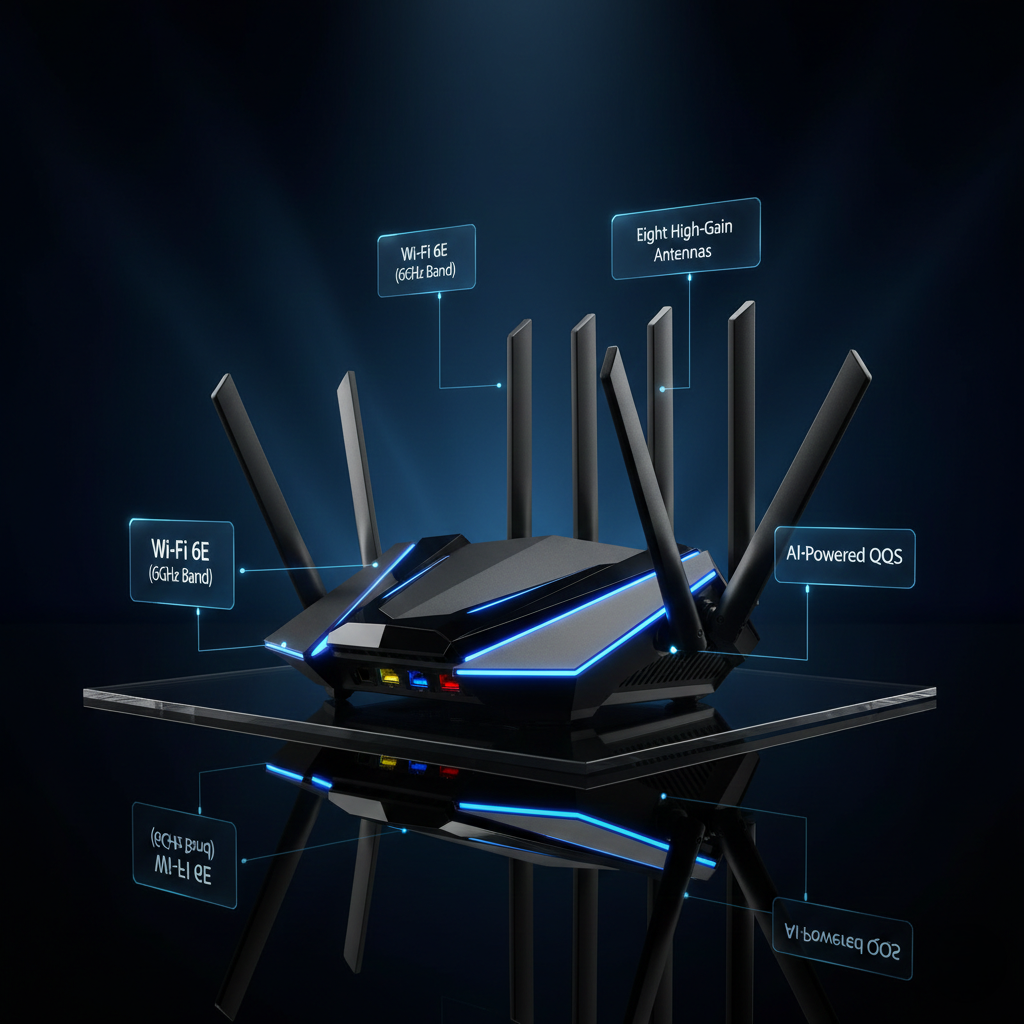
For the majority of home gamers, Wi-Fi 6E represents an excellent solution that balances performance with convenience. If you game primarily in single-player titles, cooperative multiplayer, or casual competitive modes, Wi-Fi 6E delivers performance that’s effectively indistinguishable from Ethernet while providing setup flexibility and aesthetic benefits. Investing in quality Wi-Fi 6E hardware—both router and motherboard—ensures you maximize the technology’s potential.
Many enthusiasts adopt a hybrid approach: using Ethernet for their primary gaming PC while leveraging Wi-Fi 6E for secondary devices, laptops, or consoles. This strategy provides optimal performance where it matters most while maintaining connectivity flexibility throughout the home. As you explore options in Newegg’s comprehensive Memory, SSD, and other component categories, consider how your network infrastructure integrates into your complete system design.
 The Future Is Flexible
Gaming connectivity in 2026 offers unprecedented choice and capability. Both Wi-Fi 6E and Ethernet deliver excellent gaming experiences, with the “better” option depending entirely on your environment, preferences, and competitive aspirations. The good news is that you don’t need to compromise—modern hardware supports both technologies seamlessly, allowing you to choose the right connection for each gaming session. Whether you prioritize the absolute consistency of Ethernet or the liberating convenience of Wi-Fi 6E, today’s technology ensures your gaming experience remains smooth, responsive, and thoroughly enjoyable.