




 here!
I’m your shopping assistant for PC builds, upgrades, and everything tech.
Got questions? Ask away!
Start a conversation
here!
I’m your shopping assistant for PC builds, upgrades, and everything tech.
Got questions? Ask away!
Start a conversationShipped by Hebei XG Technology Co., Ltd.

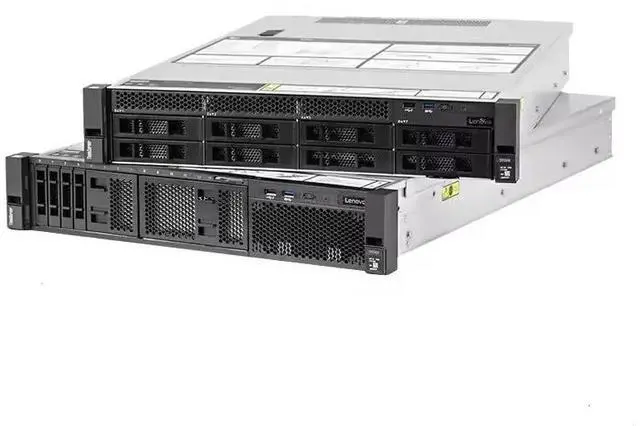
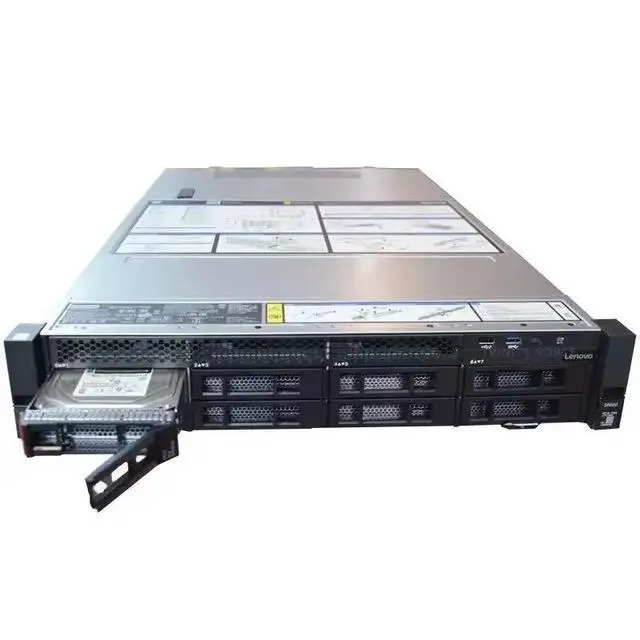
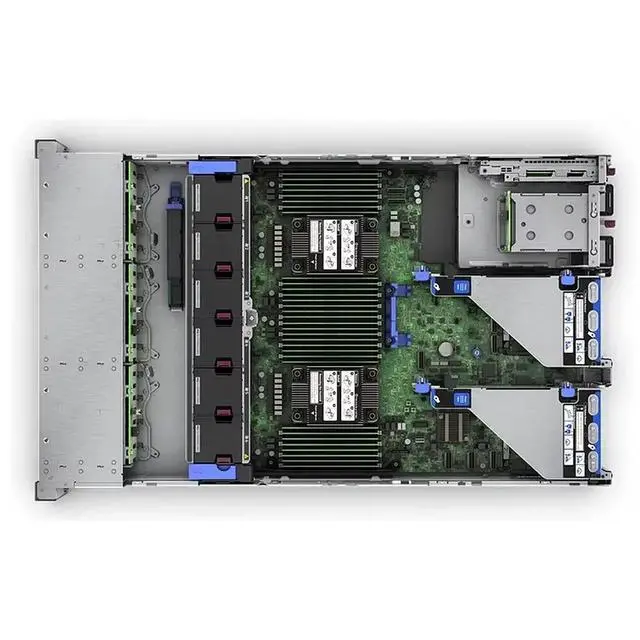



Any questions? Ask CelesteSM will help you find out quickly.


Trusted by thousands for over 7 years, X-Tech is a leading brand of Server and switch. Every X-Tech product is backed by a limited Lifetime Warranty Guarantee & Free Technical Support based in China. Our support line is open 9AM to 7PM CST. You can reach us on our Toll Free Line at +86-188-1091-5684. Please note, once product passes to the stated address of the customer we are not able to guarantee shipping changes, address changes, or product corrections until the original item is mailed back to us at the expense of the buyer. In the case of a stock issue we will attempt to contact you with an updated timeline offer on the original purchase with alternative options. In the event of a pricing issue, we typically cancel the order and inform you that it was due to a pricing issue. We try to avoid these scenarios, however we do reserve the right to cancel sales that

Computer (Brand New) - Model: Lenovo ThinkCentre Q500 Desktop Computer - Graphics Card: Integrated Graphics Card - Operating System: Windows 11 - Network: Wi-Fi Supported - Chassis: Xiaotian - Application Scenarios: Office work, study, daily use - Condition: Brand new and genuine - Note: Please contact the customer service to confirm the inventory and quotation before purchase.

Computer (Brand New) - Model: Lenovo ThinkCentre Q500 Desktop Computer - Graphics Card: Integrated Graphics Card - Operating System: Windows 11 - Network: Wi-Fi Supported - Chassis: Xiaotian - Application Scenarios: Office work, study, daily use - Condition: Brand new and genuine - Note: Please contact the customer service to confirm the inventory and quotation before purchase.

Computer (Brand New) - Model: Lenovo ThinkCentre Q500 Desktop Computer - Graphics Card: Integrated Graphics Card - Operating System: Windows 11 - Network: Wi-Fi Supported - Chassis: Xiaotian - Application Scenarios: Office work, study, daily use - Condition: Brand new and genuine - Note: Please contact the customer service to confirm the inventory and quotation before purchase.

Computer (Brand New) - Model: Lenovo ThinkCentre Q500 Desktop Computer - Graphics Card: Integrated Graphics Card - Operating System: Windows 11 - Network: Wi-Fi Supported - Chassis: Xiaotian - Application Scenarios: Office work, study, daily use - Condition: Brand new and genuine - Note: Please contact the customer service to confirm the inventory and quotation before purchase.
Computer (Brand New) - Model: Lenovo ThinkCentre Q500 Desktop Computer - Graphics Card: Integrated Graphics Card - Operating System: Windows 11 - Network: Wi-Fi Supported - Chassis: Xiaotian - Application Scenarios: Office work, study, daily use - Condition: Brand new and genuine - Note: Please contact the customer service to confirm the inventory and quotation before purchase.
The HPE ProLiant DL380 Gen11 8SFF CTO is a 2U rack server barebone with eight 2.5-inch drive bays, a 4-port Gigabit NIC, an MR416i-p RAID controller, and rack rails, making it a strong fit for IT teams building a customizable virtualization, storage, or general business server.
| Attribute | Value |
|---|---|
| Best For | Rack-mounted server deployments built around the Intel Xeon Scalable processor family |
| Processor And Platform | Intel Xeon Scalable processor platform with the CPU socket listed as Rack |
| Form Factor | 1U rack server chassis |
| Model Identifiers | Inspur DL360 Gen11 |
Q: Should I choose HPE ProLiant DL380 Gen11 or HPE DL360 Gen11?
A: Choose the DL380 Gen11 when you want a more expandable 2U platform for virtualization, mixed storage, and longer-term growth. Across HPE and reseller comparison material, the DL380 Gen11 is positioned with more PCIe expansion, higher practical storage flexibility, and higher memory capacity, while the DL360 Gen11 is the better fit when rack density matters more than expansion. For most general-purpose infrastructure builds, the DL380 Gen11 is the safer choice if you expect storage, networking, or add-in requirements to grow.
Q: Is this DL380 Gen11 CTO server a better buy than a DL380 Gen10 Plus?
A: The DL380 Gen11 is the stronger choice if you are buying for a fresh deployment and want access to newer Xeon platforms, DDR5, PCIe Gen5, and the Gen11 management and security stack. A DL380 Gen10 Plus can still make sense when reuse of existing parts, firmware familiarity, or lower acquisition cost matters more than platform longevity. In short: pick Gen11 for a longer runway and newer I/O, and consider Gen10 Plus when budget efficiency is the main goal.
Q: How does this HPE DL380 Gen11 compare with Dell PowerEdge R760?
A: These two systems are usually cross-shopped as mainstream 2U dual-socket enterprise servers. Choose the DL380 Gen11 if your environment is standardized on HPE tools, service processes, or Smart Array options such as the MR416i-P included here. Choose the PowerEdge R760 if your team prefers Dell's platform management and procurement ecosystem. Most reliable comparisons show they compete closely on core platform class, so the decision is usually driven more by management stack, storage controller preferences, support relationships, and pricing than by a simple performance gap.
Q: Should I buy this 8SFF DL380 Gen11 or move to a higher-storage DL380 Gen11 configuration?
A: Choose this 8SFF CTO version when you want a balanced compute platform with modest front-bay storage and room to customize networking, RAID, and CPU later. Move to a higher-storage DL380 Gen11 configuration when local capacity, larger drive choices, or denser front storage is a priority from day one. The main trade-off is not the platform itself but chassis emphasis: this 8SFF build is better for flexible general-purpose deployments, while higher-bay configurations are better when the server will carry more of the storage workload directly.
Q: Is a 1U or compact server better than this DL380 Gen11 for space-sensitive deployments?
A: A compact 1U server is the better fit when rack space and density are the main constraints. This DL380 Gen11 is the better fit when expandability matters more than footprint, especially for virtualization, additional PCIe devices, broader storage options, or future reconfiguration. In practical buying terms, choose 1U for density-first deployments and choose this 2U DL380 Gen11 for performance-per-node flexibility.
Q: Is this a complete, ready-to-run server out of the box?
A: No. This is best treated as a CTO barebones rack server, not a fully configured system. Based on the provided product data, it includes the 2U chassis, 8 SFF bays, a 4-port Gigabit NIC, an MR416i-P RAID controller, and rack rails, but buyers should expect to confirm the CPU, memory, storage drives, power configuration, and operating system before deployment.
Q: Who is this server most suitable for?
A: This model is most suitable for IT buyers who want to build or standardize a rack server for business infrastructure rather than buy a plug-and-play appliance. The 2U form factor, 8 small-form-factor drive bays, hardware RAID controller, and bundled rails fit typical use cases such as virtualization hosts, general business applications, storage-heavy infrastructure roles, and lab or branch deployments where component choice matters.
Q: Is 8 x 2.5-inch drive capacity enough for most business deployments?
A: It is a good fit when you want a balance of storage density, front-access drive serviceability, and a compact 2U footprint. Eight 2.5-inch bays are typically well suited to SSD-focused workloads, boot plus data tiering, and moderate shared-storage builds. The trade-off is that buyers needing maximum raw capacity may prefer larger or more numerous bays, so storage planning matters before purchase.
Q: Does the included RAID controller make this a better choice for buyers who want local drive redundancy?
A: Yes, for buyers planning multiple internal drives, an included hardware RAID controller is a practical advantage because it supports managed local storage configurations from the start. That said, RAID improves availability, not backup, so this server is a stronger fit for buyers who already understand their intended RAID level, drive mix, and recovery plan.
Q: Are the included rack rails important for the buying decision?
A: Yes. Included 2U rack rails reduce uncertainty for rack installation and are especially useful for buyers deploying into standard cabinets without wanting to source mounting hardware separately. They do not remove the need to verify rack depth, airflow clearance, and power planning, but they do make the server more deployment-ready from a mechanical standpoint.
Q: Who is this server best suited for?
A: This configuration is best suited for business infrastructure, virtualization, lab environments, and storage-heavy server roles where you want an HPE 2U platform with 8 small-form-factor bays and hardware RAID. It is a better fit for rack deployments than for casual home use, because users discussing DL380 systems commonly focus on VM hosting, storage, remote management, and datacenter-style operation rather than quiet desktop-like use.
Q: Is this a good choice for a homelab or self-hosting setup?
A: It can be a good homelab choice if you specifically want enterprise server features such as rack mounting, iLO-based remote management, RAID, and room for multiple 2.5-inch drives. The trade-off is that a DL380-class 2U server is typically more practical in a garage, basement, or rack than in a quiet living space, and community discussion repeatedly flags power, noise, and enterprise-part compatibility as factors to check before buying.
Q: What are the main trade-offs of buying this CTO barebones configuration?
A: The main trade-off is flexibility versus completeness. A CTO barebones server gives you the chassis, drive bay layout, NIC, RAID controller, and rails, but buyers should expect to verify the final CPU, memory, storage, and licensing plan themselves. Reddit discussions around DL380 Gen10/Gen11 systems repeatedly show that HPE platform choices such as supported CPUs, heatsinks, DIMM population, firmware state, and iLO features matter more than with simpler plug-and-play systems.
Q: Is the 8 x 2.5-inch SFF layout a good fit for storage-focused buyers?
A: It is a good fit if you want a compact, higher-density 2.5-inch drive layout for SSDs or smaller-form-factor storage, especially when paired with the included MR416i-P RAID controller. The trade-off is expandability: an 8-bay SFF front layout is more storage-efficient for fast drives than for maximum raw capacity, so buyers needing large low-cost bulk storage may prefer a larger-bay or LFF-oriented configuration instead.
Q: Is this worth buying if I want something quiet and simple?
A: Usually no. This server makes more sense when you specifically want enterprise rack-server capabilities, not when your top priorities are low noise, low power draw, or consumer-level simplicity. Repeated Reddit discussion around HPE rack servers points to noise tuning, fan behavior, firmware management, and HPE-specific parts compatibility as normal considerations, so it is better for buyers comfortable with enterprise hardware trade-offs.


