here!
I’m your shopping assistant for PC builds, upgrades, and everything tech.
Got questions? Ask away!
Start a conversation
here!
I’m your shopping assistant for PC builds, upgrades, and everything tech.
Got questions? Ask away!
Start a conversation



Any questions? Ask CelesteSM will help you find out quickly.

LOAMLIN is a provider of equipment for LED lighting and control systems and home assistants. Focus on providing customers with high-quality, reliable home lighting equipment.
Mainly provided by LOAMLIN:
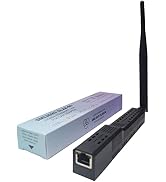
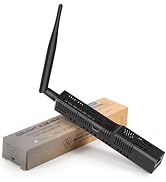
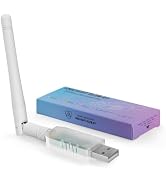
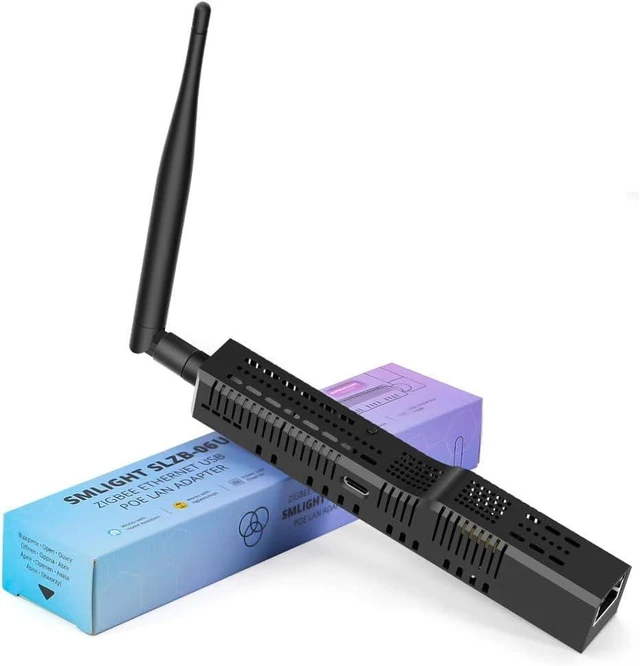
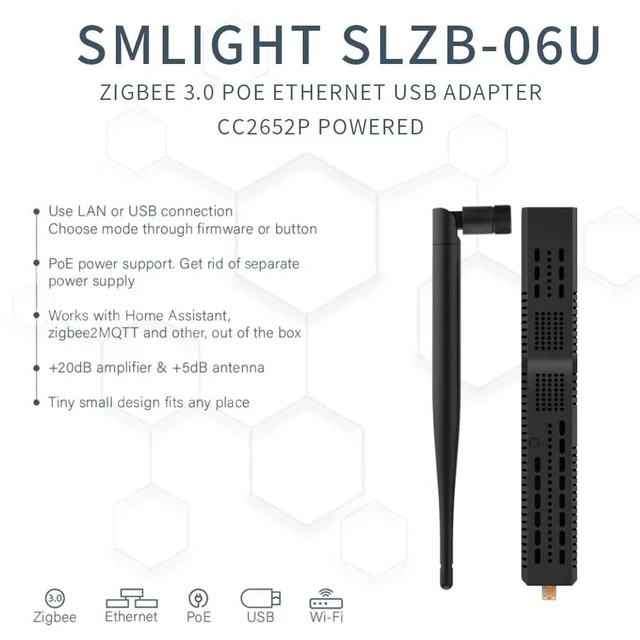
SMLIGHT SLZB-06U/06MU/06p7U/06MG24U are a network device that serves as a central bridge for managing communication in a Zigbee network. SLZB-06 can also serve a Matter-over-Thread network. The devices are designed specifically for Zigbee2MQTT, Home Assistant and ZHA ensuring smooth work out-of-the-box.
CC2652P (48Mhz, 88Kb RAM) is the Top 1 on our list. Reliability has been tested over the years and by many users. CC2652* chips are fully supported in Zigbee2MQTT (EFR32 has an “experimental” support status), and are also fully supported in ZHA. That is, it is a universal coordinator for both ZHA and Zigbee2MQTT. Zigbee firmware supports up to 200 end devices. Even with the maximum number of Zigbee devices, the chip parameters (processor 48Mhz and 88Kb RAM) are not even close to the maximum, so there is no difference in speed compared to other chips in the series (CC2652P7: 48Mhz+152Kb RAM, CC2674P10: 48Mhz+264Kb RAM). So, CC2652P is #1.
The EFR32MG21 (80Mhz + 96Kb RAM) does not differ significantly from the CC2652P chips in terms of technical characteristics. However, there are a few things that the user should know: (1) This chip is ideal for working with ZHA , but it is listed in the “experimental” section for Zigbee2MQTT. In practice, these chips show more stable operation than CC26** in Zigbee coordinator mode. In addition, although both EFR32MG21 and CC2652P chips have a +20dB amplifier, EFR32 chips usually show higher LQI with end devices. We put this chip on the 1st place along with the CC2652P chip in our rating.
The CC2652P7 (48Mhz + 152 Kb RAM) has the same processor (48Mhz) as the CC2652P chips, but a slightly larger amount of RAM – 152Kb (CC2652P: 88Kb). At the same time, neither the processor nor the memory is used even by 30% when the chip is operating in coordinator mode with the maximum possible number of connected end devices. Therefore, this chip is more of a marketing ploy. Our recommendation is to pay attention to CC2652P. It is cheaper, more reliable (because it has been tested by a large number of users), and supports +20dB of gain at the firmware level. That is, If you like marketing gimmicks, the CC2652P7 is your choice.The CC2652P7 chip is ranked #2 in our rating.
TEFR32MG24 (80Mhz + 256KbRAM) does not differ significantly from EFR32MG21 chip in terms of technical characteristics, except for the size of RAM: 256Kb versus 96Kb in EFR32MG21. The amount of RAM is at the level of the CC2674P10 chip. However, as in the case of the CC2674P10 chip, even with the maximum connection, the processor and RAM are not loaded to the maximum in EFR32MG21. So whether it makes sense to overpay for EFR32MG24 is a rhetorical question. Therefore, here we would say the same as with CC2652P7 and CC2674P10 – if you like marketing gimmicks, CC2674P10 is your choice. This chip takes the 3rd place in our rating.
The CC2674P7 (48Mhz + 264Kb RAM) has the same processor (48Mhz) as the CC2652P and CC2652P7 chips, but a slightly larger amount of RAM – 264Kb (CC2652P: 88Kb, CC2652P: 152Kb,). At the same time, neither the processor nor the memory is used even by 30% when the chip is operating in coordinator mode with the maximum possible number of connected end devices. Therefore, this chip is more of a marketing ploy. In addition, the firmware for this chip is in test mode. As of February 2024, we recommend that you buy these coordinators at your own risk, or if you are a firmware developer and you need a test device on this chip. Our recommendation is to pay attention to the CC2652P. It is cheaper, more reliable (as it has been tested by a large number of users), and supports +20 dB of gain at the firmware level. That is, if you like marketing gimmicks, CC2674P10 is your choice. The CC2674P10 chip takes the 4th place in our rating.
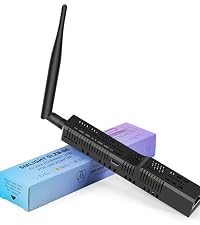 SLZB-06U | 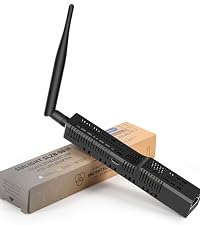 SLZB-06MU | 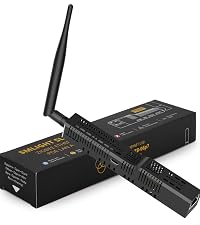 SLZB-06P7U | 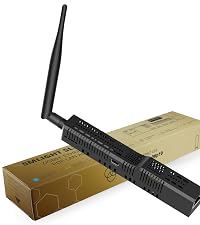 SLZB-06P10U | 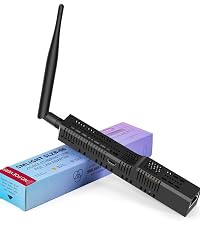 SLZB-06NoPOE | 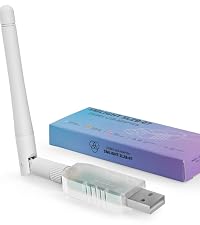 SLZB-07 | 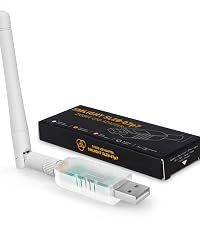 SLZB-06p7 | |
|---|---|---|---|---|---|---|---|
Customer Reviews | — | — | — | — | — | — | — |
Price | — | — | — | — | — | — | — |
Zigbee Soc | CC2652 | EFF32 | CC2652P7 | CC2674P10 | CC2652 | EFR32 | EFR32 |
Core Soc | ESP32-V3,16Mb 2 core @ 240 Mhz | ESP32-V3,16Mb 2 core @ 240 Mhz | ESP32-V3,16Mb 2 core @ 240 Mhz | ESP32-V3,16Mb 2 core @ 240 Mhz | ESP32-V3,16Mb 2 core @ 240 Mhz | NO | NO |
Serial SoC | CP2102N | CP2102N | CP2102N | CP2102N | CP2102N | CP2102 | CP2102 |
Zigbee-to-UsB | ? | ? | ? | ? | ? | ? | ? |
Zigbee-to-Ethernet | ? | ? | ? | ? | ? | ? | ? |
Zigbee-to-WiFi | ? | ? | ? | ? | ? | ? | ? |
USB powering | ? | ? | ? | ? | ? | ? | ? |
POE powering | 802.3af | 802.3af | 802.3af | 802.3af | NO | No | No |
Zigbee2MQTT | ? | ? | ? | ? | ? | ? | ? |
ZHA | ? | ? | ? | ? | ? | ? | ? |
Do these coordinators work with Zigbee2MQTT and ZHA?
Yes, all models work with both Zigbee2MQTT and ZHA.
Do I benefit from using SLZB-06p7 based on newer SoC C2652P7?
If you do not plan to have more than 200 end Zigbee devices, you do not need pay more for CC2652P7 chip. Moreover, CC2652P and CC2652P7 are based on the same processor Cortex M4F 48Mhz, the only difference is RAM.
Can I use “passive” 24V PoE?
Adapter supports active PoE standard IEEE 802.3af. So Only PoE routers and injectors with this standard will work.
Is it possible to use device in Wi-Fi mode?
Yes, it is. What you need is just choose mode to Zigbee-to-Wi-Fi and connect to your Wi-Fi network.
Are there any delays in Zigbee while using via Ethernet?
No, actually Ethernet 100Mb is much faster rather than the baud rate used for USB serial connection 115k.
Can I connect to type-C and RJ45 at the same time? Optoelectronic isolation at place?
Yes. The device contains optoelectronic isolation between USB and Ethernet parts. So you can plug in SLZB-06M to both RJ45 and type-C at the same time.
Do I need to change powering either from POE or USB? Any switch?
No. You do not need to think about tit. No switches. Just plug in POE or type-C or both – and the device works. It distinguishes power sources and acts correspondingly.
How to select mode USB/Ethernet? Any physical switches?
The device can be switched between USB or Ethernet either through a web-interface or by button. Just short press – and the work mode changed. Switching by web interface allows changing the work mode distantly.
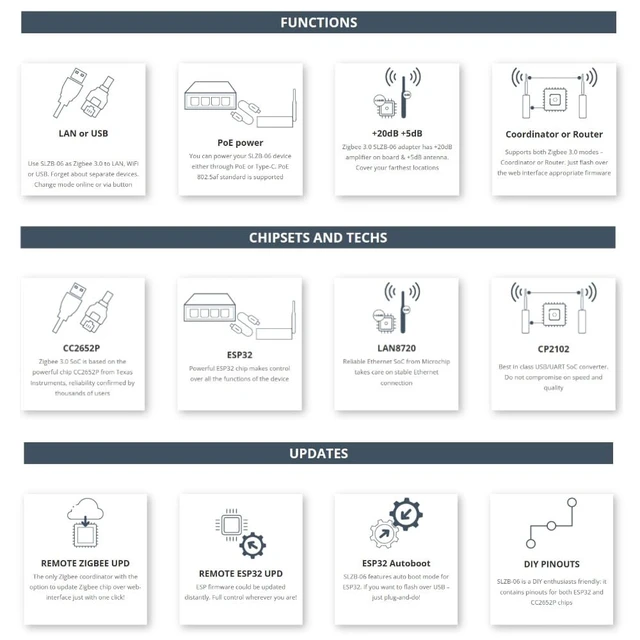
SMLIGHT SLZB-06U/06MU/06p7U/06MG24U are a network device that serves as a central bridge for managing communication in a Zigbee network. SLZB-06 can also serve a Matter-over-Thread network. The devices are designed specifically for Zigbee2MQTT, Home Assistant and ZHA ensuring smooth work out-of-the-box.
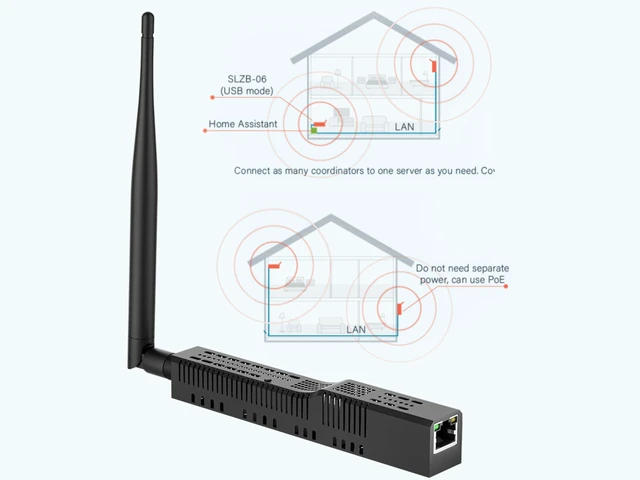
| 3 modes | Zigbee-to-Ethernet, Zigbee-to-WiFi and Zigbee-to-USB. |
|---|---|
| Matter-over-Thread | SLZB-06U has also experimental supports of Matter-over-Thread. |
| Different Zigbee SoCs Options | SLZB-06U on CC2652P, SLZB-06p7U on CC2652P7, SLZB-06P10U on CC2674P10U, SLZB-06MG24U on EFR32MG24 and SLZB-06M on EFR32. |
| Plug-and-play | Pre-flashed and ready to use with Zigbee2MQTT and ZHA. |
| One-click update | Zigbee and Core firmware OTA update over web-interface |
| ESP32 chip | 2 cores @ 240Mhz + 16Mb memory. |
| Double protection | VPN tunneling with security authorizations. Securely protected login with password to web-interface, internal whitelist firewall settings |
| Multi-Building Coverage | Can cover multiple buildings with 2 or more coordinators and Zigbee2MQTT. You can install as many coordinators to work with Zigbee2MQTT as you want. |
| Support multiple languages | 15 language localization interfaces. |
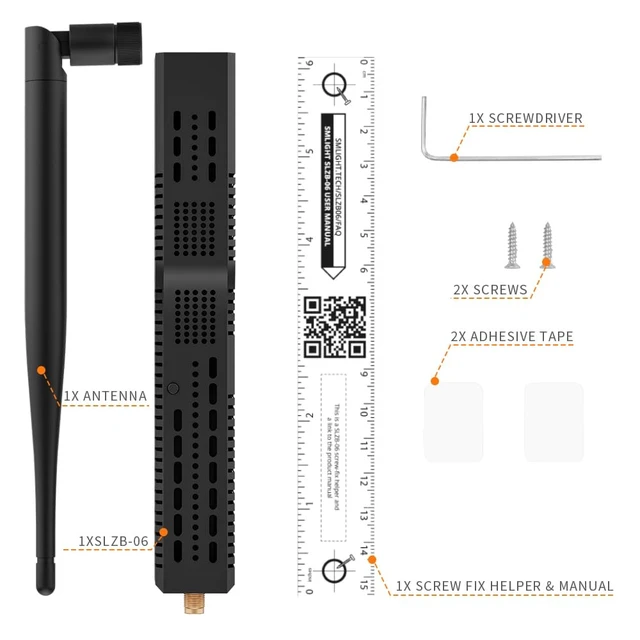
| Rich packing | Zigbee Coordinator, +5dB antenna, screws and screwdriver, adhesive tape, Type-C adapter, manual. |
CC2652P (48Mhz, 88Kb RAM) is the Top 1 on our list. Reliability has been tested over the years and by many users. CC2652* chips are fully supported in Zigbee2MQTT (EFR32 has an “experimental” support status), and are also fully supported in ZHA. That is, it is a universal coordinator for both ZHA and Zigbee2MQTT. Zigbee firmware supports up to 200 end devices. Even with the maximum number of Zigbee devices, the chip parameters (processor 48Mhz and 88Kb RAM) are not even close to the maximum, so there is no difference in speed compared to other chips in the series (CC2652P7: 48Mhz+152Kb RAM, CC2674P10: 48Mhz+264Kb RAM). So, CC2652P is #1.
The EFR32MG21 (80Mhz + 96Kb RAM) does not differ significantly from the CC2652P chips in terms of technical characteristics. However, there are a few things that the user should know: (1) This chip is ideal for working with ZHA , but it is listed in the “experimental” section for Zigbee2MQTT. In practice, these chips show more stable operation than CC26** in Zigbee coordinator mode. In addition, although both EFR32MG21 and CC2652P chips have a +20dB amplifier, EFR32 chips usually show higher LQI with end devices. We put this chip on the 1st place along with the CC2652P chip in our rating.
The CC2652P7 (48Mhz + 152 Kb RAM) has the same processor (48Mhz) as the CC2652P chips, but a slightly larger amount of RAM – 152Kb (CC2652P: 88Kb). At the same time, neither the processor nor the memory is used even by 30% when the chip is operating in coordinator mode with the maximum possible number of connected end devices. Therefore, this chip is more of a marketing ploy. Our recommendation is to pay attention to CC2652P. It is cheaper, more reliable (because it has been tested by a large number of users), and supports +20dB of gain at the firmware level. That is, If you like marketing gimmicks, the CC2652P7 is your choice.The CC2652P7 chip is ranked #2 in our rating.
TEFR32MG24 (80Mhz + 256KbRAM) does not differ significantly from EFR32MG21 chip in terms of technical characteristics, except for the size of RAM: 256Kb versus 96Kb in EFR32MG21. The amount of RAM is at the level of the CC2674P10 chip. However, as in the case of the CC2674P10 chip, even with the maximum connection, the processor and RAM are not loaded to the maximum in EFR32MG21. So whether it makes sense to overpay for EFR32MG24 is a rhetorical question. Therefore, here we would say the same as with CC2652P7 and CC2674P10 – if you like marketing gimmicks, CC2674P10 is your choice. This chip takes the 3rd place in our rating.
The CC2674P7 (48Mhz + 264Kb RAM) has the same processor (48Mhz) as the CC2652P and CC2652P7 chips, but a slightly larger amount of RAM – 264Kb (CC2652P: 88Kb, CC2652P: 152Kb,). At the same time, neither the processor nor the memory is used even by 30% when the chip is operating in coordinator mode with the maximum possible number of connected end devices. Therefore, this chip is more of a marketing ploy. In addition, the firmware for this chip is in test mode. As of February 2024, we recommend that you buy these coordinators at your own risk, or if you are a firmware developer and you need a test device on this chip. Our recommendation is to pay attention to the CC2652P. It is cheaper, more reliable (as it has been tested by a large number of users), and supports +20 dB of gain at the firmware level. That is, if you like marketing gimmicks, CC2674P10 is your choice. The CC2674P10 chip takes the 4th place in our rating.
SLZB-06U | SLZB-06MU | SLZB-06P7U | SLZB-06P10U | SLZB-06NoPOE | SLZB-07 | SLZB-06p7 |
|---|---|---|---|---|---|---|
| Customer Reviews | ||||||
| — | — | — | — | — | — | — |
| Price | ||||||
| — | — | — | — | — | — | — |
| Zigbee Soc | ||||||
| CC2652 | EFF32 | CC2652P7 | CC2674P10 | CC2652 | EFR32 | EFR32 |
| Core Soc | ||||||
| ESP32-V3,16Mb 2 core @ 240 Mhz | ESP32-V3,16Mb 2 core @ 240 Mhz | ESP32-V3,16Mb 2 core @ 240 Mhz | ESP32-V3,16Mb 2 core @ 240 Mhz | ESP32-V3,16Mb 2 core @ 240 Mhz | NO | NO |
| Serial SoC | ||||||
| CP2102N | CP2102N | CP2102N | CP2102N | CP2102N | CP2102 | CP2102 |
| Zigbee-to-UsB | ||||||
| ? | ? | ? | ? | ? | ? | ? |
| Zigbee-to-Ethernet | ||||||
| ? | ? | ? | ? | ? | ? | ? |
| Zigbee-to-WiFi | ||||||
| ? | ? | ? | ? | ? | ? | ? |
| USB powering | ||||||
| ? | ? | ? | ? | ? | ? | ? |
| POE powering | ||||||
| 802.3af | 802.3af | 802.3af | 802.3af | NO | No | No |
| Zigbee2MQTT | ||||||
| ? | ? | ? | ? | ? | ? | ? |
| ZHA | ||||||
| ? | ? | ? | ? | ? | ? | ? |
Do these coordinators work with Zigbee2MQTT and ZHA?
Yes, all models work with both Zigbee2MQTT and ZHA.
Do I benefit from using SLZB-06p7 based on newer SoC C2652P7?
If you do not plan to have more than 200 end Zigbee devices, you do not need pay more for CC2652P7 chip. Moreover, CC2652P and CC2652P7 are based on the same processor Cortex M4F 48Mhz, the only difference is RAM.
Can I use “passive” 24V PoE?
Adapter supports active PoE standard IEEE 802.3af. So Only PoE routers and injectors with this standard will work.
Is it possible to use device in Wi-Fi mode?
Yes, it is. What you need is just choose mode to Zigbee-to-Wi-Fi and connect to your Wi-Fi network.
Are there any delays in Zigbee while using via Ethernet?
No, actually Ethernet 100Mb is much faster rather than the baud rate used for USB serial connection 115k.
Can I connect to type-C and RJ45 at the same time? Optoelectronic isolation at place?
Yes. The device contains optoelectronic isolation between USB and Ethernet parts. So you can plug in SLZB-06M to both RJ45 and type-C at the same time.
Do I need to change powering either from POE or USB? Any switch?
No. You do not need to think about tit. No switches. Just plug in POE or type-C or both – and the device works. It distinguishes power sources and acts correspondingly.
How to select mode USB/Ethernet? Any physical switches?
The device can be switched between USB or Ethernet either through a web-interface or by button. Just short press – and the work mode changed. Switching by web interface allows changing the work mode distantly.
LOAMLIN is a provider of equipment for LED lighting and control systems and home assistants. Focus on providing customers with high-quality, reliable home lighting equipment.
Mainly provided by LOAMLIN:
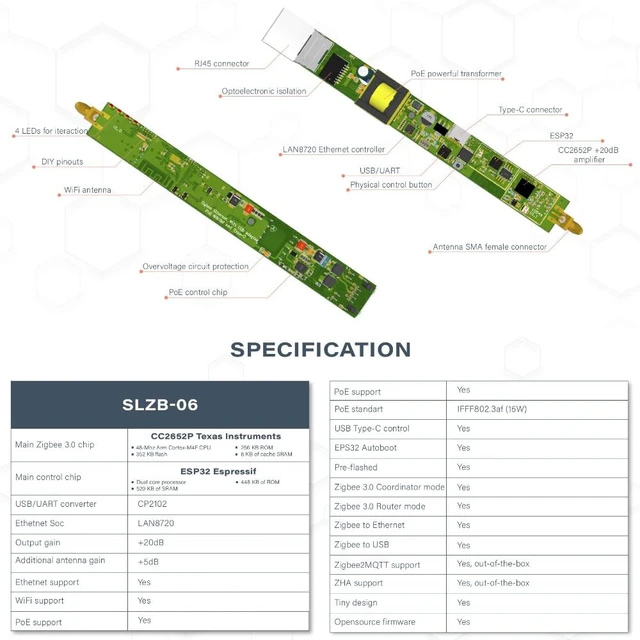
SLZB-06U specifications:
Wireless SoCs
Texas Instruments CC2652P1FRGZR Arm Cortex-M4F microcontroller @ 48 MHz with 352KB flash, 256KB ROM for protocols and library functions, 80+8KB SRAM, integrated power amplifier, Bluetooth 5.2 Low Energy and 802.15.4 radios
Espressif Systems ESP32-DOWDQ5-V3 dual-core processor @ 240MHz with 448 KB ROM, 520 KB SRAM, 16 KB SRAM in RTC, WiFi and BLE connectivity
Connectivity
Ethernet RJ45 port with PoE support (IEEE 802.3af) implemented through Microchip LAN8720 10/100M Ethernet controller
2.4 GHz WiFi up to 100 Mbps
Zigbee 3.0 support
+5dB SMA antenna included
USB USB Type-C port for data and power
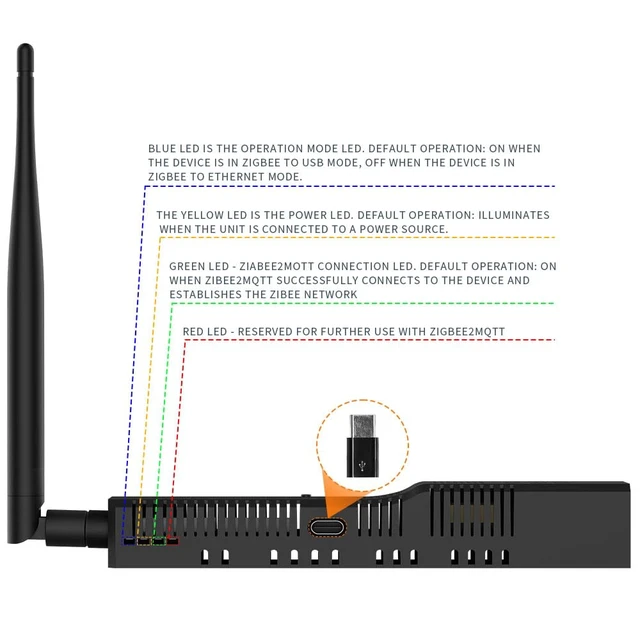
Misc 4x user LEDs, 1x button
Power Supply
oInput 5V/200mA via USB or PoE
Dimensions 160 x 26 x 22mm
Operating temperature: +5C - +35C
Note:
SLZB-06U designed to work with Zigbee2MQTT or ZHA integration.