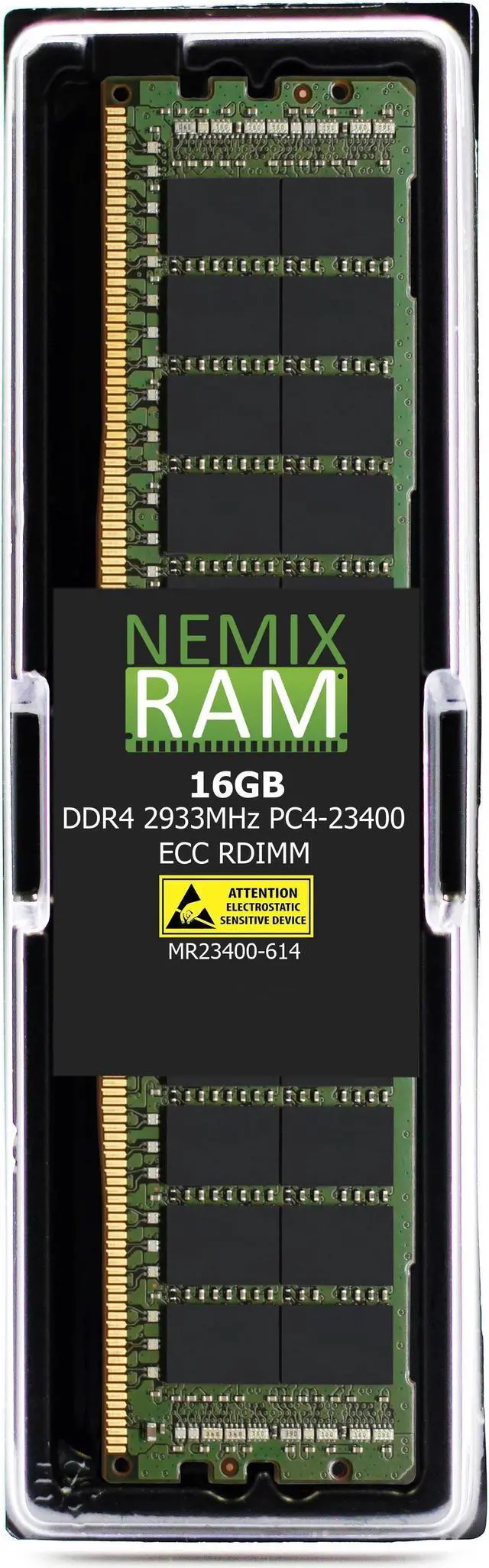
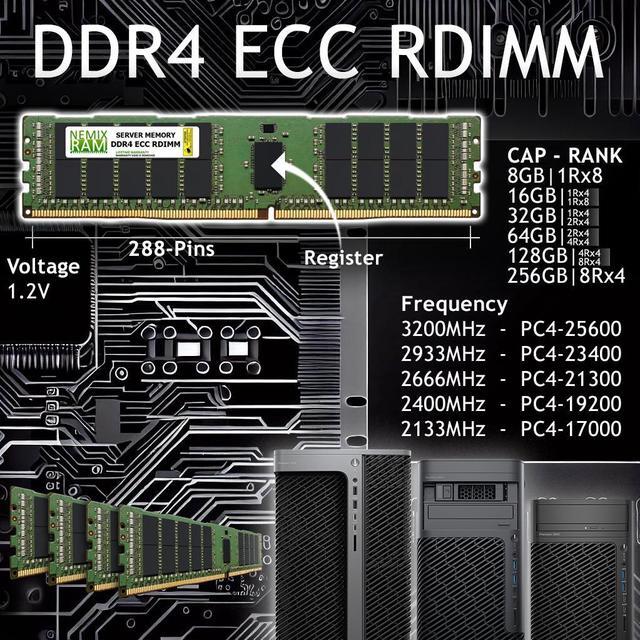
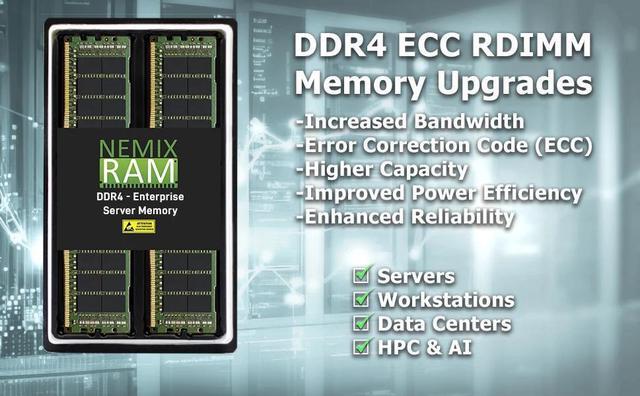
NEMIX RAM’s 16GB DDR4-2933 ECC Registered DIMM is a server memory module for systems that support 288-pin DDR4 RDIMMs, making it suitable for server and workstation upgrades that require registered ECC memory.
Recommended For
- Server administrators replacing a failed DIMM or adding 16GB to a DDR4 server that explicitly supports ECC registered RDIMMs and this module’s speed and rank.
- Homelab operators upgrading a compatible DDR4 server for services such as virtual machines, containers, or self-hosted applications, after checking the system’s supported DIMM type and population rules.
- Workstation operators whose board and processor support DDR4 ECC RDIMMs and who need a single 16GB module to expand or replace memory for sustained professional workloads.
- IT teams maintaining older DDR4 server platforms that specify 2933 MT/s ECC RDIMM memory and need a module with the listed 1Rx4 organization.
Real-World Use Scenarios
- On a compatible virtualization host, add this module when several VMs or lab services are competing for memory; the extra capacity can give them more room to run before the host has to reclaim or swap memory. The benefit depends on memory being the bottleneck.
- When a compatible database or application server is short on memory, use the module as part of a larger RAM upgrade to give more data room in memory; this may reduce disk reads when the workload’s working set fits better, but it does not guarantee faster performance.
- For a home-lab server that hosts file services alongside containers or other services, add capacity if memory use is limiting those workloads. This is a server-memory upgrade, not a general-purpose desktop or consumer NAS upgrade: the system must support DDR4 registered ECC memory.
- During a repair or refresh of a compatible DDR4 server, use the module to replace a failed DIMM or add capacity. Check the server’s supported DIMM type, speed, rank, and population rules first; a system may run memory below its rated speed depending on its configuration.
- In a workstation that explicitly supports registered ECC DIMMs, use the module as part of a compatible memory configuration for memory-heavy professional tasks. It will not work in systems that require unbuffered desktop memory, even if the DDR4 generation and pin count appear to match.




 here!