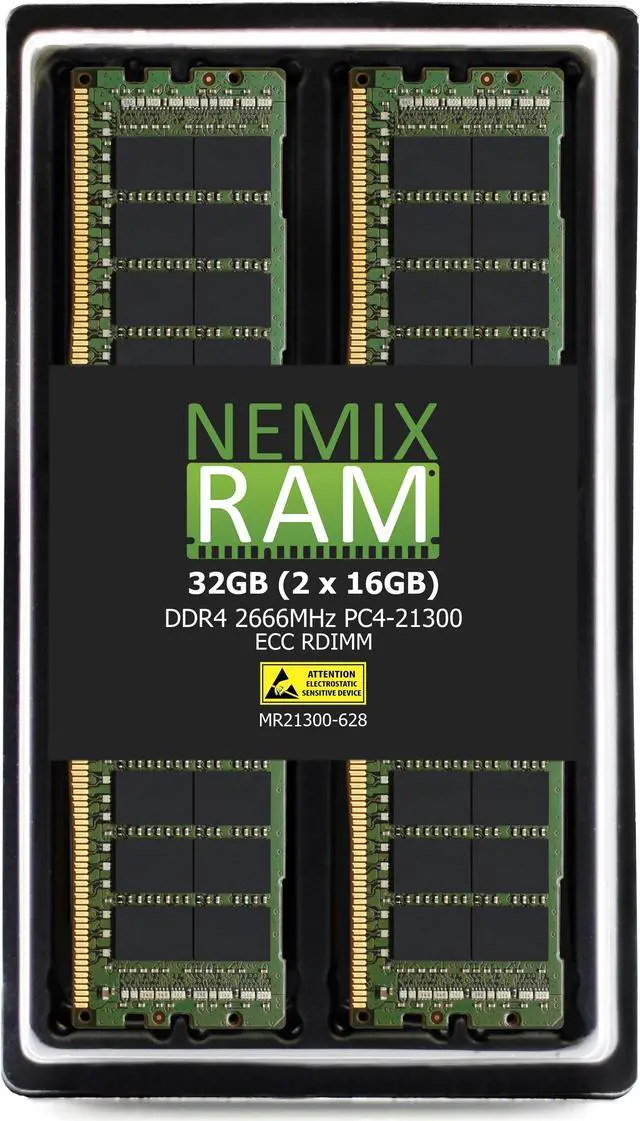
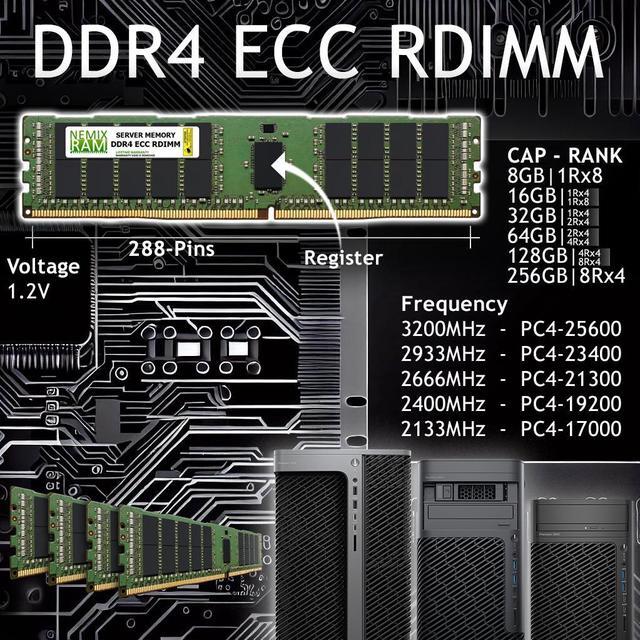
NEMIX RAM’s 32GB (2 x 16GB) DDR4-2666 ECC registered memory kit is designed for compatible ASUS KNPA-U16 EPYC 7000-series server builds needing a 288-pin RDIMM upgrade.
Recommended For
- ASUS KNPA-U16 and supported EPYC 7000-series owners replacing or adding two compatible 16GB ECC registered DIMMs for a 32GB memory configuration; confirm the CPU’s supported speed and the board’s slot-population rules.
- Home-lab builders running a compatible EPYC server who need a small, matched ECC RDIMM kit for basic server, virtualization, or storage workloads rather than a large-memory configuration.
- Server repair or refurbishment technicians matching a 2Rx8, DDR4-2666 ECC RDIMM configuration in a KNPA-U16-based system.
- EPYC 7000 users who already have compatible registered memory and want to expand in stages, provided they follow the motherboard’s required DIMM placement and accept that two modules do not populate all eight memory channels.
Real-World Use Scenarios
- Adding this 32GB kit to a compatible EPYC server can give a small virtualization host more RAM to allocate across lightweight test VMs, such as lab environments for directory services or Kubernetes. It helps when memory is the constraint; it will not by itself speed up workloads limited by CPU or storage.
- For a KNPA-U16 server that needs more memory or a replacement pair, these registered ECC DIMMs can add capacity while keeping the system in the server-memory category. Confirm the motherboard’s memory population rules and compatibility list before installing; a matching speed and memory type alone do not guarantee compatibility.
- In a home lab or development server, the added memory can provide more room for several small services or build and test environments to run together. The practical benefit depends on whether the existing system is short on RAM; this kit does not guarantee faster builds or service response times.
- For a modest database or application server, the extra RAM can support a larger working set or buffer cache if the workload can use it. It is a capacity increase, not a database-performance guarantee; the full cache benefit depends on the database size, configuration, and available system memory.




 here!