




 here!
I’m your shopping assistant for PC builds, upgrades, and everything tech.
Got questions? Ask away!
Start a conversation
here!
I’m your shopping assistant for PC builds, upgrades, and everything tech.
Got questions? Ask away!
Start a conversation





Any questions? Ask CelesteSM will help you find out quickly.
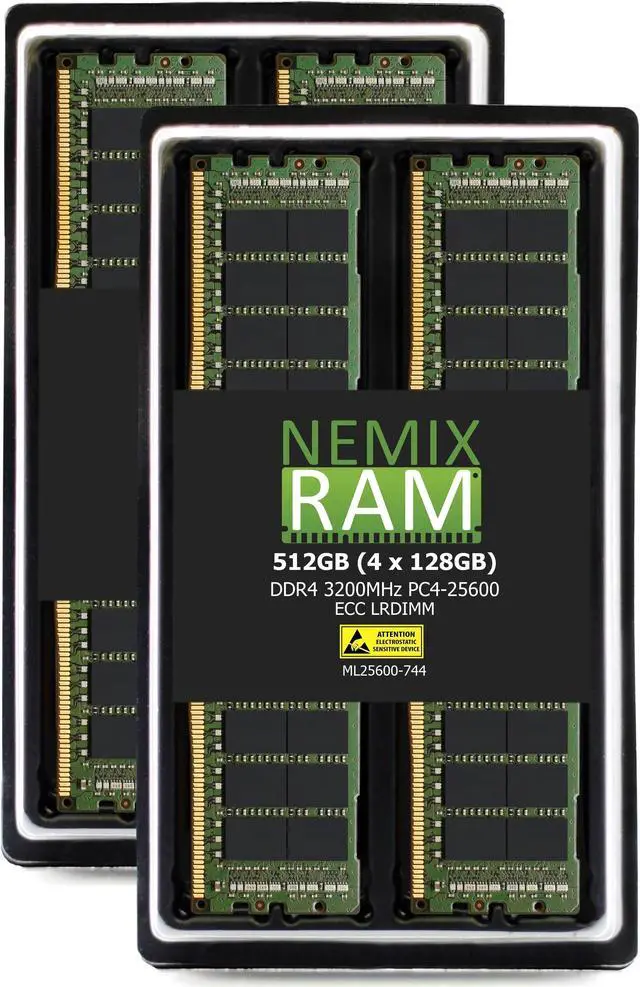
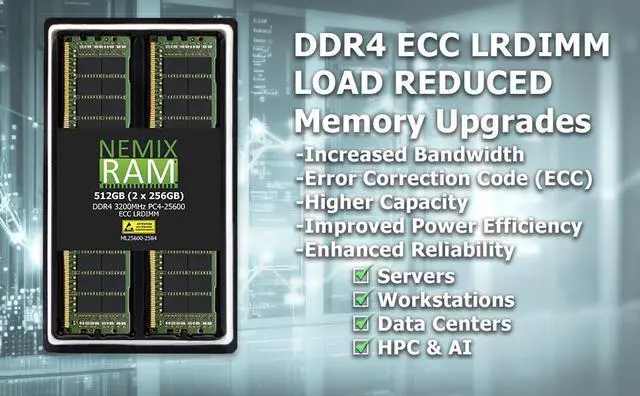
NEMIX RAM’s 512GB DDR4-3200 ECC LRDIMM kit includes four 128GB modules for servers that support 4Rx4 load-reduced memory; it is intended for server use, not PC computers.
| Attribute | Value |
|---|---|
| Best For | Server memory upgrades requiring DDR4-3200 ECC load-reduced DIMMs; not intended for PC computers |
| Capacity And Configuration | 512GB total across 4 × 128GB modules |
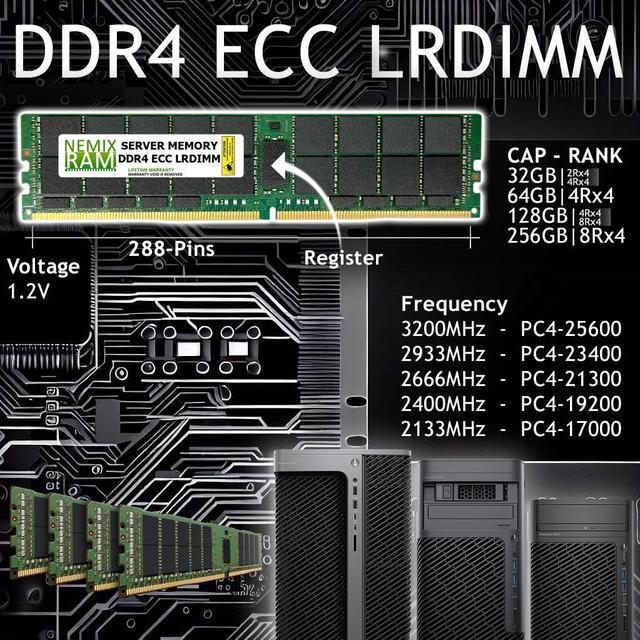
| Memory Speed And Latency | DDR4-3200 (PC4-25600) with CAS latency 22 |
| ECC And Module Architecture | ECC load-reduced DIMMs with 4Rx4 rank configuration |
| Voltage And Pin Configuration | 1.2V, 288-pin |
| Chip Manufacturers | Major OEMs: Samsung, Micron, and Hynix |
| Model Identifiers | NEMIX RAM, part/model number ML25600-744K4-SM-SYS-120C-TN10R |
Q: NEMIX RAM 512GB (4×128GB) or 256GB (4×64GB): which kit should I choose?
A: Choose the 512GB kit when your server needs more memory while keeping the kit at four modules: it provides 128GB per DIMM instead of 64GB. Both configurations are DDR4-3200 ECC 4Rx4 LRDIMMs; confirm your system supports the selected module density and total capacity.
Q: Should I get the NEMIX RAM 512GB kit or the 1TB kit?
A: Choose 512GB for a four-module configuration with 128GB per DIMM. Choose the 1TB kit when you need twice the total capacity and your server supports eight 128GB modules. Both are DDR4-3200 ECC 4Rx4 LRDIMMs.
Q: How does the NEMIX RAM 512GB kit compare with the 768GB kit?
A: The 512GB kit has four 128GB modules; the 768GB option has six 128GB modules. Choose 768GB when you need the additional capacity and your server’s supported memory population includes six modules. Both configurations are listed as DDR4-3200 ECC 4Rx4 LRDIMMs.
Q: How do I know if this 512GB kit is compatible with my server?
A: Check the server’s documentation for support for DDR4 LRDIMMs, 128GB 4Rx4 modules, and the kit’s 3200 MT/s speed. Also verify the server’s maximum memory capacity and required DIMM population order. A 288-pin match alone does not guarantee compatibility.
Q: Can I use this memory in a regular desktop or laptop?
A: No. This is ECC load-reduced server memory, and the product is identified as not for PC computers. Use it only in a system whose documentation supports DDR4 LRDIMMs.
Q: Who is a 512GB LRDIMM kit suitable for?
A: It is intended for server operators who need high memory capacity for workloads such as virtualization or large in-memory datasets, and whose server supports 128GB DDR4 LRDIMMs. The added capacity helps only when available memory is a constraint for the workload.
Q: Can I mix this kit with the memory already installed in my server?
A: Do not assume it can be mixed. Confirm that the server supports LRDIMMs and that its memory rules allow the existing modules to be used alongside this kit. In particular, check the server documentation for module type, capacity, rank, speed, and population requirements before installing it.
Q: Will this LRDIMM work with my server?
A: Only if the server’s processor, motherboard, and firmware support 128GB DDR4-3200 ECC LRDIMMs with this rank. Check the system’s memory compatibility list before buying; support for DDR4 or ECC memory alone does not confirm support for this module.
Q: Can I use this alongside RDIMMs already installed in my server?
A: Do not plan to mix LRDIMMs and RDIMMs in the same system. Reddit discussions repeatedly flag the two types as incompatible when mixed; check your server documentation and use one supported memory type throughout.


