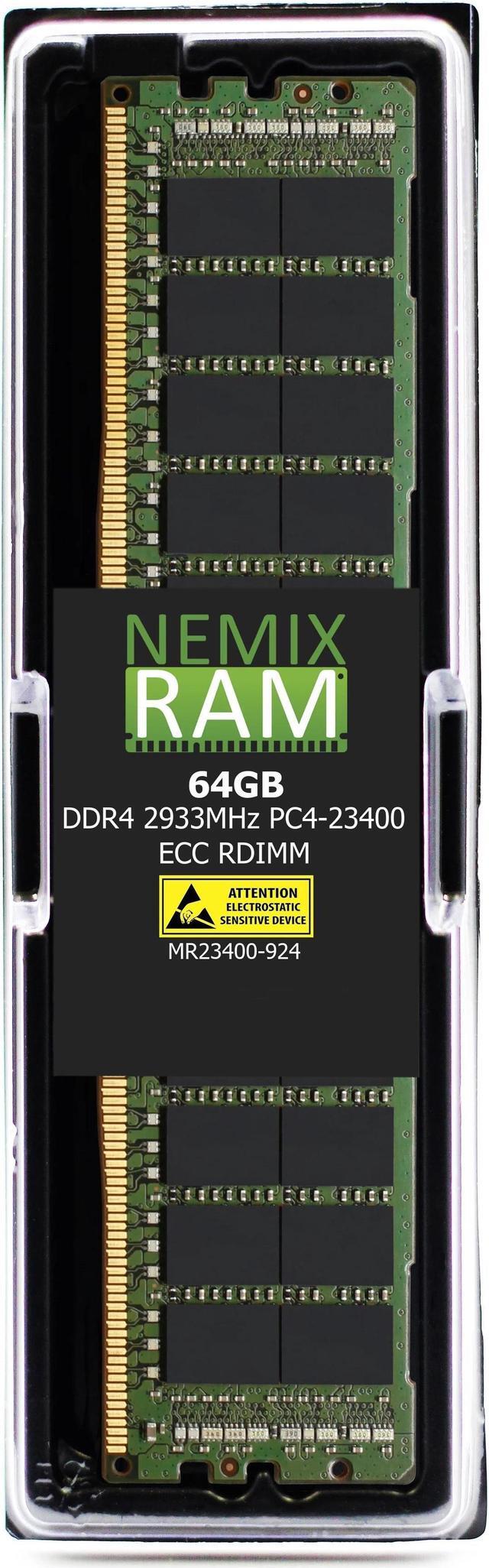
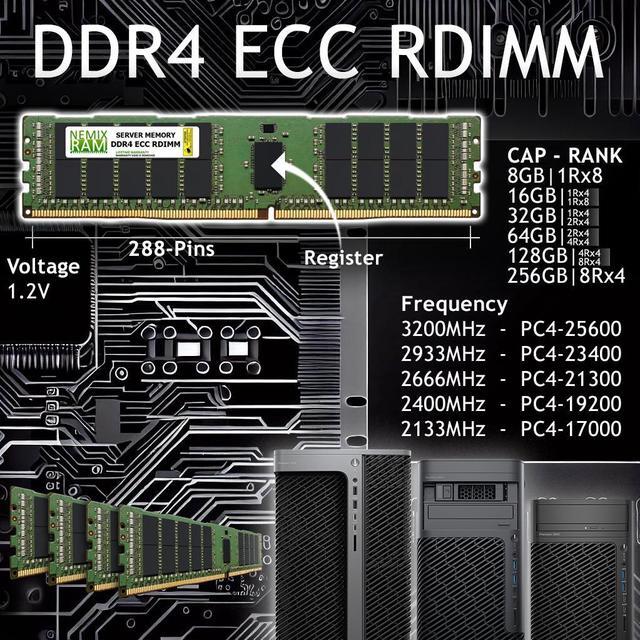
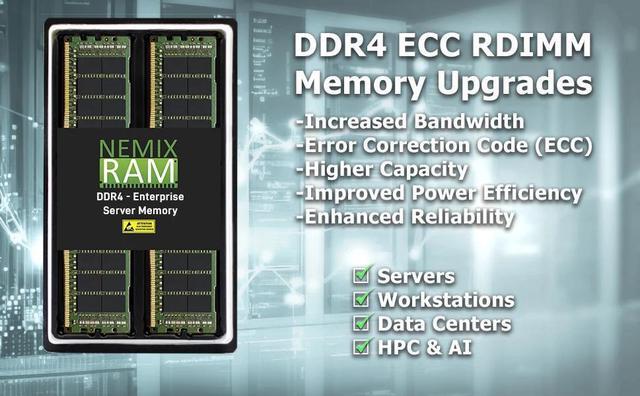
NEMIX RAM MR23400-924K1 is a 64GB DDR4-2933 ECC registered DIMM for compatible servers and workstations that support 288-pin RDIMM memory. Its single-module capacity and ECC design suit users upgrading memory in supported enterprise systems.
Recommended For
- Operators upgrading a DDR4 server or workstation that explicitly supports 64GB ECC RDIMMs and needs more memory for virtualization, server applications, or other memory-heavy workloads. Confirm the system’s supported DIMM type, capacity, speed, and population rules before buying.
- Homelab builders expanding a compatible DDR4 server for additional VMs or services, especially when their motherboard and CPU support registered ECC memory and the system’s memory guide allows this 64GB module configuration.
- IT teams replacing or matching an existing 64GB DDR4-2933 2Rx4 ECC RDIMM in a supported server, where matching the system’s memory type and configuration matters more than using consumer desktop memory.
- Workstation owners running a platform that specifically supports DDR4 RDIMMs and ECC, and whose memory-intensive professional workloads benefit from adding capacity rather than switching to a different memory generation.
Real-World Use Scenarios
- On a compatible DDR4 RDIMM server used for virtualization, adding memory can give existing VMs more room or let the host run additional VMs before memory pressure becomes a constraint.
- For a server running memory-hungry database applications, adding capacity can let more of the database working set stay in memory; the benefit depends on the application and the server’s full memory configuration.
- When a compatible server’s workload grows over time, adding a 64GB module can increase memory capacity without replacing the whole system; check the server’s supported DIMM types and population rules first.
- For a homelab server or hypervisor with limited DIMM slots, moving to higher-capacity RDIMMs can help raise total memory while using fewer slots, provided the CPU and motherboard support the module’s type and configuration.
- In an ECC-capable server used for ongoing business or data workloads, ECC memory can detect and correct certain memory errors, helping reduce the risk that those errors disrupt a running workload.




 here!