




 here!
I’m your shopping assistant for PC builds, upgrades, and everything tech.
Got questions? Ask away!
Start a conversation
here!
I’m your shopping assistant for PC builds, upgrades, and everything tech.
Got questions? Ask away!
Start a conversation



Any questions? Ask CelesteSM will help you find out quickly.
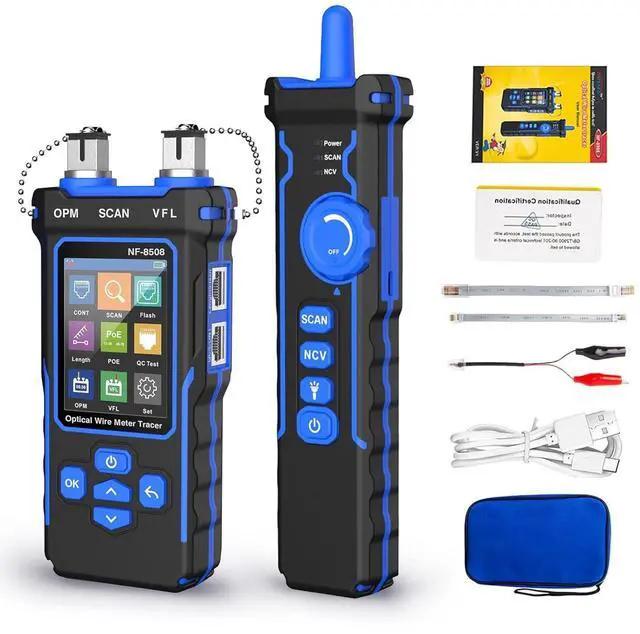
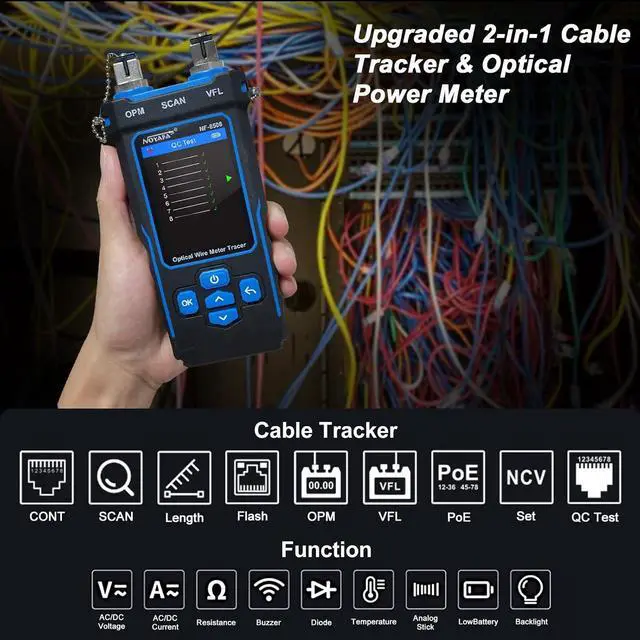
NOYAFA NF-8508 Multifunctional Network Cable Tester: Continuity testing, cable scan, port flash, length measurement, POE Test, QC test, optical power meter, VFL and NVC function, you can efficiently perform a wide variety of connection tests with just a single press of a button.

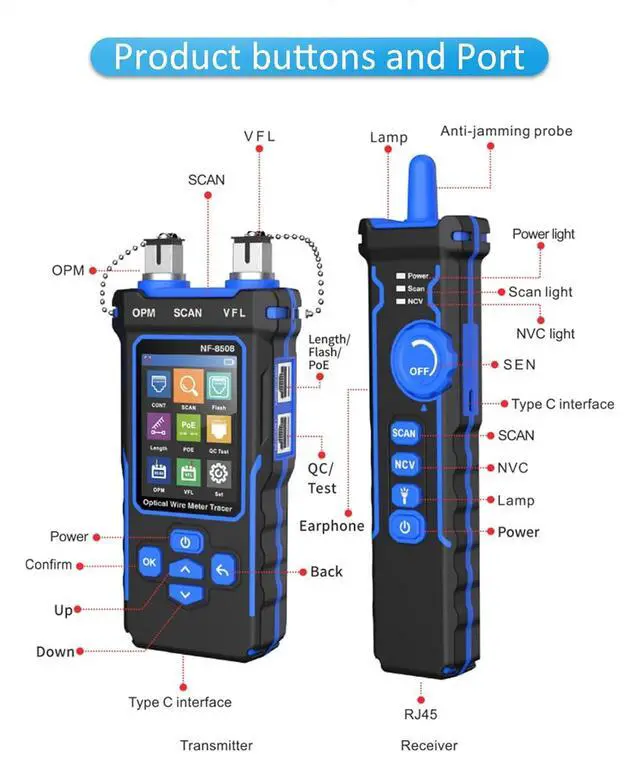
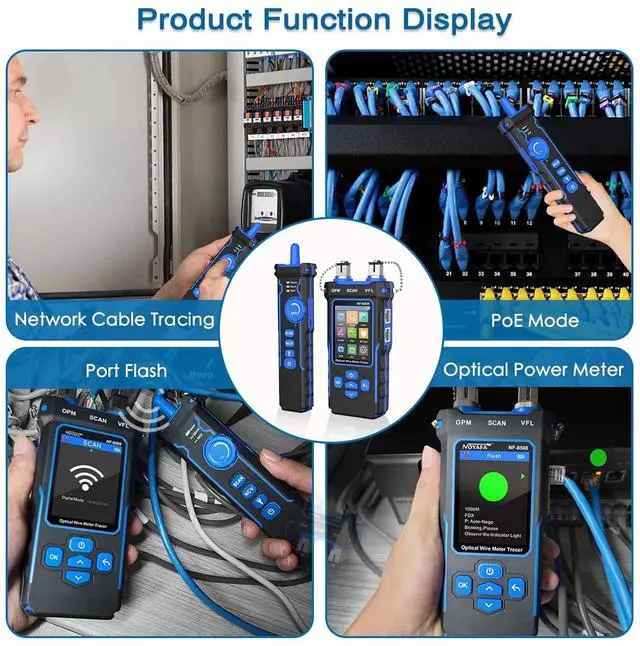
PORT FLASH:Quickly & Exactly find out the target cable port to efficiency. lf there is a port whose flash frequency is same as the“Length/Flash”port on tranmitter, the frequency is around 3 secsalso the other ports are flashing more quickly, then you can easily identify it is your target port.

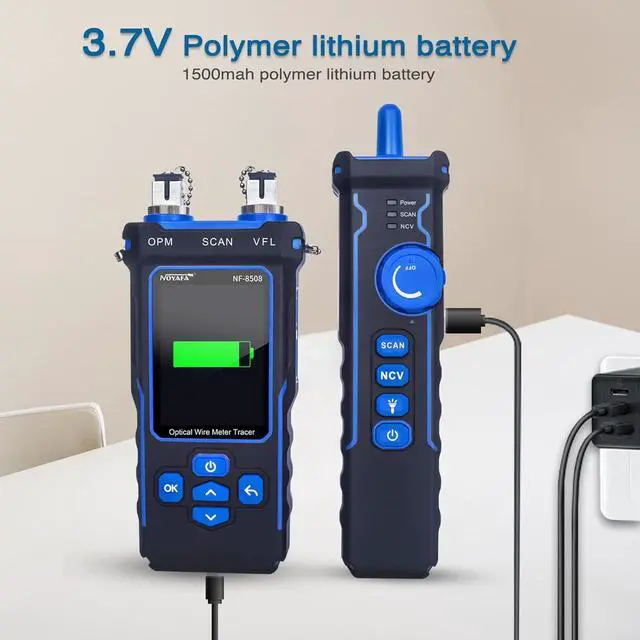
Long Battery Life + Type-C Charging: running time of 10 hours, Type-C charging is more convenient.

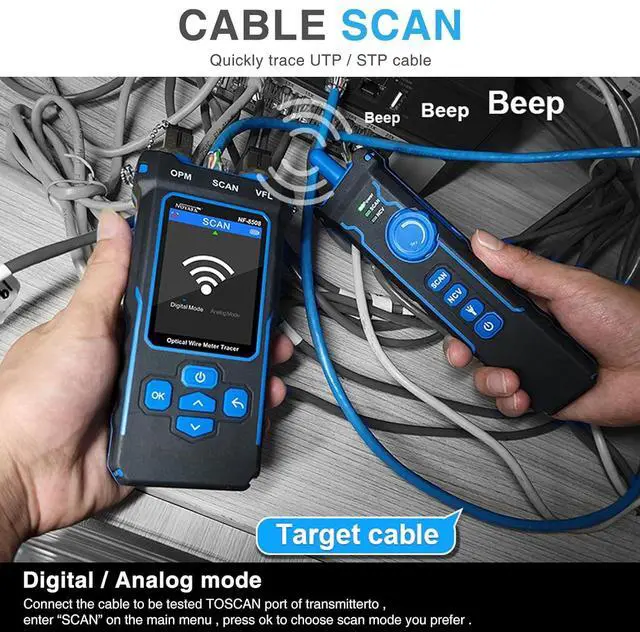
Quickly trace UTP/STP cable and has Digital / Analog mode/ Test network cable continuity, shorted, broken, cross

One-click identification of live equipment can detect wires and sockets to avoid the danger caused by strong electricity during construction

Fast flashing, slow flashing, and light on,high precision
NOYAFA NF-8508 Multifunctional Network Cable Tester: Continuity testing, cable scan, port flash, length measurement, POE Test, QC test, optical power meter, VFL and NVC function, you can efficiently perform a wide variety of connection tests with just a single press of a button.


NOYAFA Network Cable Tester with 7 Wavelengths Optical Power Meter, PoE Tester with Visual Fault Locator
POE TEST: Quickly identify PoE equipment, test POE voltage, power supply polarity, power supply mode and PSE type

PORT FLASH:Quickly & Exactly find out the target cable port to efficiency. lf there is a port whose flash frequency is same as the“Length/Flash”port on tranmitter, the frequency is around 3 secsalso the other ports are flashing more quickly, then you can easily identify it is your target port.
PORT FLASH:Quickly & Exactly find out the target cable port to efficiency


Long Battery Life + Type-C Charging: running time of 10 hours, Type-C charging is more convenient.
Quickly trace UTP/STP cable and has Digital / Analog mode/ Test network cable continuity, shorted, broken, cross
One-click identification of live equipment can detect wires and sockets to avoid the danger caused by strong electricity during construction
Fast flashing, slow flashing, and light on,high precision


It combines nine useful functions: cable continuity testing, cable scanning, port status checking, cable length measurement, POE power testing, fiber optic power metering, NVC non-contact voltage testing, and more. This tool can detect various types of faults in RJ45, RJ11, network cables, and fiber optic cables. It provides a comprehensive solution for network construction and maintenance. Cable scanning automatically detects RJ11, RJ45, CAT5, and CAT6 cable connections, ensuring stable connections and preventing network disruptions. Whether used in home or office networks, this tool makes it easy to identify any cable connection issues, thereby ensuring stable network connectivity.For fiber optic connections, it can detect breaks, bends, and other problems. Problems related to optical fibers are quite common. Optical fibers are widely used in the construction and maintenance of fiber optic networks.POE device testing: Checks whether POE devices are functioning properly.Non-contact voltage testing: Useful for safety inspections, industrial maintenance, and home electrical checks. It helps ensure safe and efficient operations for users.Its also useful for enterprise network maintenance, home offices, smart home equipment, IT management, and network equipment debugging. It helps technicians quickly diagnose port-related issues and maintain network stability.Optical fiber repair, installation, and commissioning are also essential tasks, especially in data centers, telecommunications companies, and smart buildings.The device offers nine integrated functions for maintaining and testing all types of cables. For fiber and network equipment, it enables precise cable scanning and fault location, helping to avoid omissions and errors during troubleshooting.
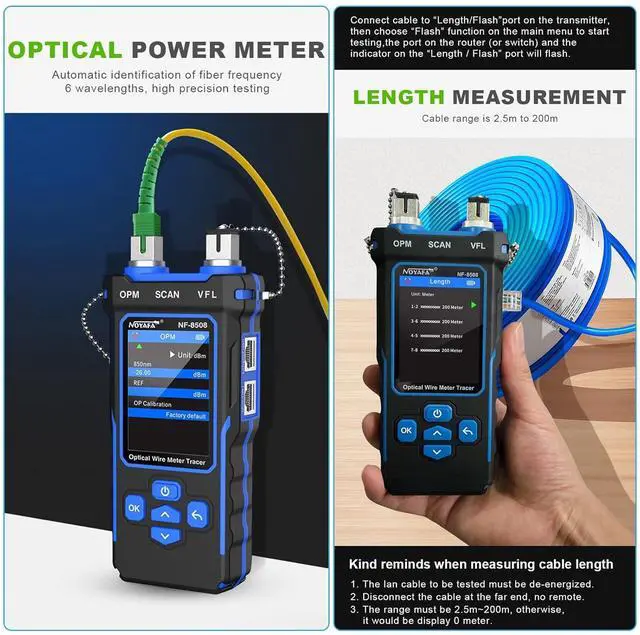
The NOYAFA NF-8508 is a 9-in-1 network and fiber cable tester for installers, IT technicians, and field service professionals. It combines Ethernet continuity, cable length testing up to 200 m, PoE verification, port flashing, optical power measurement, VFL tracing, and NCV detection for troubleshooting copper and fiber networks.
| Attribute | Value |
|---|---|
| Best For | Network cable and fiber-optic troubleshooting, continuity testing, PoE checks, cable-length measurement, optical-power testing, visual fault locating, and live-port tracing in PC and network service work |
| Model Identifiers | Noyafa NF-8508 |
Q: Is the NOYAFA NF-8508 better than the Klein Scout Pro 3?
A: Choose the NOYAFA NF-8508 when you need both Ethernet and fiber troubleshooting, including optical power measurement, a visual fault locator, PoE checks, cable-length testing, port flashing, and NCV detection. Choose the Klein Scout Pro 3 when your work is mainly voice, data, and coaxial cable installation and you prefer a tester designed around cable identification, length measurement, PoE testing, and multi-location mapping remotes. The NF-8508 provides broader fiber-related coverage, while the Scout Pro 3 has a more installation-focused remote-mapping ecosystem.
Q: Should I buy the NOYAFA NF-8508 or the Fluke Networks LinkIQ?
A: Choose the NF-8508 for portable, multi-function field troubleshooting that includes fiber optical power and VFL testing along with Ethernet cable checks. Choose the Fluke Networks LinkIQ when the priority is professional copper-cable qualification and active network diagnostics, such as validating performance up to 10GBASE-T, identifying switch information, testing IP connectivity, measuring PoE under load, and documenting results. The LinkIQ is the stronger fit for network performance validation; the NF-8508 is the more suitable fit when fiber tests and general cable-service functions are required in one device.
Q: Is the NF-8508 worth upgrading to from the NOYAFA NF-8209 Pro?
A: Upgrade to the NF-8508 if your work includes fiber links or requires optical power measurement and VFL fault finding. The NF-8209 Pro is the more focused choice for Ethernet and telephone-cable tracing, wire mapping, cable-fault testing, length measurement, PoE checks, port flashing, and crimp testing. If your jobs are limited to copper cabling, the NF-8209 Pro covers the core installation tasks with a simpler toolset; the NF-8508 adds value when fiber diagnostics are part of the job.
Q: Do I need the NF-8508 instead of a basic RJ45 cable tester?
A: Choose the NF-8508 when you need more than continuity or wire-map checks, such as cable-length measurement, PoE verification, port flashing, cable tracing, crimp-quality testing, optical power measurement, VFL testing, or NCV detection. A basic RJ45 tester is sufficient when the only requirement is confirming common open, short, or miswired-pair conditions on copper Ethernet cables. The NF-8508 is the better fit for technicians who want one field tool for mixed copper, telephone, coaxial, and fiber-related checks.
Q: Who is the NOYAFA NF-8508 suitable for?
A: The NF-8508 is best suited for network installers, IT technicians, telecom contractors, and advanced home users who need copper-cable testing, PoE checks, cable tracing, length measurement, and basic fiber troubleshooting in one handheld device. It may be more functionality than necessary for users who only need simple RJ45 continuity testing.
Q: Can it test both Ethernet cables and fiber optic cables?
A: Yes. The NF-8508 supports CAT5, CAT6, and CAT6a network-cable testing, as well as telephone and BNC cable functions. For fiber, it includes a seven-wavelength optical power meter covering 850 to 1650 nm and a 650 nm visual fault locator for finding visible breaks, bends, and poor connections. It is intended for signal and fault checks, not advanced fiber certification.
Q: Can the NF-8508 test PoE equipment and locate ports on a live network?
A: It can identify PoE voltage, polarity, and supported AT/AF power standards up to 60 V DC, and its port-flashing function helps locate a connected switch port. The port-flashing feature is designed for live-network tracing, but users should follow the manual and avoid connecting the tester to electrical circuits or live conductors outside its supported network and PoE functions.
Q: What cable lengths and cable faults can it measure?
A: The NF-8508 measures compatible cable lengths up to 200 meters and checks RJ45, telephone, and BNC cables for conditions such as opens and shorts. It also supports cable continuity and port identification. The 200-meter range is useful for many residential, commercial, and field-installation runs, but it is not a substitute for certification testing on longer or highly specialized links.
Q: Is it practical to carry for field work or travel?
A: The NF-8508 is designed for field use with a rechargeable 1500 mAh battery, USB-C charging, backlighting, auto-off, and up to about 10 hours of stated battery operation. Its all-in-one design can reduce the number of separate testers needed for copper, PoE, and basic fiber checks. Users who only perform occasional cable continuity tests may prefer a smaller, simpler tester.
Q: Is the NOYAFA NF-8508 worth buying for basic network and fiber troubleshooting?
A: It is a reasonable choice when you want one budget device for wire mapping, PoE checks, cable tracing, length estimation, optical power measurement, and VFL testing. It is not a replacement for a professional cable certifier, OTDR, or advanced network analyzer.
Q: Who is the NOYAFA NF-8508 best suited for?
A: It is best suited for home-network users, low-voltage technicians, installers, and field technicians who need basic Ethernet, PoE, cable-tracing, and fiber checks in one portable tool. Users performing formal certification or advanced fault diagnosis should use a higher-end tester.
Q: Can the NF-8508 accurately locate cable faults?
A: It can estimate cable length and help identify open or short conditions, which is useful for locating faults in wall runs or conduit. Treat the distance reading as approximate rather than certification-grade; community reports describe the length measurement as useful but not always precise.
Q: What are the main trade-offs of the NOYAFA NF-8508?
A: Its main advantage is the broad feature set, including Ethernet testing, PoE checks, port flashing, optical power measurement, and VFL in one unit. The trade-offs are a less polished interface, different ports for different tests, imperfect length accuracy, and limited suitability for formal network certification.


