here!
I’m your shopping assistant for PC builds, upgrades, and everything tech.
Got questions? Ask away!
Start a conversation
here!
I’m your shopping assistant for PC builds, upgrades, and everything tech.
Got questions? Ask away!
Start a conversation



Any questions? Ask CelesteSM will help you find out quickly.
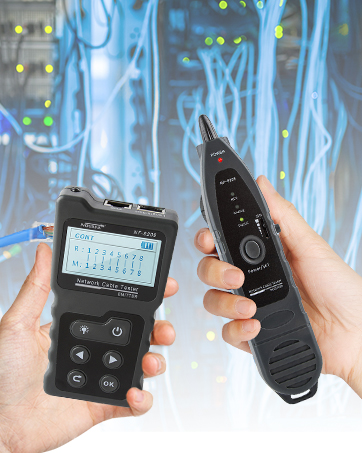
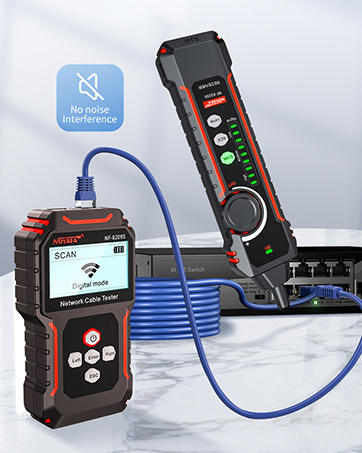
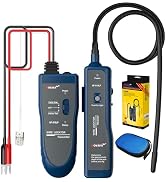
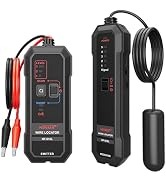
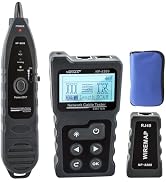
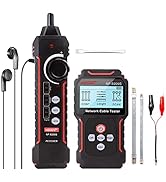
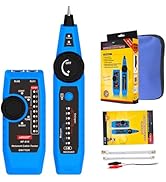
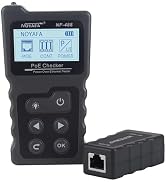
NOYAF NF-8209S network tester includes an audio transmitter and a probe receiver, making it easy to trace CAT5/CAT6 cables with RJ45/RJ11 ports. It supports Power over Ethernet (PoE) and shielded cables, and the probe's light is helpful even in dark environments. It can check cable quality, detect faults such as breaks or shorts, test cable continuity and cable sequence, and identify phone line status via LED indicators. Network cable tester usage scenarios: Home network minor repairs: Save on electrician costs while improving quality of life. Engineer wiring: Easily maintain and organize cables, improving work efficiency. Automotive wiring inspection and tracing: Trace and maintain complex wiring harnesses to ensure driving safety. To use the network cable tester: Scan the cable: Plug one end of the cable into the transmitter port, press the switch to power the device, and use the receiver probe to adjust the sensitivity to locate the target cable. The faster the receiver beeps, the correct cable is. If the cable is powered by PoE, the PoE indicator will light up. Fault detection: Plug the two ends of the network cable into the transmitter and receiver, respectively, and use the LED indicators to determine the cable's physical condition. If the wiring is correct, the indicator lights on the transmitter and receiver will be in the order of 1-2-3-4-5-6-7-8. If it is a shielded network cable, the G light will be on. You can also insert one end of the network cable into the transmitter port and move the receiver probe along the network cable. When the beeping sound stops, determine the location of the network cable fault. Insert the network cable connector into the correct socket of the transmitter. If all the QC lights on the transmitter are on, it means the connector is crimped correctly
| Has Multiple Battery Powered Components | false |
| Measurement Type | Ohmmeter |
| Included Components | NOYAFA NF-8209S Network Cable Teste Kit |
| Item Weight | 0.2 pounds |
| Item Package Quantity | 1 |
| Specification Met | CE |
| Item Dimensions | 1.5 L x 0.9 W x 6.6 H inches |
| Brand Name | NOYAFA |
| Number of Items | 1 |
| Item Package Dimensions | 4.9022 L x 16.51 W x 27.0002 H centimeters |
| Battery Installation Device Type | installed_in_vehicle |
| Style Name | utilitarian |
| Number of Lithium-ion Cells | 2 |
| Measurement Accuracy | 0 |
| Color | Black |
| Package Weight | 0.54 kilograms |
| Battery Cell Composition | lithium_polymer |
| Battery Weight | 0.01 pounds |
| Manufacturer | NOYAFA |
| Lithium Battery Energy Content | 1400 milliampere_hour |
| Lithium Battery Packaging | batteries_contained_in_equipment |
| Contains Battery or Cell | battery |
| Model | NYF-NF8209S |
| Number of Batteries | 2 |
| Battery Type | 9v |
| Are batteries required? | true |
| Power Source | Battery Powered |
| Are batteries included? | true |
The NOYAFA NF-8209S is a multifunction network cable tester and tracer for checking, locating, and troubleshooting RJ45/RJ11 cables. It supports CAT5/5e and CAT6/6A testing, PoE and NCV detection, cable length measurement, fault scanning, port flashing, and line tracing, making it suitable for IT professionals, network installers, telecom engineers, and serious DIY users.
Q: Is the NOYAFA NF-8209S better than a basic Ethernet cable tester?
A: Choose the NF-8209S when you need more than continuity and wire-map checks. It adds cable-length measurement, tone tracing, PoE pin and voltage detection, port flashing, NCV detection, fault scanning, loopback testing, and anti-interference scan modes. A basic tester is sufficient for occasional RJ45 wiring checks, while the NF-8209S is better suited to troubleshooting installed network or telephone cabling.
Q: Should I buy the NOYAFA NF-8209S or the Klein Tools Scout Pro 3?
A: Choose the NF-8209S for integrated PoE testing, NCV detection, digital and anti-interference cable tracing, port flashing, and USB-C rechargeable operation. Choose the Klein Scout Pro 3 when you need broad RJ11/RJ12, RJ45, and coax support, cable-length measurement up to 2,000 feet, or a remote-identification kit for mapping multiple cable runs. The decision depends on whether multifunction troubleshooting or voice/data/video cable identification is the priority.
Q: Is the NOYAFA NF-8209S enough for professional network troubleshooting, or should I get a Fluke LinkIQ?
A: Choose the NF-8209S for physical-layer troubleshooting such as wire faults, cable tracing, length checks, PoE detection, and port identification. Choose the Fluke LinkIQ when you also need frequency-based cable-performance validation up to 10GBASE-T, switch identification, VLAN and port information, IP ping tests, and PoE load testing. The NF-8209S is aimed at cable installation and fault isolation; LinkIQ is designed for deeper network and performance diagnostics.
Q: Is the NF-8209S a good choice for portable cable tracing and field work?
A: The NF-8209S is a practical portable option when one handheld tool needs to combine cable tracing, PoE checks, length measurement, fault scanning, NCV detection, and port flashing. Its rechargeable 1,400 mAh battery and USB-C charging support repeated field use. For work centered on network certification, switch diagnostics, or documented test reports, a higher-tier tester such as the Fluke LinkIQ is the better fit.
Q: Can the NOYAFA NF-8209S test CAT5 and CAT6 Ethernet cables?
A: Yes. The NF-8209S is designed to test RJ45 Ethernet cables, including CAT5, CAT5e, CAT6, and CAT6A types. It can check cable continuity, wiring faults, and physical connection status. It also supports RJ11 telephone-line testing.
Q: Can it test PoE cables and detect voltage without disconnecting the network equipment?
A: The NF-8209S includes PoE and NCV functions for identifying PoE power pins, detecting supported PSE power modes, and sensing AC voltage. It is intended for physical cable and power inspection, not for measuring internet speed, link bandwidth, or overall network performance.
Q: Can it trace Ethernet cables through walls, cable bundles, or network ports?
A: Yes. The NF-8209S combines a tone generator and probe with normal, anti-interference, and PoE tracing modes. Its port-flashing and line-scan functions help identify connected ports and locate accessible RJ45 or RJ11 cables in bundles or installed runs.
Q: Does it measure cable length and identify wiring faults?
A: Yes. The NF-8209S provides cable-length testing, continuity checks, loopback testing, and fault-line scanning. It is suitable for finding open, short, miswired, or incorrectly connected pairs, but it should not be treated as a full network analyzer for diagnosing switch, router, speed, or data-traffic problems.
Q: Who is the NOYAFA NF-8209S suitable for?
A: It is suitable for network installers, IT technicians, telecom workers, structured-cabling projects, and DIY users who need more than a basic pass/fail cable checker. Its tracing, PoE, NCV, port-flashing, length, and fault-scan functions make it useful for installation and troubleshooting, while Type-C charging supports repeated field use.
Q: Is the NOYAFA NF-8209S suitable for home or small-office Ethernet troubleshooting?
A: Yes. It is suitable for wire mapping, continuity checks, cable-length testing, PoE inspection, port flashing, and basic fault location in home or small-office networks. It is not a substitute for a certification tester when formal cable certification is required.
Q: Can the NF-8209S replace a professional cable certifier or advanced network tester?
A: No. The NF-8209S is intended for physical cable troubleshooting, including wire mapping, continuity, length, PoE, and tracing. Community discussions describe these functions as useful but basic; it should not be treated as a replacement for certification equipment or advanced network diagnostics.
Q: Is the NF-8209S good for tracing one cable in a crowded bundle?
A: It can help identify and trace cables, but performance may be limited by crosstalk and nearby active or unshielded Ethernet cables. Users report that sensitivity or isolation settings can narrow the signal, but the tester may still identify a group of cables rather than one cable in dense bundles.
Q: Does the NF-8209S identify split-pair wiring or confirm network speed?
A: Not reliably based on the cited discussions. The tester can show wire mapping, continuity, length, and some cable faults, but users specifically note that basic testers may not detect split pairs when the same incorrect arrangement appears at both ends. Confirming negotiated Ethernet speed requires network testing with compatible equipment.