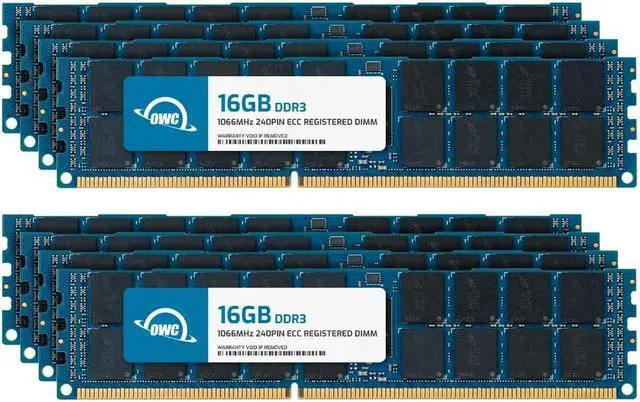
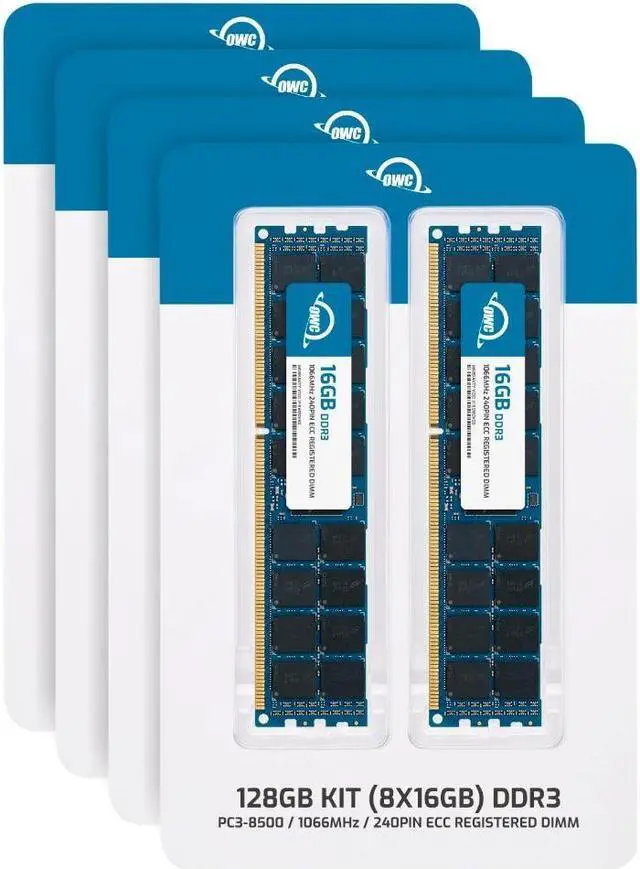
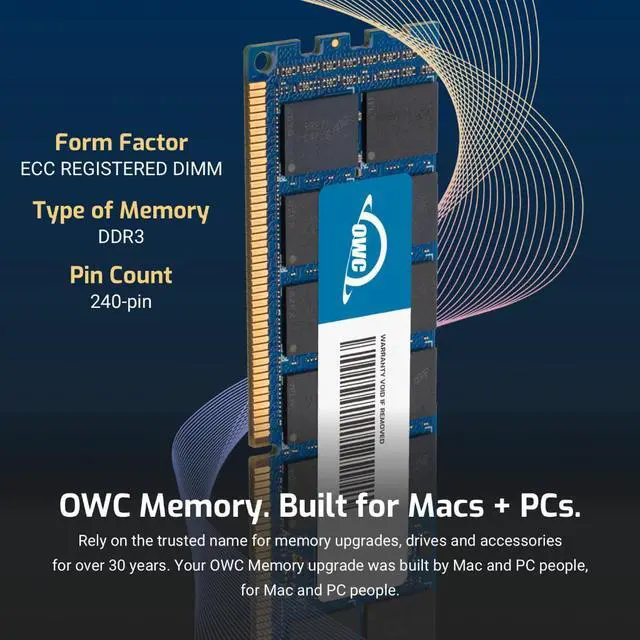
The OWC 128GB DDR3 ECC Registered RDIMM kit includes eight 16GB, 240-pin modules rated at 1066 MT/s (PC3-8500), CL7 and 1.5V for compatible workstations and servers that use registered memory.
Recommended For
- Operators of a compatible DDR3 server who need to expand memory for virtualization, multiple services, or consolidating workloads onto one host.
- Home-lab or NAS builders keeping a DDR3 platform in service who need a large memory pool for storage services and other self-hosted workloads; the motherboard and CPU must support ECC registered DIMMs.
- Workstation users with a compatible DDR3 RDIMM platform who routinely work with large files or several memory-hungry applications and want more capacity rather than a newer memory generation.
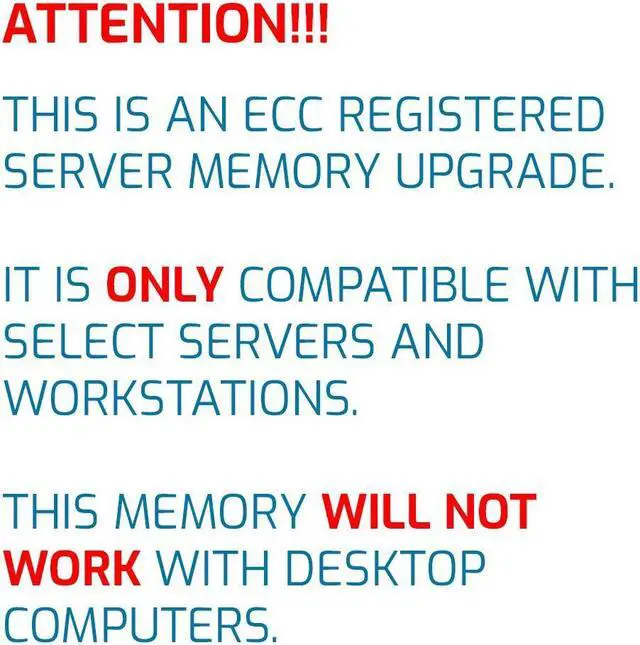
- IT teams or refurbishers extending the useful life of a legacy server or workstation, provided its manual confirms support for 16GB, 2Rx4 DDR3-1066 registered ECC modules and the eight-DIMM configuration.
Real-World Use Scenarios
- On a compatible older server running a hypervisor, adding this memory can give several virtual machines more room to run at once and reduce memory pressure; the host still needs RAM reserved for itself, and results depend on the VMs’ workloads.
- In a compatible ZFS or TrueNAS file server, the added capacity can give the system more RAM for its read cache, so frequently accessed data may be served from memory instead of slower storage.
- For a database server with a memory-intensive workload, extra RAM can let more of the active database workload fit in memory; the practical benefit depends on the database, its configuration, and whether memory is currently a bottleneck.
- For a home lab built around a compatible DDR3 Xeon server, this kit can support more concurrent test machines and services on one host, reducing the need to split workloads across multiple boxes when memory is the limiting resource.
- When maintaining a compatible legacy workstation or server, replacing or expanding its memory can help keep memory-heavy workloads on the existing system instead of forcing an immediate platform replacement; it does not make the processor or storage faster.




 here!