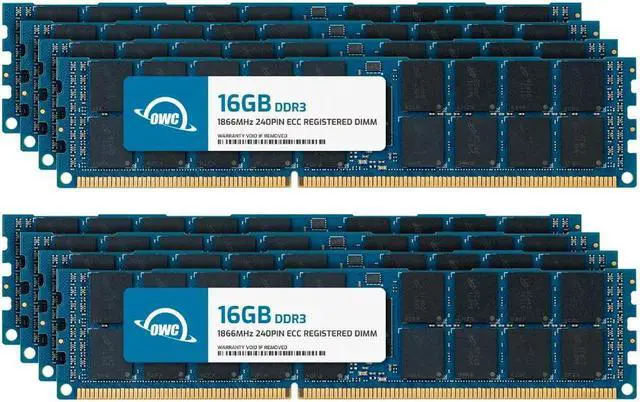
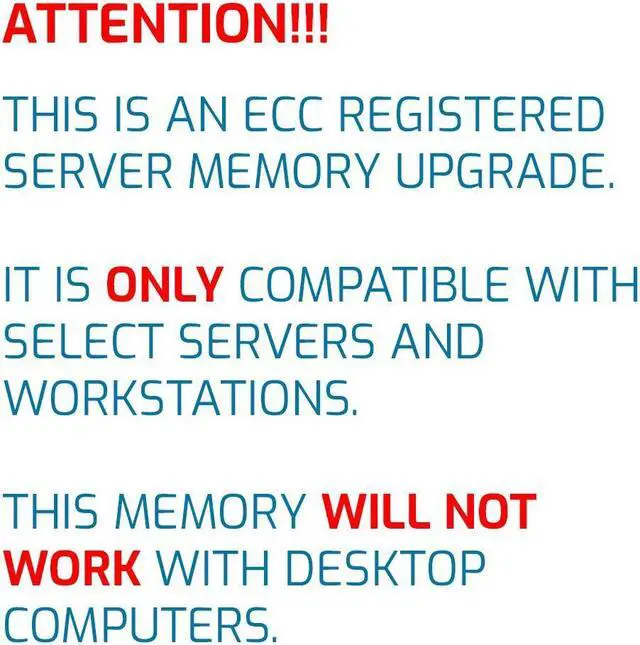
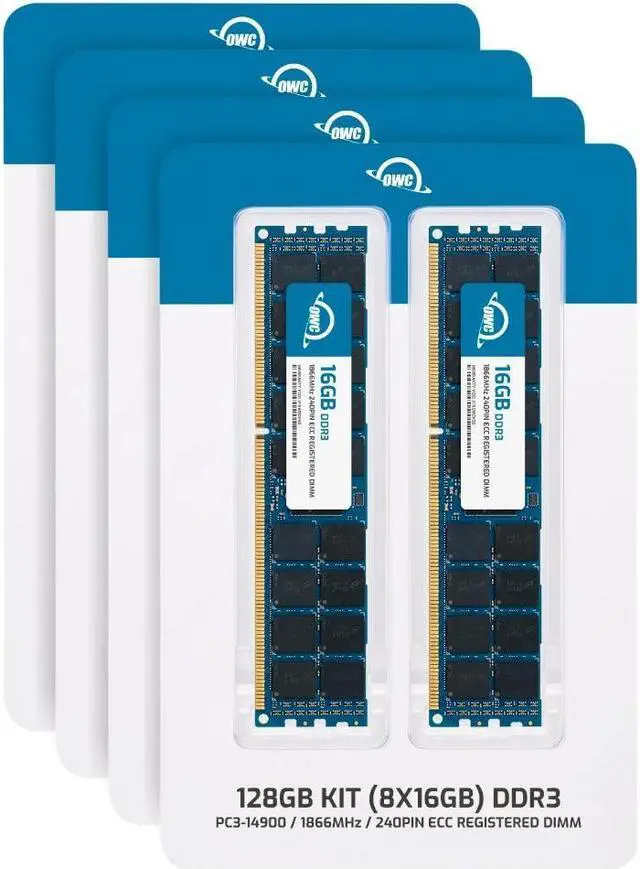
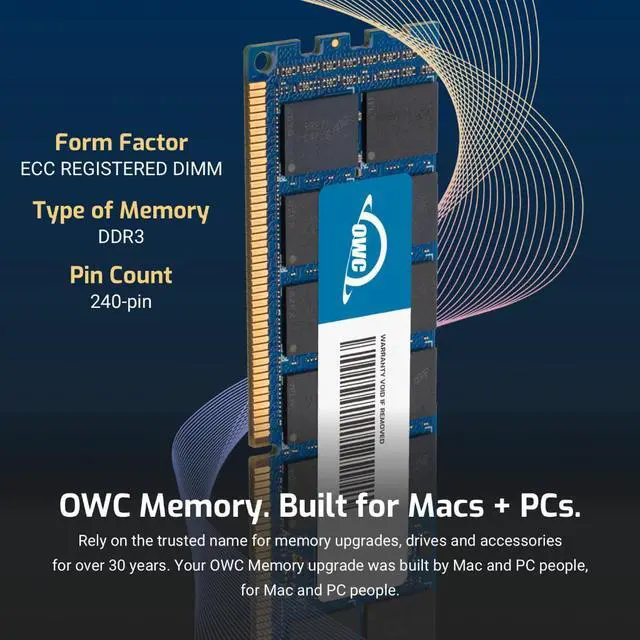
The OWC 128GB DDR3-1866 ECC Registered RDIMM kit includes eight 16GB modules for compatible workstations and servers that use 240-pin, 1.5V DDR3 registered memory; it is intended for systems that support ECC RDIMMs, not standard desktops or unbuffered-memory configurations.
Recommended For
- Owners of a compatible DDR3 Xeon server who need to populate eight slots with 128GB for memory-intensive server workloads; check the system’s supported DIMM type, capacity, speed, and population rules first.
- Homelab operators keeping a compatible DDR3 RDIMM server in service and running multiple virtual machines or containers that benefit from additional memory.
- Operators of older servers or NAS systems who want to expand memory without replacing an existing DDR3 platform, provided its manufacturer supports 16GB 2Rx4 registered ECC modules.
- Owners of a legacy workstation that specifically supports DDR3-1866 ECC RDIMMs and needs more RAM for memory-heavy professional work.
Real-World Use Scenarios
- On a compatible legacy server running Proxmox or another hypervisor, an administrator can assign memory to several virtual machines instead of keeping the host limited to a small number of lightly provisioned guests; the practical benefit is more room to run test environments and services at once.
- For a home lab or small office server that hosts file services, containers, and always-on applications, adding memory can reduce pressure on the existing RAM budget and leave more headroom for concurrent services; the modules are intended for a compatible ECC-registered platform, not a standard desktop.
- When upgrading a compatible workstation used for large projects or memory-heavy applications, the added capacity can help keep more working data in memory and avoid running short of RAM; it does not by itself guarantee faster application performance.
- For a database or other server workload that keeps frequently used data in memory, the upgrade can provide more capacity for the workload or its cache on an older compatible system; actual gains depend on whether that workload was constrained by memory.