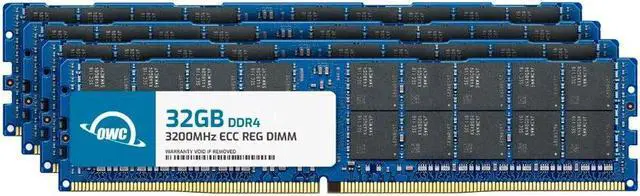
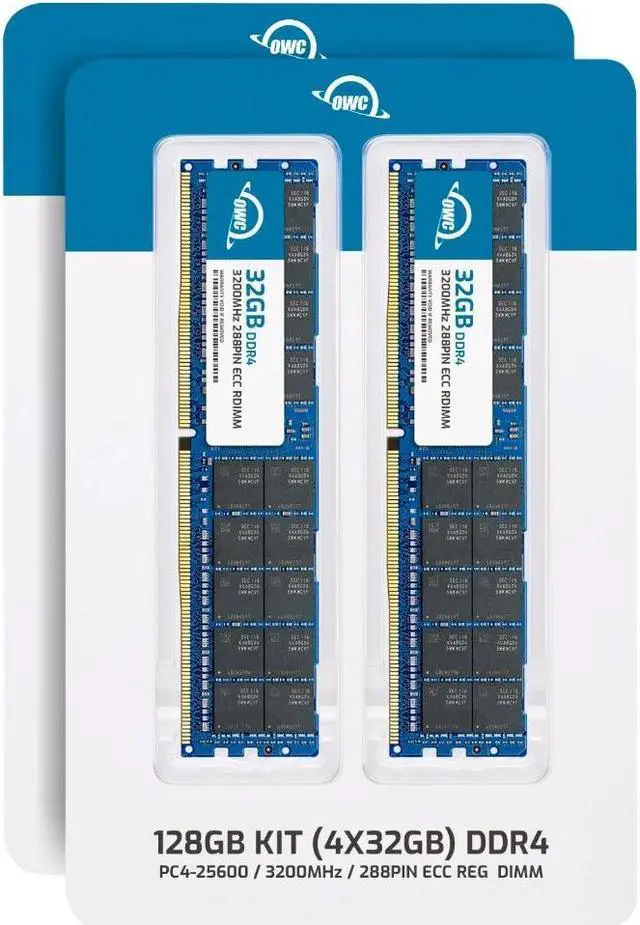
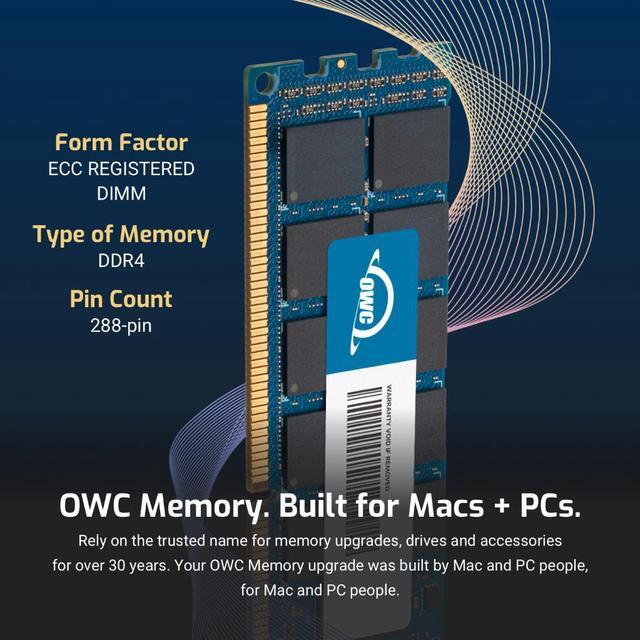
The OWC 128GB DDR4-3200 ECC Registered RDIMM kit includes four 32GB modules for compatible servers and workstations that support 288-pin 2Rx4 registered memory; it is not intended for standard desktops or systems using unbuffered memory.
Recommended For
- Operators of compatible DDR4 servers who want to add 128GB for memory-demanding workloads such as virtualization or database services; confirm the server supports ECC RDIMMs and this module configuration.
- Workstation users with an RDIMM-compatible platform who regularly keep many applications or large working files in memory and need a four-module, 128GB upgrade.
- NAS owners whose system specifically supports DDR4 ECC registered DIMMs and who want to expand memory; check the NAS manufacturer’s compatibility and population rules before buying.
- Homelab builders upgrading a server-class DDR4 platform for workloads that benefit from additional memory, provided the CPU and motherboard support registered ECC DIMMs.
Real-World Use Scenarios
- On a compatible virtualization host, an administrator can allocate memory across several virtual machines; the extra capacity can help keep more guests running without competing as quickly for the host’s available RAM.
- For a homelab running services in separate VMs or containers, the added memory can leave more room for a mix of test systems and always-on services; the actual number depends on each workload and the host’s other hardware.
- In a server that runs both storage services and virtual machines, the additional RAM can be divided between guest systems and storage needs; it may provide more room for ZFS or Ceph, but does not replace adequate storage, CPU, or network capacity.
- When an older server or workstation is short on memory, this kit can be used as a capacity upgrade to support larger in-memory workloads or more concurrent tasks, provided the system supports DDR4 ECC registered DIMMs and the four-module configuration.
- For a small database or caching service hosted on a compatible server, more RAM can give the application more space for its working data; whether that improves responsiveness depends on the database workload and its configuration.




 here!