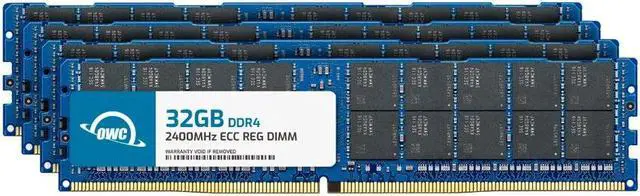
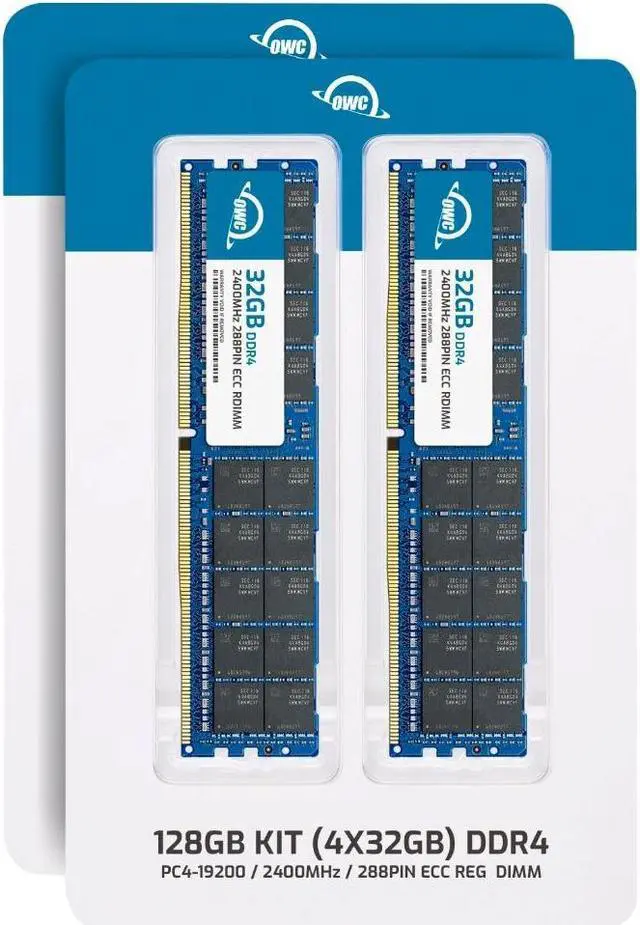
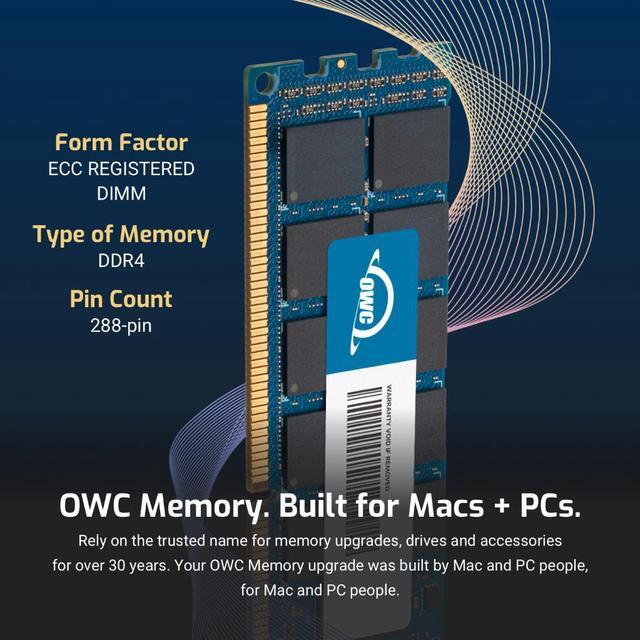
OWC’s 128GB DDR4-2400 ECC Registered RDIMM kit includes four 32GB, 288-pin 2Rx4 modules for compatible servers, workstations, or NAS systems that need a higher-capacity memory upgrade.
Recommended For
- Server operators upgrading a DDR4 platform that explicitly supports 32GB ECC registered RDIMMs at 2400MHz, especially when adding memory for virtual machines or multiple server workloads. Confirm the system’s supported DIMM type, speed, capacity, and slot-population rules before installing.
- Homelab and NAS builders using a compatible server-class motherboard who want a four-module, 128GB memory upgrade for services such as virtualization, storage, or home-lab applications. The system must support DDR4 RDIMMs; a matching DDR4 slot alone does not establish compatibility.
- Owners of older DDR4 servers seeking a capacity upgrade while staying with a 2400MHz-compatible memory configuration, rather than replacing the platform. The server’s processor and motherboard must support this module’s capacity, rank, and registered DIMM type.
- Workstation users whose specific workstation platform supports ECC registered DDR4 RDIMMs and the kit’s 32GB-per-module configuration. Check the workstation’s memory support list; workstation memory support varies by model.
Real-World Use Scenarios
- When expanding a compatible virtualization host, the added memory can give multiple virtual machines more room to run at once, reducing memory pressure when the host is running short on RAM.
- For a compatible database server whose working set is constrained by RAM, increasing memory can let more frequently used data stay in memory and may reduce reliance on storage reads; the benefit depends on the database and workload.
- In a supported NAS or file server, extra memory can provide more room for filesystem caching or other services; ECC can help detect and correct certain memory errors when the platform supports and enables it, but it does not replace backups.
- When upgrading an older compatible server, this 128GB kit can increase installed memory capacity without replacing the whole system, giving existing server workloads more RAM headroom.
- For a compatible workstation running memory-heavy engineering, analysis, or other sustained compute tasks, more RAM can help keep larger working datasets in memory rather than relying as heavily on storage.




 here!