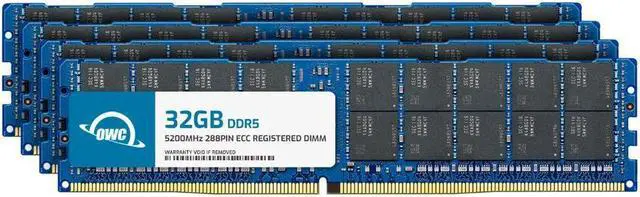
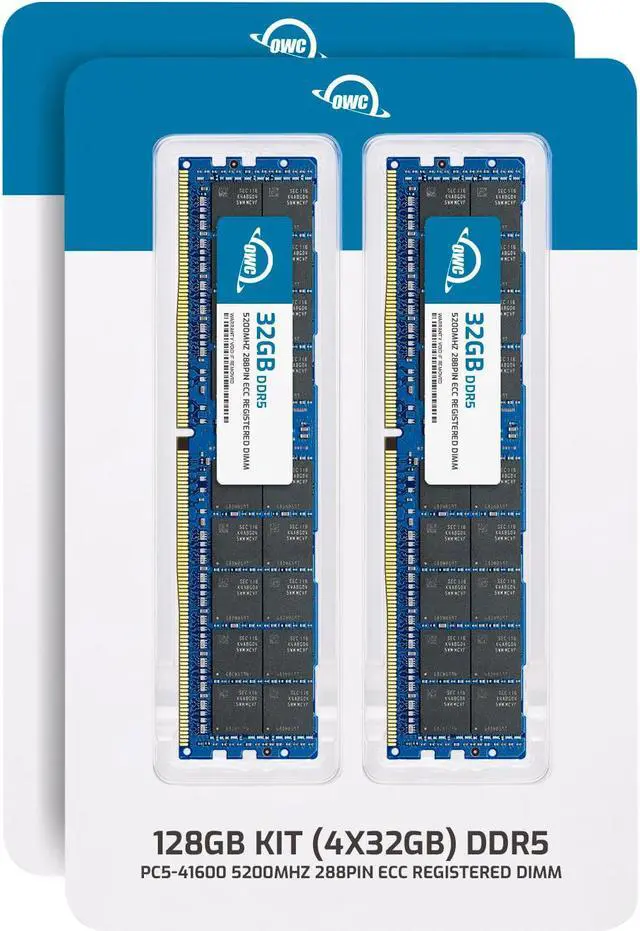
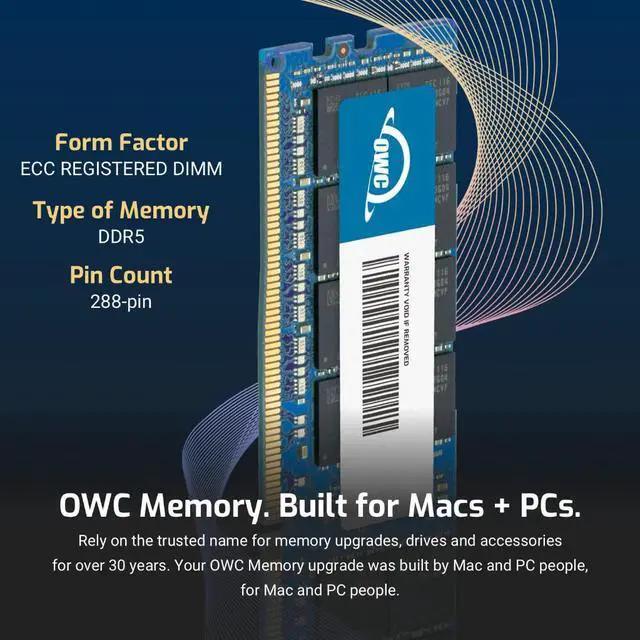
The OWC 128GB DDR5-5200 ECC Registered RDIMM kit includes four 32GB modules for compatible workstations and servers that need a high-capacity memory upgrade; it is intended for systems that support registered DIMMs, not standard desktops.
Recommended For
- Operators upgrading a compatible DDR5 server or workstation who need a 128GB, four-module ECC RDIMM kit for memory-intensive workloads; confirm the system supports this exact module type, capacity, speed, and four-DIMM population.
- Workstation users running large engineering, scientific, or AI-development datasets who need additional memory capacity and have a platform validated for DDR5 ECC RDIMMs. Platform limits may cap the kit below its rated 5200 MT/s.
- Server builders or administrators expanding a compatible virtualization or multi-service host, where additional RAM can support more resident workloads; check the server’s memory population rules and whether it requires matching DIMMs.
- NAS or server owners replacing or expanding memory in a system specifically designed for DDR5 ECC RDIMMs, rather than seeking a general-purpose desktop RAM upgrade.
Real-World Use Scenarios
- When a compatible virtualization host is running out of memory, adding this kit can give more virtual machines room to run together, reducing memory pressure when RAM is the bottleneck.
- For a compatible server handling memory-heavy databases or analytics, the added capacity can help keep more working data in memory, which may reduce reliance on slower storage when the workload was memory-constrained.
- When a workstation processes large engineering, visualization, or content-creation projects, the extra memory can accommodate larger active files and datasets, helping avoid slowdowns caused by exhausting available RAM.
- For a small business server hosting websites or internal applications, additional memory can support more simultaneous services or users when the existing server is limited by RAM.
- In a compatible compute server running memory-intensive scientific or HPC jobs, the additional capacity can let larger datasets or more concurrent jobs fit in memory; actual runtime still depends on the processor, software, and memory configuration.




 here!