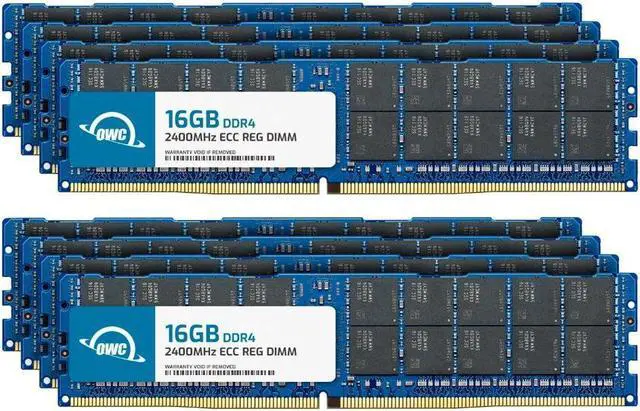
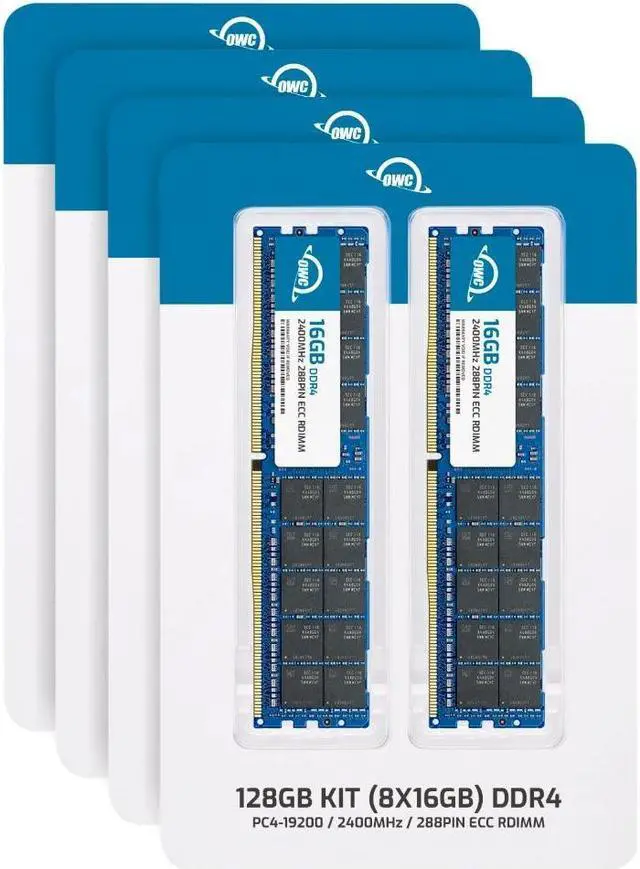
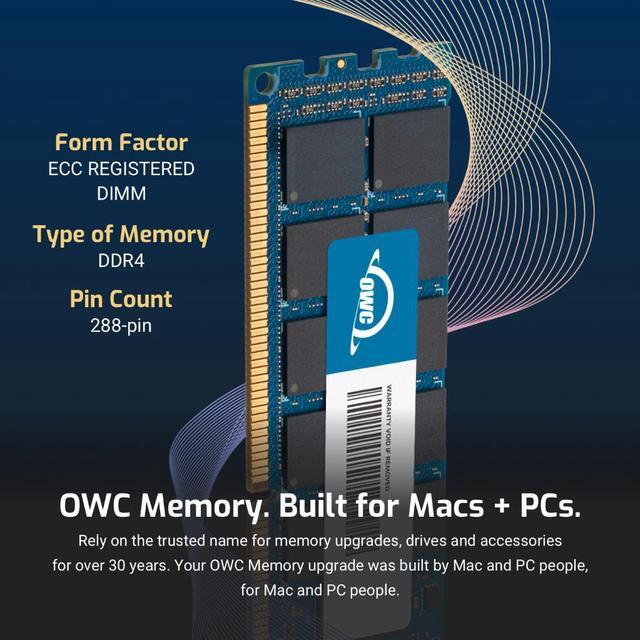
The OWC 128GB DDR4-2400 ECC Registered RDIMM kit includes eight 16GB modules and is suitable for compatible servers and workstations that need higher memory capacity and error-correcting memory.
Recommended For
- Operators of DDR4-2400 servers who need a 128GB ECC memory upgrade for workloads such as hosting several virtual machines; confirm the server supports 16GB 2Rx4 ECC RDIMMs and this eight-module configuration.
- Owners of a compatible workstation doing memory-heavy compute or working with large datasets who want 128GB of ECC registered DDR4 memory rather than desktop UDIMMs.
- Homelab builders setting up a server platform that explicitly supports ECC RDIMMs and need a matched eight-stick kit for a memory-intensive lab, storage, or virtualization setup.
- Maintainers extending the life of an older DDR4 server or workstation who need replacement memory at 2400 MT/s and have verified the system’s DIMM population rules.
Real-World Use Scenarios
- On a compatible DDR4 RDIMM virtualization host, adding memory can give the administrator more room to assign RAM to several VMs, such as separate application, test, and infrastructure servers. It helps most when the host is currently short on memory; it does not increase CPU or storage performance.
- For a server running SQL Server or Oracle, the added capacity can provide more room for database memory and concurrent workloads. The practical benefit depends on whether the server is memory-constrained and on the rest of its configuration.
- For a compatible NAS or file server storing important data, this ECC registered memory can be used as part of a reliability-focused system build. ECC is one layer of protection; it does not replace backups or guarantee that stored data cannot be corrupted.
- When keeping an older compatible DDR4 server or workstation in service, this kit can be used to expand its memory without replacing the whole system. Check the platform’s supported RDIMM type, capacity, and configuration before installing it.
- For a small-business server that runs several services or database VMs at once, additional memory can make it easier to allocate capacity across those workloads. The improvement is most noticeable when existing memory limits are causing workloads to compete for RAM.




 here!