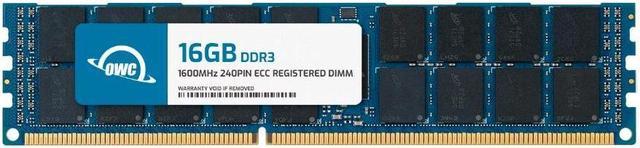
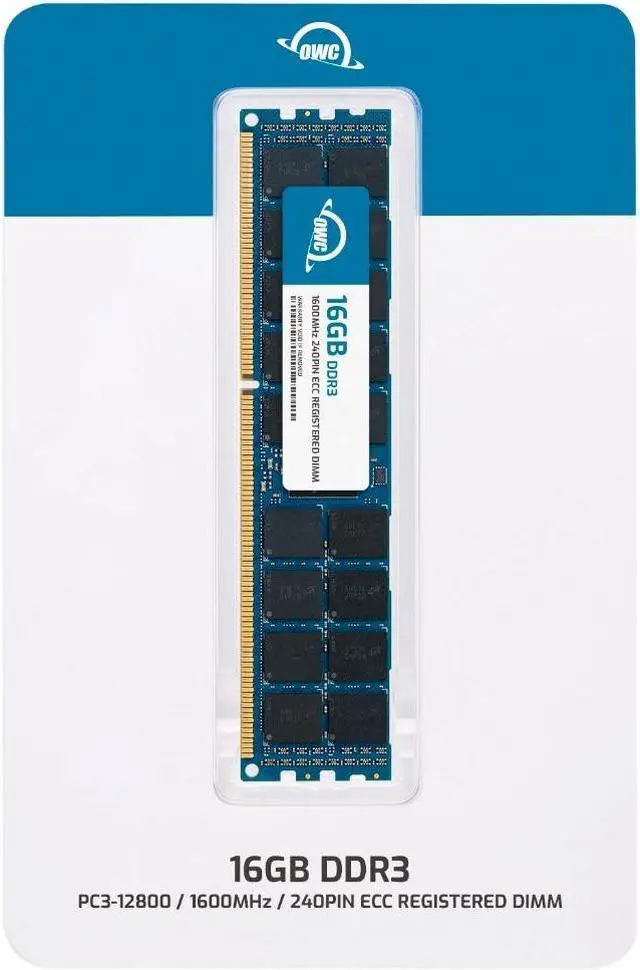
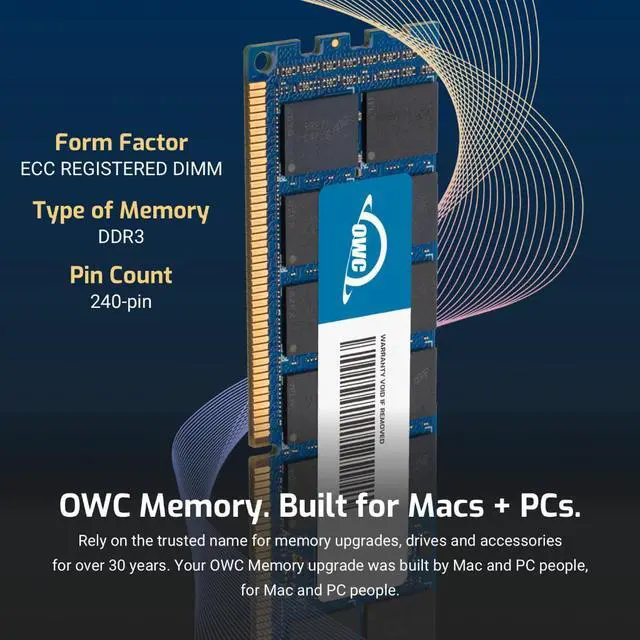
The OWC 16GB DDR3L-1600 ECC Registered RDIMM is a server and workstation memory upgrade for systems that support 240-pin, 1.35V, 2Rx4 registered DIMMs; it matches the specifications of Dell part numbers A6761613, A6994465, A7515505, A8255125, and SNP20D6FC/16G.
Recommended For
- Operators maintaining an older Dell PowerEdge or similar server whose manual specifies 16GB DDR3L-1600, 2Rx4 ECC RDIMMs; verify the exact model and memory-population rules before buying.
- Homelab or NAS users extending the life of an existing DDR3 server, when its motherboard supports registered ECC memory and this module’s capacity, rank, and speed.
- IT technicians replacing a failed or missing DIMM in a compatible system, especially when matching an existing 16GB, 2Rx4 DDR3L-1600 RDIMM configuration.
- Workstation owners running memory-intensive tasks on an older workstation specifically designed for DDR3 registered ECC DIMMs, such as a compatible rendering or engineering system.
Real-World Use Scenarios
- When a compatible older Dell server is running several virtual machines, adding memory can give the host more room to assign RAM to guests; CPU and storage limits can still constrain how many workloads run smoothly.
- For a home-lab server hosting virtual machines and self-hosted services, this module can add memory capacity when the system supports DDR3L ECC registered DIMMs, helping the owner run more workloads within the host’s available resources.
- When consolidating database virtual machines on a compatible legacy PowerEdge server, additional installed memory can provide more capacity to allocate across guests; actual database performance also depends on processor, storage, and workload.
- For a home server running ZFS storage alongside other self-hosted workloads, adding compatible memory can provide more capacity for the combined setup, though it does not by itself guarantee faster file transfers.
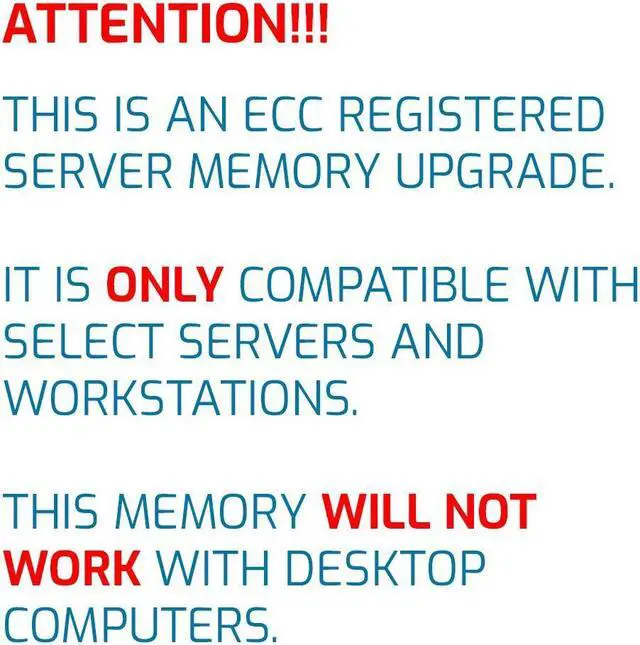
- When replacing or expanding memory in a supported DDR3 Dell server, choosing a compatible registered ECC module can help keep the system within its supported configuration; check the server’s memory rules before installation, because RDIMMs cannot be mixed with UDIMMs.




 here!