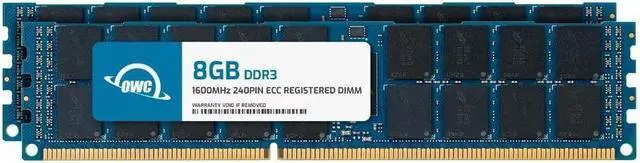
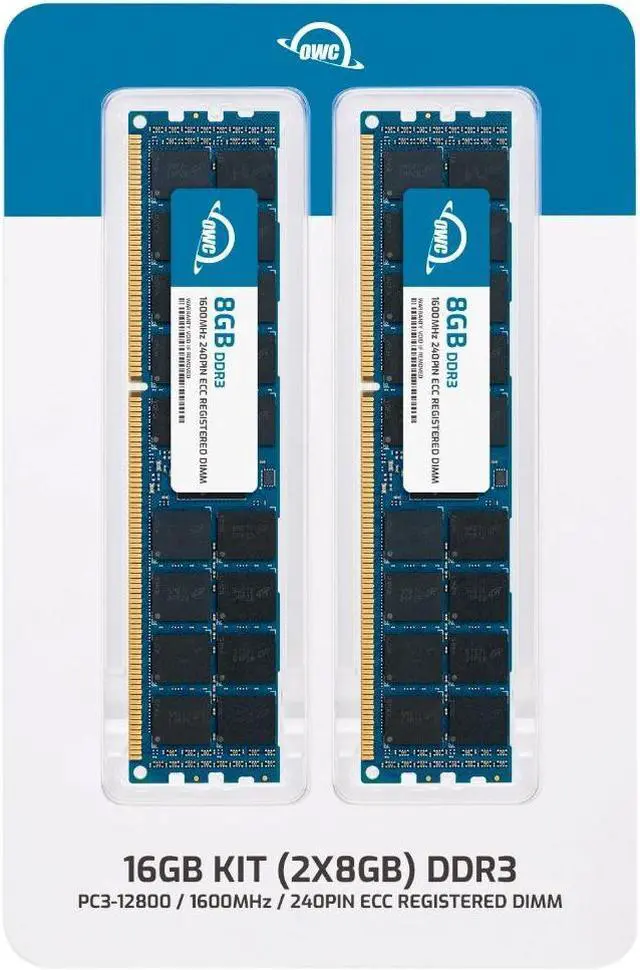
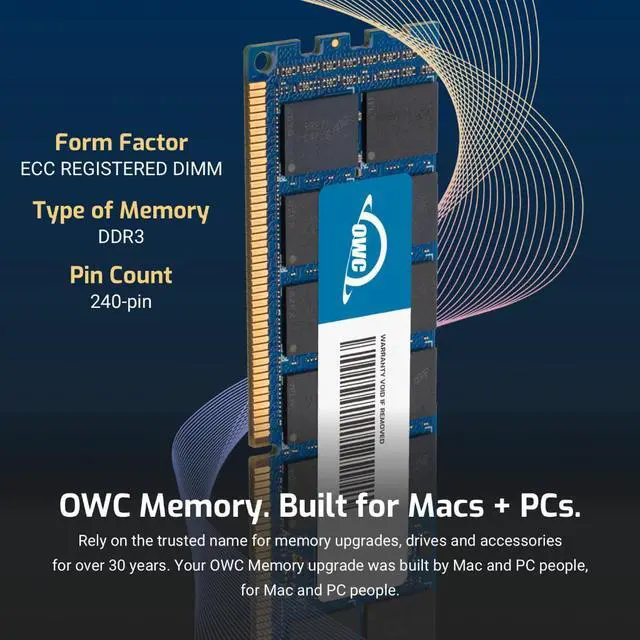
OWC’s 16GB DDR3L ECC Registered memory kit includes two 8GB, 240-pin DIMMs rated at 1600 MT/s, CL11 and 1.35V, for compatible workstations and servers that support 1Rx4 RDIMMs.
Recommended For
- Operators of compatible legacy servers who need a 16GB memory addition for hosting services, virtual machines, or NAS workloads. Confirm the system supports DDR3L ECC registered RDIMMs and this module’s rank and voltage before buying.
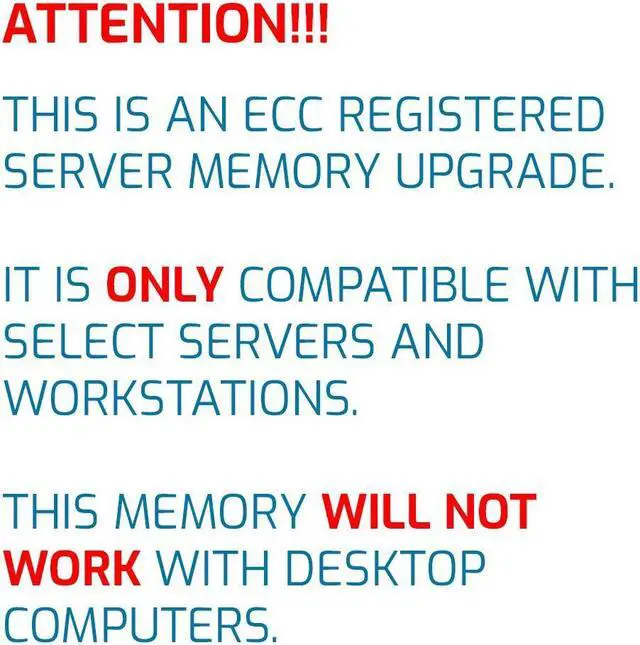
- Administrators maintaining an existing ECC RDIMM setup who want matching modules for a repair or incremental upgrade. Check the system’s memory rules and existing DIMMs first; registered and unbuffered memory are not interchangeable.
- Workstation maintainers whose specific platform calls for ECC registered DDR3L memory and who have verified RDIMM support. OWC positions this kit for workstations as well as servers, but compatibility depends on the workstation’s memory specifications.
- Organizations extending the service life of older DDR3 systems instead of replacing their infrastructure, provided a 16GB increase fits their capacity needs and the system supports this exact memory type.
Real-World Use Scenarios
- On a compatible DDR3 server used as a Proxmox host, adding memory can give the host and its virtual machines more room to run together; the benefit depends on the server’s total capacity and workload.
- For a compatible server or workstation running a ZFS-based NAS, this ECC memory adds an error-correction layer that can help reduce the risk of memory bit flips affecting filesystem operations; it does not replace backups or guarantee data integrity.
- When an older server is short on memory for a home lab, adding compatible RDIMMs can help it continue hosting services such as containers, media streaming, or network tools without replacing the whole system.
- In a memory-constrained legacy workstation that supports registered ECC DDR3L, the kit can add capacity for ongoing professional workloads; it will not speed up tasks limited by the processor, storage, or graphics hardware.
- For a small virtualization or testing lab on an older DDR3 server, this kit can be a modest capacity upgrade for experimenting with a few VMs or services, provided the system’s memory limits and DIMM population rules allow it.




 here!