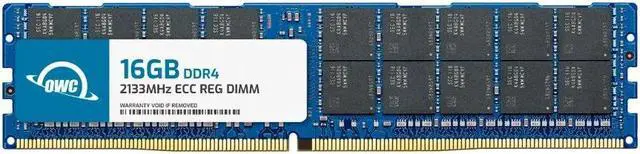
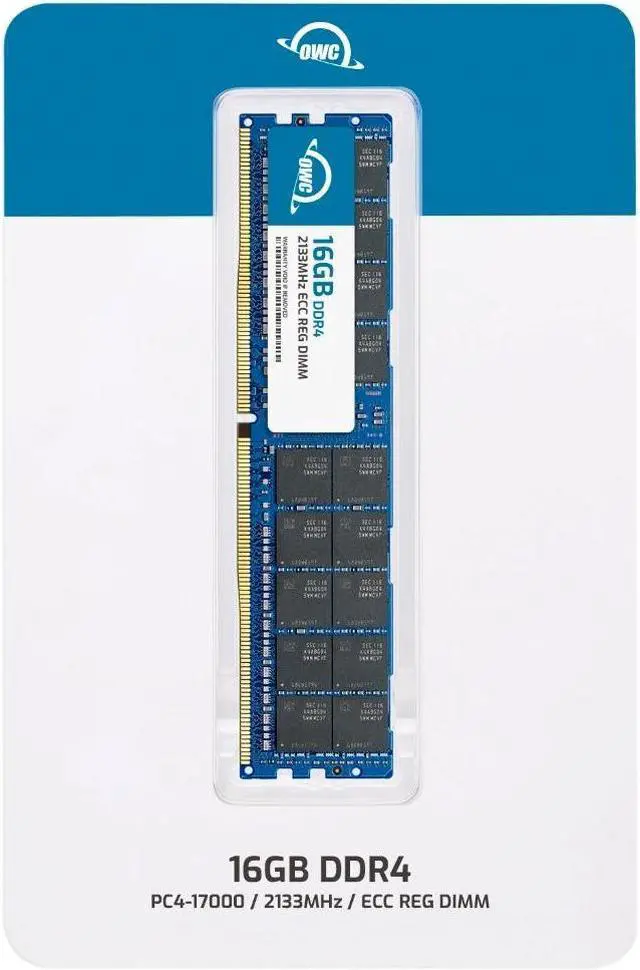
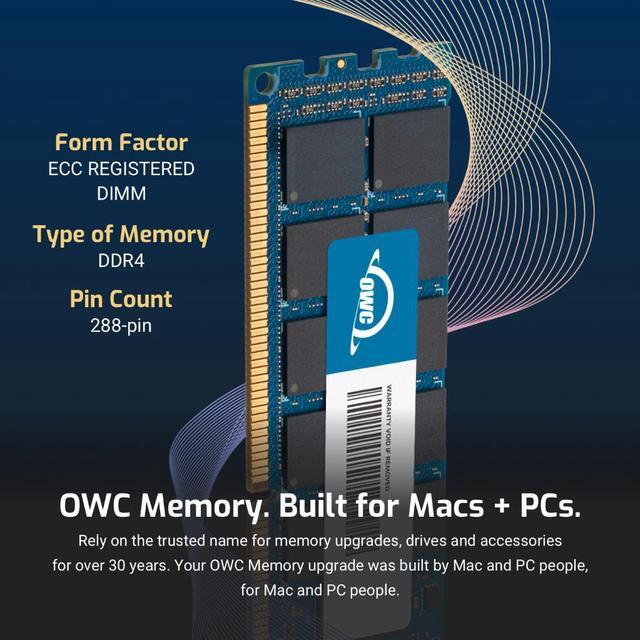
OWC 16GB DDR4-2133 ECC Registered RDIMM is a server and workstation memory upgrade for systems that support 288-pin, 2Rx4 registered DIMMs at 1.2V; it matches the listed Kingston KVR21R15D4/16, KTL-TS421/16G, and KVR21R15D4/16-B2 specifications.
Recommended For
- Server administrators replacing a failed DIMM or matching an existing module in a system that supports 16GB DDR4-2133 ECC RDIMMs; OWC lists compatible Dell, Lenovo, QNAP, and Supermicro systems.
- Operators extending the life of a compatible DDR4 server or NAS who need a replacement or capacity addition in a platform documented to accept registered ECC memory.
- Owners of a listed RDIMM-compatible workstation, such as certain Lenovo ThinkStation P-series models, who are maintaining or upgrading memory to the platform’s supported configuration.
- Homelab builders using a server-class motherboard that specifically supports DDR4 ECC RDIMMs and whose memory speed and configuration match this 16GB, 2133 MT/s module.
Real-World Use Scenarios
- A server running low on memory hosts several virtual machines; adding this 16GB module can provide more capacity for guest operating systems and their applications, if the server supports this RDIMM and has an available slot.
- An IT team wants to keep an older DDR4 server in service rather than replace it; this module can serve as a compatible-capacity upgrade or replacement when the system’s memory requirements match.
- A server runs a database or other application that keeps working data in memory; adding RAM can give the workload more room and may reduce pressure to rely on slower storage when memory capacity is the constraint.
- A small business or homelab operator runs always-on server services and wants memory with error-correction support; in a compatible ECC-capable system, this registered module adds capacity while supporting ECC operation.
- A workstation user handles memory-hungry applications alongside other tasks; if the workload is running short of RAM, adding this module can increase available memory and reduce slowdowns caused by memory pressure.




 here!