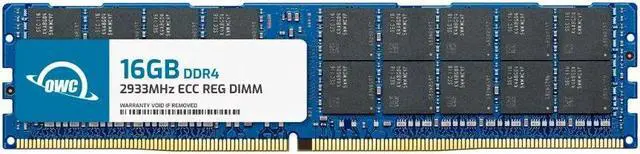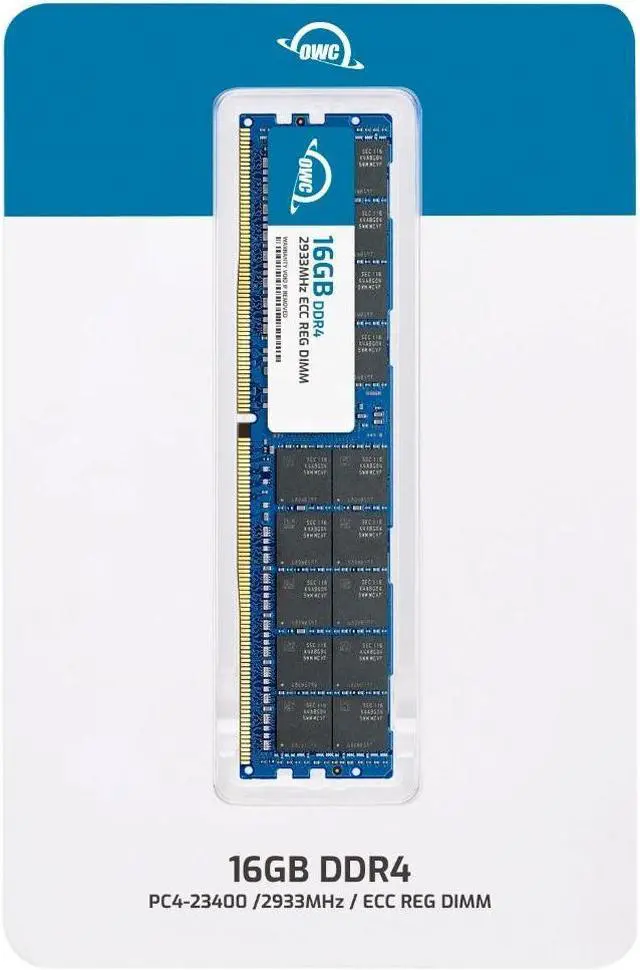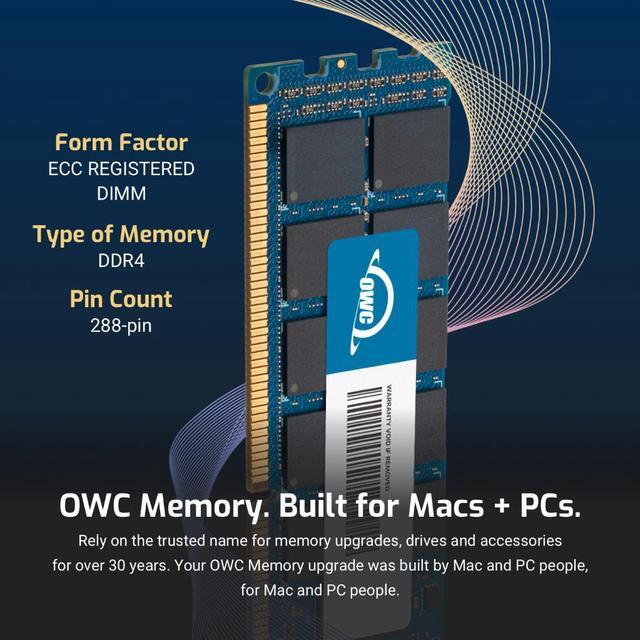


The OWC 16GB DDR4-2933 ECC Registered RDIMM is a server and workstation memory upgrade or replacement matching Supermicro MEM-DR416L-CL01-ER29, MEM-DR416L-CL03-ER29, and MEM-DR416L-HL04-ER29; it suits systems that require 288-pin, 2Rx8 registered ECC memory.
Recommended For
- Server administrators replacing a failed DIMM or expanding a Supermicro system that specifically supports 16GB DDR4-2933 2Rx8 ECC Registered memory; verify the motherboard and CPU memory limits before ordering.
- Workstation, server, and NAS builders whose systems require ECC Registered DDR4 memory and support this module’s capacity, rank, and speed.
- Operators upgrading server or storage systems used for sustained data-handling workloads who need ECC memory and have confirmed RDIMM support in their platform.
- IT teams extending the service life of an existing DDR4 server or workstation by adding a matching registered ECC DIMM, rather than replacing the whole memory configuration.
Real-World Use Scenarios
- When a compatible Supermicro server needs a failed memory module replaced, this RDIMM can serve as a matching-capacity replacement, helping restore the system without replacing the whole server. Confirm the exact system’s memory support before installation.
- When a supported virtualization host is running short on memory for its virtual machines, adding this module can provide more capacity for concurrent guests and services; the practical gain depends on the host’s total memory configuration.
- For a compatible NAS server running file services alongside other applications, this module can add memory headroom, helping the system accommodate more concurrent work without changing the storage drives.
- In a server used for a Ceph storage cluster, compatible nodes can use this memory class as part of their system configuration; adding capacity may help support the cluster’s node workloads, but does not by itself increase storage performance.
- In a compatible server-grade workstation used for design, rendering, or technical projects, adding memory can give large applications and files more room to run alongside other tasks; the benefit depends on whether the current workload is memory-limited.