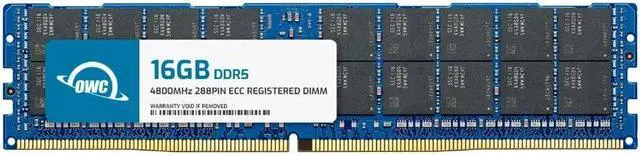
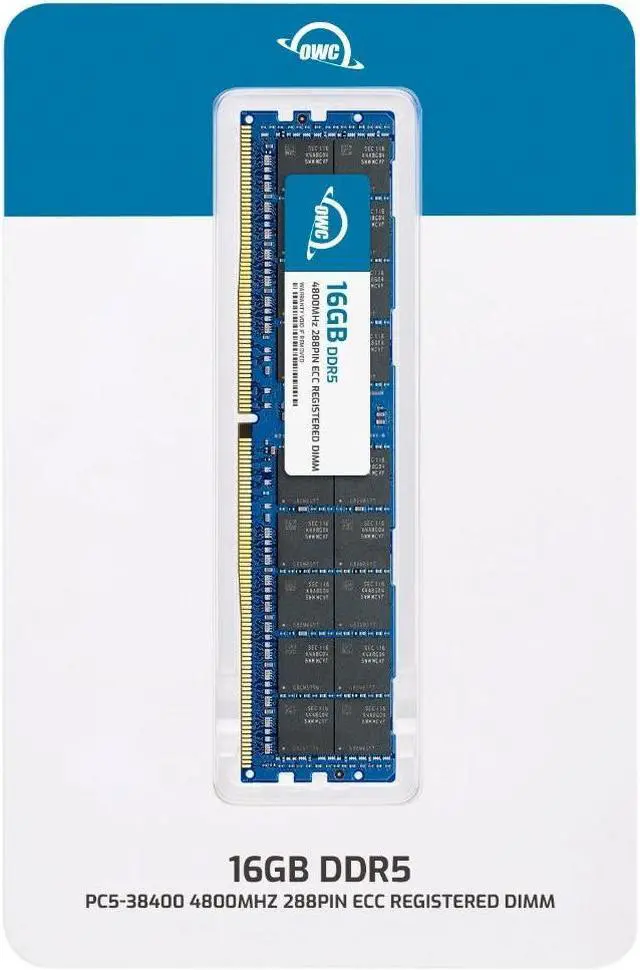
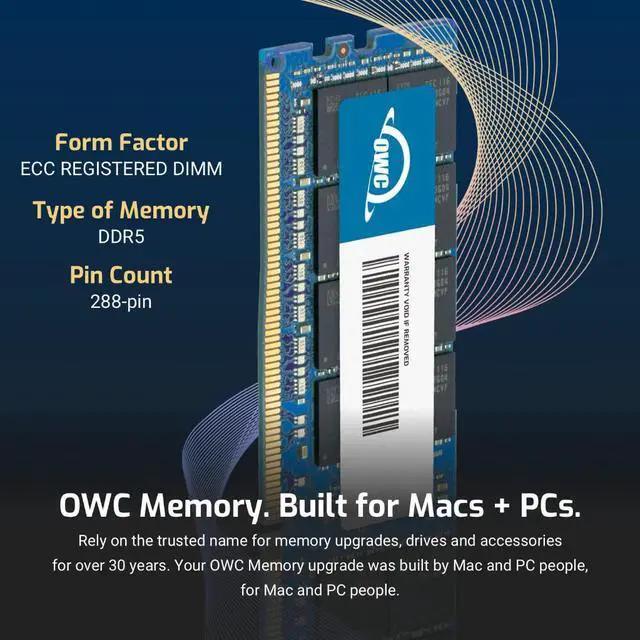
OWC 16GB DDR5-4800 ECC Registered RDIMM is a server and workstation memory upgrade compatible with Kingston part KSM48R40BS8KMM-16HMR. It suits systems designed for registered ECC memory, rather than standard desktops.
Recommended For
- Server administrators replacing or adding a 16GB module in a system that specifically supports DDR5-4800 ECC registered RDIMMs; check the server’s compatibility list and memory-population rules first.
- IT teams maintaining server infrastructure that uses registered ECC memory and need a single 16GB DDR5-4800 replacement module, rather than a desktop-memory upgrade.
- Workstation builders using a motherboard and processor that explicitly support DDR5 ECC RDIMMs and want server-class registered memory for their supported configuration.
- NAS owners upgrading a model whose specifications call for DDR5 ECC registered RDIMMs and whose memory configuration supports this module’s capacity and rank.
Real-World Use Scenarios
- In a compatible DDR5 RDIMM server, replace a failed or missing memory module to restore installed memory capacity; the system must support this module’s capacity, rank, and speed.
- When a compatible server is short on memory for a growing workload, add this module as a modest capacity increase; it may help keep more active services or virtual machines in memory, depending on the system’s total RAM and workload.
- For a homelab built on a server platform that accepts DDR5 ECC RDIMMs, use it in a lab host for testing services or virtualization; whether it supports additional guests depends on the host’s total memory and configuration.
- In a supported workstation used for memory-intensive work, install it as part of a compatible ECC RDIMM configuration; ECC can help detect or correct certain memory errors, but does not guarantee uninterrupted work or faster performance.
- When extending the life of an existing compatible server, use the module to make a small, incremental memory upgrade rather than replacing the whole system; check the server’s memory population rules and avoid mixing RDIMMs with incompatible memory types.




 here!