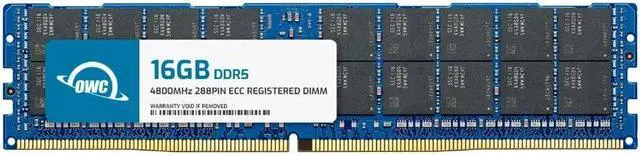
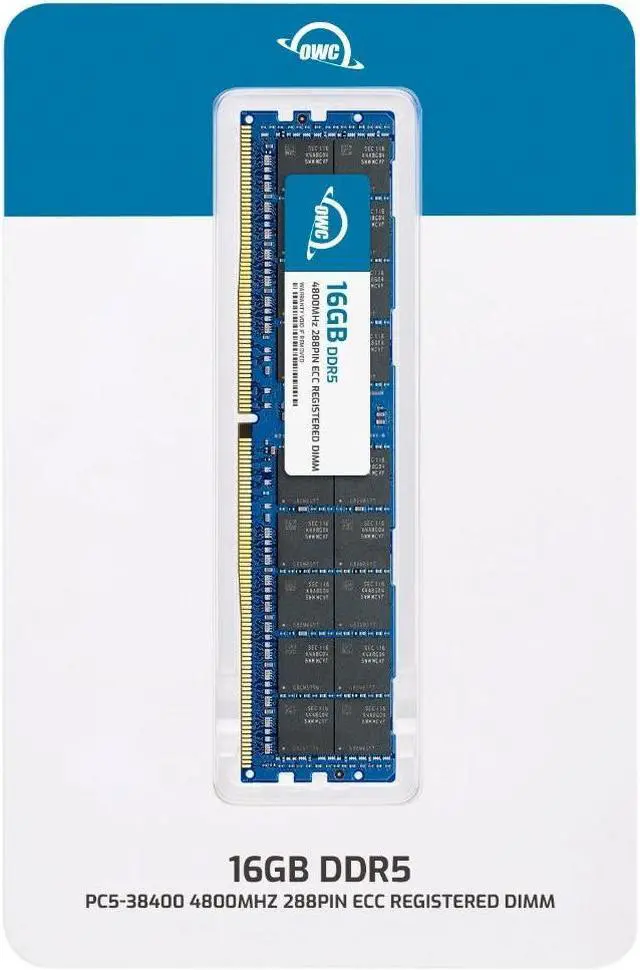
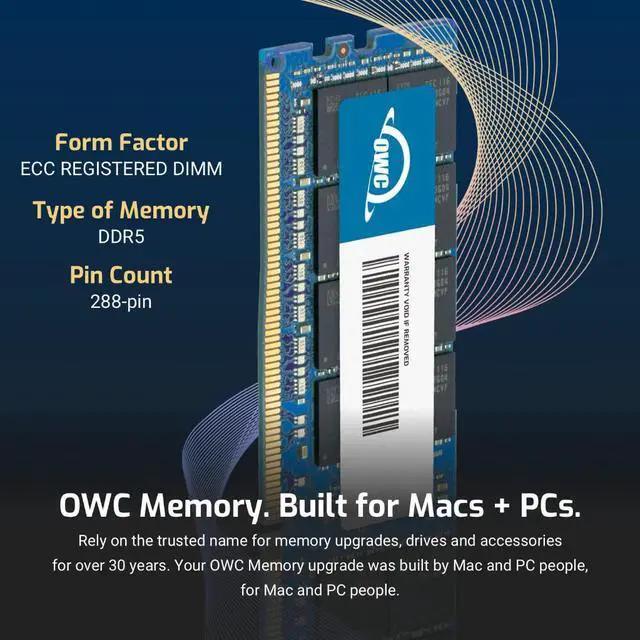
The OWC 16GB DDR5-4800 ECC Registered RDIMM is a server and workstation memory module for systems that support 288-pin DDR5 RDIMMs, including upgrades compatible with Samsung part M321R2GA3BB6-CQK.
Recommended For
- Server owners replacing a failed 16GB DDR5-4800 ECC RDIMM, provided their system supports this module type and configuration.
- Workstation users adding memory to a board and processor that specifically support DDR5 registered ECC DIMMs; verify the platform’s supported speed and memory population rules before buying.
- Homelab builders running a compatible server platform who want an ECC registered module for services such as virtualization, storage, or other always-on workloads.
- IT teams maintaining a compatible server fleet that needs a single 16GB replacement module rather than a larger memory kit.
Real-World Use Scenarios
- When a compatible DDR5 RDIMM server or workstation needs a memory replacement or incremental capacity, this 16GB module can restore or expand system memory; confirm the system supports 16GB DDR5-4800 ECC registered DIMMs and follow its population rules.
- For a compatible virtualization host running several virtual machines, adding memory can provide more room for guest operating systems and services, potentially reducing memory pressure when RAM is the constraint; one 16GB module is a modest capacity addition, not a guaranteed speed boost.
- On a compatible server used for databases or analytics, additional memory can help keep more working data in RAM when the workload is memory-limited, reducing reliance on slower storage; the benefit depends on the application and total installed memory.
- For a professional workstation running compute-heavy applications, such as engineering or simulation workloads, this module is an upgrade option only if the workstation requires ECC registered DDR5; added memory may help when projects exceed the system’s current RAM capacity.
- In an always-on server used for file storage or home-lab services, ECC registered memory is relevant when the platform supports it and the operator prioritizes memory error detection and correction; it does not replace backups or guarantee data integrity.




 here!