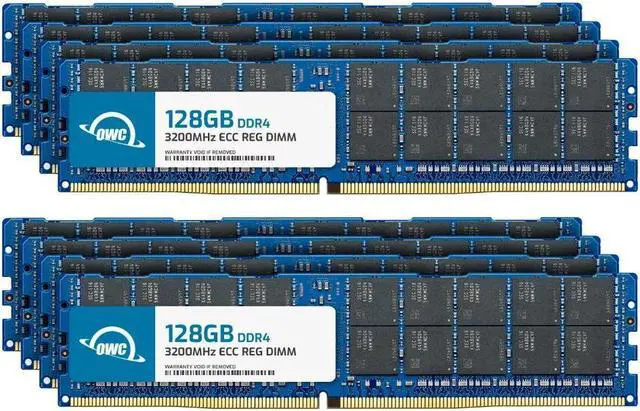
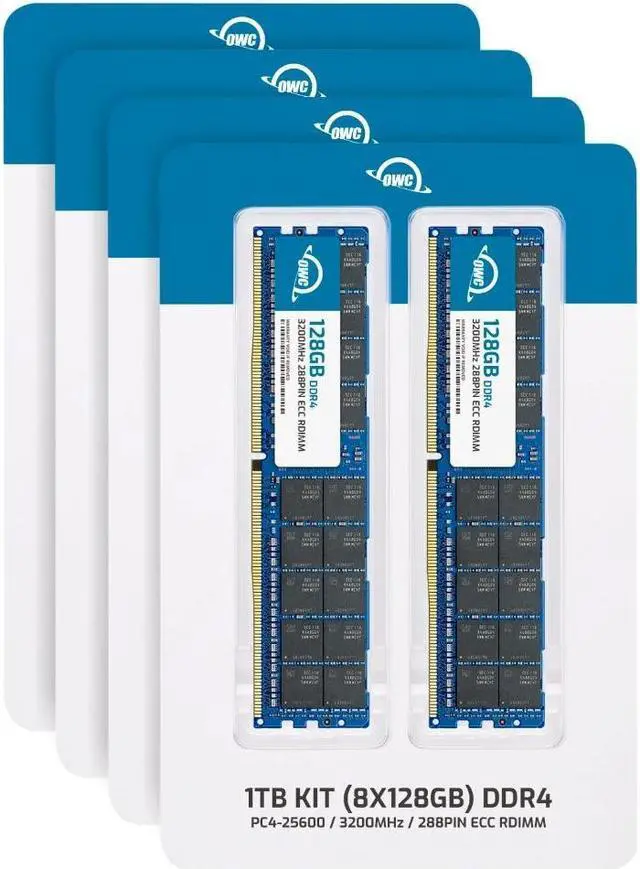
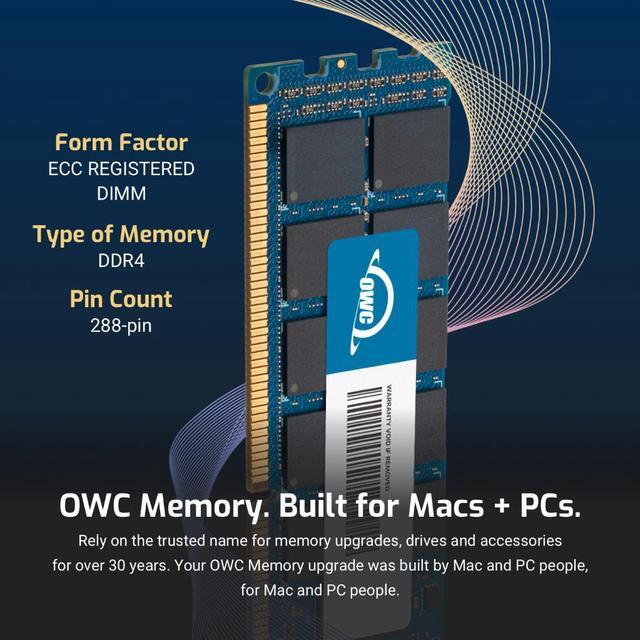
The OWC 1TB DDR4-3200 ECC Registered RDIMM kit combines eight 128GB modules for compatible servers and workstations that need very high memory capacity for demanding workloads.
Recommended For
- Server operators expanding a compatible DDR4 platform for multiple memory-heavy virtual machines, where adding host RAM can help keep guest working sets in physical memory instead of relying on swapping.
- Workstation users handling large projects or datasets who need up to 1TB of ECC registered memory and have a motherboard and processor that support 128GB 4Rx4 DDR4 RDIMMs.
- Server or NAS builders provisioning a compatible system with a matched eight-module kit, rather than adding a few DIMMs to a platform that may have different memory population requirements.
- Administrators upgrading a supported server for memory-intensive database or analytics work, when the workload’s measured memory needs justify a 1TB kit.
Real-World Use Scenarios
- On a compatible virtualization host, an administrator can assign memory to more or larger VMs on one server; the practical benefit is less memory pressure when consolidating workloads, provided CPU and storage capacity also keep up.
- For a memory-sized in-memory database such as SAP HANA, additional RAM can let more of the working dataset and query workspace remain in memory, reducing reliance on disk reads when the workload fits; actual capacity needs depend on data size and usage.
- For a virtual desktop infrastructure host, the memory can support more concurrently provisioned desktop VMs or larger memory allocations per desktop, helping avoid paging when user workloads are memory-bound.
- For large data-processing jobs such as Spark analytics, more server memory can keep a larger working set available during computation; a Micron capacity benchmark reports improved Spark SVM execution when its test system increased from 512GB to 1TB.
- For SQL Server reporting, data warehousing, or cache-heavy workloads, added memory can give the database more room for its working data and cache, which may reduce storage reads when the active workload fits in RAM; it does not replace adequate CPU or storage performance.




 here!