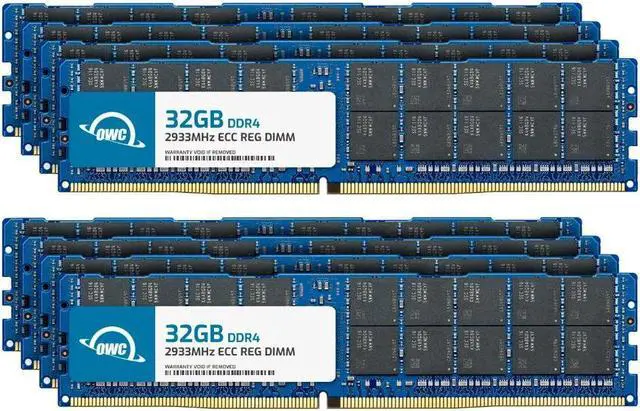
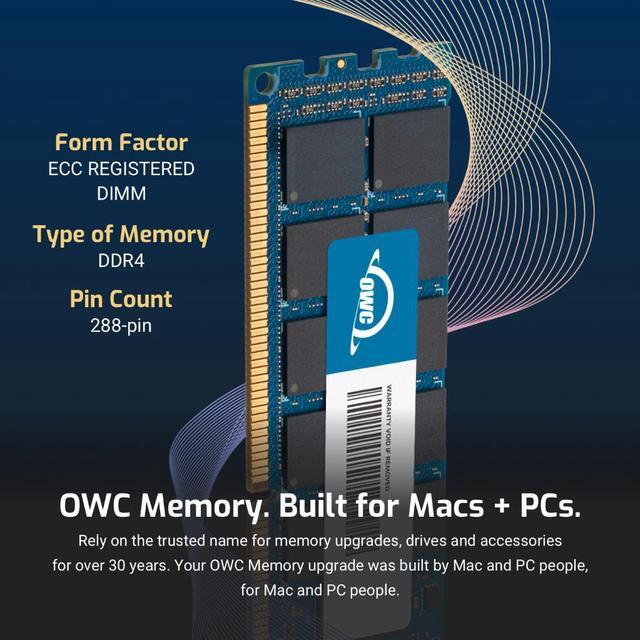
OWC’s 256GB DDR4-2933 ECC Registered RDIMM kit includes eight 32GB modules for servers and workstations that support 288-pin, 2Rx4 registered memory. It runs at 1.2V and is intended for compatible systems, not standard desktop computers or builds using unbuffered memory.
Recommended For
- Server operators expanding a virtualization host for multiple memory-hungry VMs, provided the server supports 32GB DDR4-2933 ECC RDIMMs and the eight-module layout.
- Administrators of compatible DDR4 servers who need to add memory capacity for workloads whose active data sets are constrained by RAM, rather than replace the host platform.
- Teams maintaining compatible DDR4-2933 server infrastructure that need ECC registered memory for supported server workloads; confirm the platform accepts 32GB 2Rx4 RDIMMs before installing the kit.
- IT staff refreshing an older server rather than replacing it, when its processor, motherboard, memory population rules, and available slots support this DDR4 RDIMM configuration.
Real-World Use Scenarios
- On a compatible server running Proxmox, VMware, or Hyper-V, adding memory can let an administrator run more virtual machines at once or give existing VMs more room, reducing slowdowns caused by memory pressure when RAM is the bottleneck.
- For a database server with a large, frequently used working set, extra memory can give database caches more room and reduce reliance on storage for that data; the benefit depends on the database workload and its configuration.
- In a homelab or IT training server, users can run several isolated test systems—such as virtual routers, firewalls, and servers—at the same time, making it easier to build and reset network or software test environments.
- For a home or small-business server combining virtual machines, containers, and other services, more memory can help those workloads share one host with less competition for RAM, provided the processor and software also support the workload.
- On a compatible NAS or storage server, additional memory may be used by the operating system for filesystem caching while the server also runs other services; it does not replace adequate storage or guarantee faster file transfers.