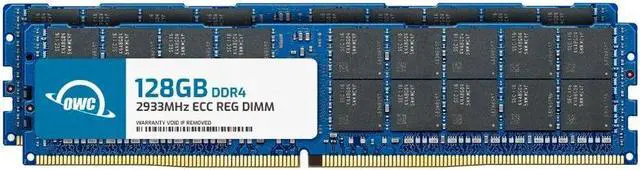
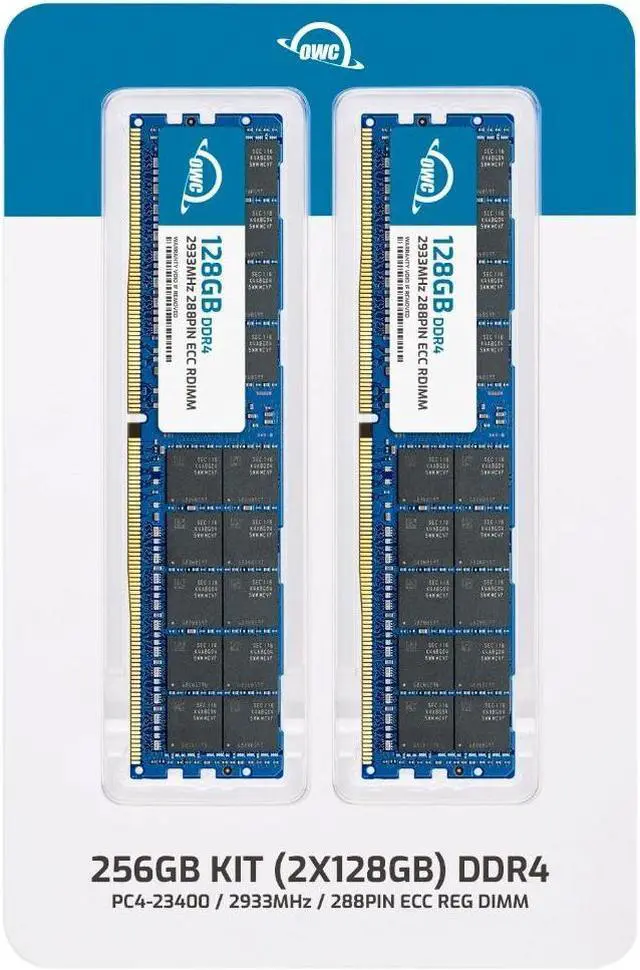
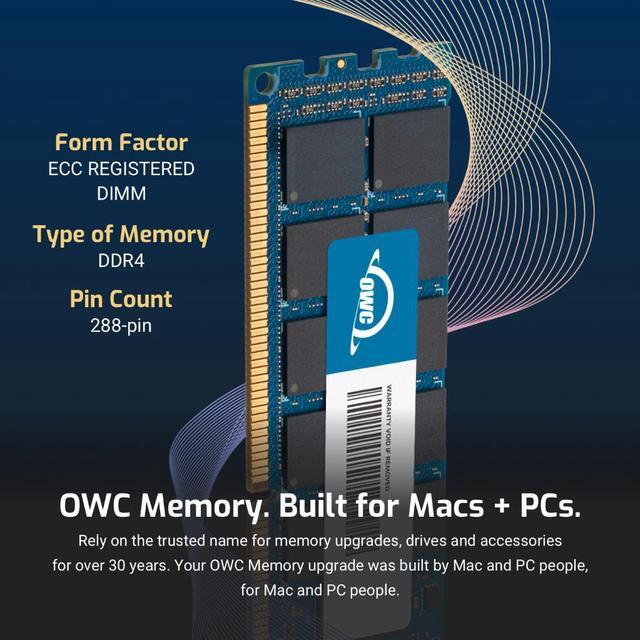
The OWC 256GB DDR4-2933 ECC Registered RDIMM kit includes two 128GB modules for compatible servers and workstations that support 4Rx4 registered memory.
Recommended For
- Server operators expanding memory for multiple virtual machines or consolidated services, when their system supports 128GB DDR4 ECC RDIMMs and the required slot-population layout.
- Workstation users running memory-intensive professional workloads, such as large datasets or complex simulations, who need a 256GB upgrade in two RDIMM slots and have a platform qualified for this module type and capacity.
- IT teams refreshing a compatible DDR4 server that needs more memory capacity for existing services, provided its CPU, motherboard, firmware, and memory configuration support 128GB 4Rx4 ECC registered DIMMs.
- Homelab builders using a server-grade DDR4 platform for memory-heavy services, if the exact motherboard and processor support ECC RDIMMs; this kit is a poor match for consumer platforms that only accept unbuffered memory.
Real-World Use Scenarios
- When a compatible server is running out of memory for virtual machines, adding this 256GB kit can provide more room for guest operating systems and services, potentially reducing memory contention if RAM capacity is the bottleneck. Check the server’s supported DIMM type, capacity, and population rules first.
- For a server hosting memory-hungry database workloads, the added capacity can help keep more of the working set in memory when the workload is RAM-limited; it does not by itself guarantee faster queries or transactions.
- In a homelab or small server cluster, the extra memory can support running more services or larger VMs on one host, provided CPU, storage, and the server’s memory-channel layout are also suitable.
- For a virtual desktop host, added RAM can let the server assign more memory to desktop VMs or accommodate more concurrent users when memory is the limiting resource; actual capacity depends on each desktop’s allocation and the host configuration.
- On a compatible file server using ZFS, the added capacity can leave more memory available for filesystem caching or other services, though cache behavior depends on the operating system and workload and does not ensure faster file transfers.




 here!