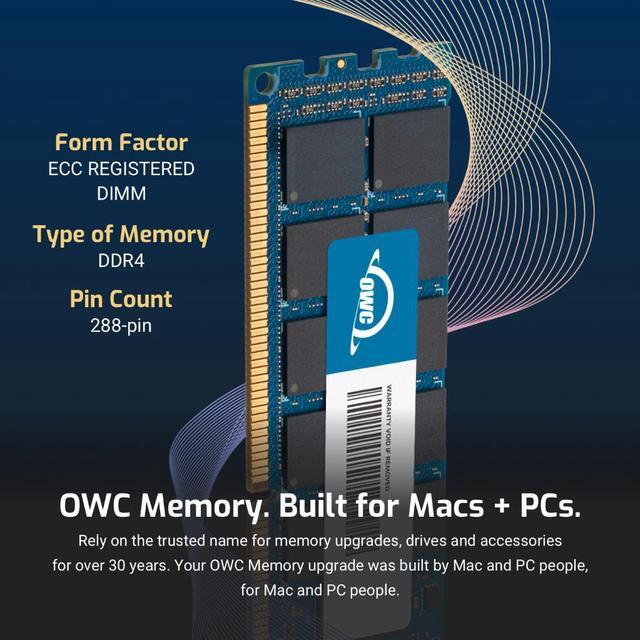
The OWC 256GB DDR4-2666 ECC Registered RDIMM kit includes two 128GB modules for compatible servers and workstations that support 4Rx4 registered memory. It is not intended for standard desktop computers or systems using unbuffered memory.
Recommended For
- Server operators expanding a compatible DDR4 RDIMM system for virtualization or container hosts, where multiple workloads need a larger shared memory pool. Confirm the platform supports 128GB 4Rx4 modules and the planned DIMM population.
- Workstation or server administrators running memory-intensive databases, analytics, or in-memory services who need to add capacity in two 128GB modules and whose platform supports this exact DDR4 RDIMM type.
- IT teams extending the useful life of an existing DDR4 server or workstation that already uses ECC registered memory and has verified support for 128GB 4Rx4 DIMMs at 2666 MT/s or a compatible lower speed.
- Homelab builders setting up a compatible server for several virtual machines or memory-heavy services who want to install 256GB using two matched ECC registered DIMMs rather than a larger number of smaller modules.
Real-World Use Scenarios
- On a server that supports these 128GB RDIMMs, a virtualization host can use the added memory to run more or larger virtual machines at once, reducing pressure to reclaim or swap guest memory; CPU, storage, and workload limits still apply.
- For a memory-constrained database server, additional RAM can let the database keep more frequently used data in its buffer pool, potentially reducing disk reads; the benefit depends on the database, workload, and memory configuration.
- In a compatible TrueNAS or other ZFS storage server, extra RAM can give the ARC read cache more room, so frequently accessed files may be served from memory instead of storage when they fit in the active cache.
- For a home lab or development server, the added capacity can help keep several test environments, virtual machines, and services running together instead of shutting some down to free memory; processor and storage resources can still become bottlenecks.