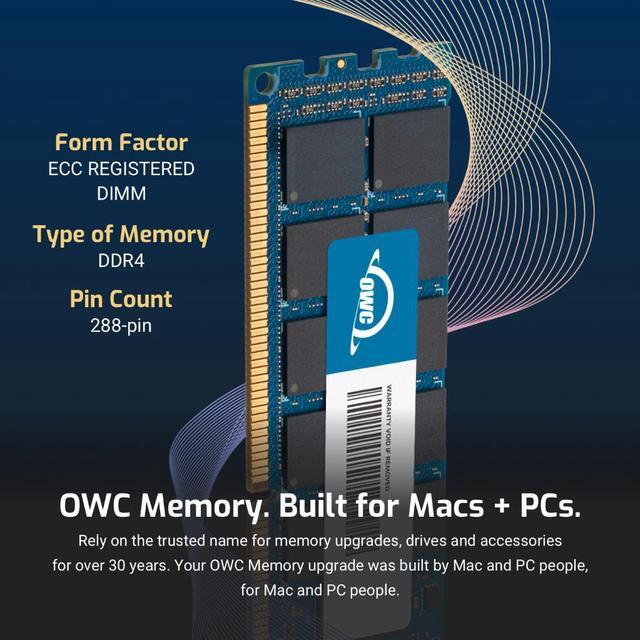
OWC 3R2D42R4256K is a 256GB DDR4-3200 ECC Registered RDIMM kit with eight 32GB modules, designed for compatible servers and workstations that need high-capacity memory. Confirm your system supports 288-pin RDIMMs; this memory is not for standard desktops and cannot be mixed with unbuffered memory.
Recommended For
- Server operators building or upgrading a compatible DDR4 platform who need 256GB of ECC registered memory supplied as eight matched 32GB modules.
- Virtualization and lab-host builders who need substantial memory capacity for running multiple virtual machines or services on one compatible server.
- Workstation or server users with memory-intensive workloads who need ECC registered DIMMs and whose system supports 32GB 2Rx4 DDR4-3200 RDIMMs.
- Owners extending the life of an existing DDR4 server who have checked the server’s memory support and need a full eight-module replacement or expansion kit.
Real-World Use Scenarios
- On a compatible server, a Proxmox or Hyper-V host can use the added capacity to keep more virtual machines running at once, useful when consolidating services or lab systems; how many fit depends on each VM’s memory needs and the rest of the server.
- For a SQL Server database with a frequently accessed working set, more available RAM can let the database cache more pages, potentially reducing reads from storage when memory capacity is the bottleneck; it won’t resolve unrelated CPU or storage limits.
- In a ZFS storage server, additional RAM can give the ARC more room to retain recently or frequently read data, so repeated reads may be served from memory rather than the storage pool; the benefit depends on the workload’s read pattern.
- For a remote-desktop or VDI host, the memory can support more concurrently running desktop VMs within the host’s capacity plan, helping avoid memory shortages that prevent VMs from starting; actual user density depends on VM allocations and workload.
- For an always-on server running supported workloads, ECC can automatically correct certain correctable memory errors, while system monitoring can help administrators spot recurring errors; ECC does not prevent every memory or system failure.




 here!